Modeling Genotype to Phenotype: A Search for Natural Objects of Selection
Explore evolutionary dynamics through metabolism as a genotype-phenotype map, examining how collective modes in phenotype space serve as natural selection objects rather than individual genes.

Computational Modeling of Chemotaxis - The Best Way to Understand Cell Migration
Explore computational modeling techniques for understanding cell migration and chemotaxis, enhancing knowledge of cellular movement mechanisms.
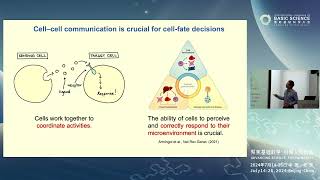
Modeling and Analyzing Cell-Cell Communication from Single-Cell Data
Explore CellChat, an integrated method for inferring and analyzing cell-cell communication from single-cell sequencing data using systems biology and machine learning approaches.
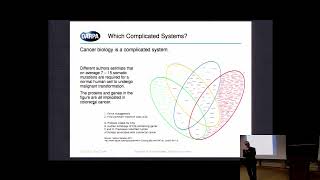
Acquiring Big Mechanisms by Reading Primary Literature - 2015
Explore machine learning techniques for extracting causal models from scientific literature, focusing on Ras-driven cancers and systemic effects of interventions.
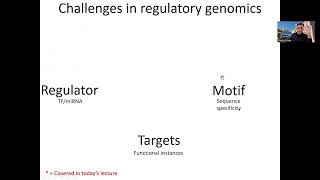
Regulatory Circuitry and Networks - Lecture 7
Explore regulatory circuitry and networks in biological systems, focusing on gene regulation mechanisms and their interconnected pathways.
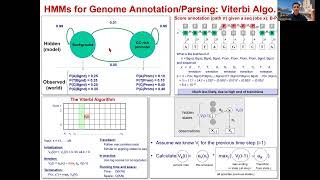
Regulatory Circuitry - Lecture 6
Explore regulatory circuitry in genomics, uncovering mechanisms of gene expression control and cellular regulation through advanced computational analysis techniques.
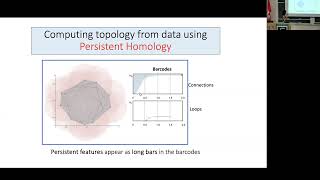
Applications of Topological Data Analysis in Cancer - Lecture 2
Explore applications of topological data analysis in cancer research, focusing on mathematical modeling of treatments, resistance, and optimization.

Non-Neural Intelligence: Biological Architecture Problem-Solving in Diverse Spaces
Explore biological intelligence beyond neural systems, examining how cells, tissues, and subcellular components demonstrate problem-solving abilities and collective decision-making across different scales.
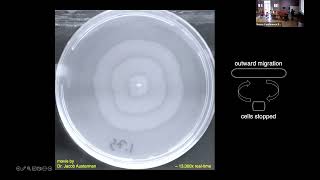
Micro-crowdsourcing: How Swarming Bacteria Integrate Signals During Collective Migration
Explore how bacteria communicate and move collectively, focusing on P. mirabilis's identity-based signaling and its impact on bacterial communities and population-wide swarming behavior.
Tipping Points in Cancer - Mathematical Oncology and Computational Biology
Explore the mathematical dynamics of cancer progression through computational analysis of fluid mechanics, biology, and critical transition points in tumor development.
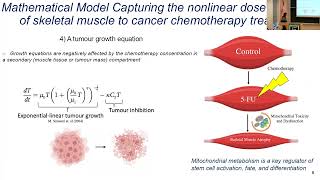
Chemotherapy-Induced Cachexia and Model-Informed Dosing to Preserve Lean Mass in Cancer Treatment
Explore mathematical modeling approaches for optimizing chemotherapy dosing to minimize muscle loss while maintaining effective cancer treatment strategies.
Balancing Interpretability and Predictive Accuracy in Mathematical Models of T Cell Activation
Explore mathematical modeling approaches for T cell activation, examining the trade-offs between model interpretability and accuracy in immunological systems.

Negative Feedback as a Noise Suppression Mechanism in Collective Foraging
Explore how social insects use negative feedback signals in foraging behavior, examining their role in variance reduction and system robustness through stochastic dynamics analysis.

How Multiscale Collectives Collect Across Scales in Biological Systems
Explore groundbreaking research on how collective systems operate across different scales, from embryonic development to bioelectric patterns in brain formation, using minimal two-scale models and causal networks.
Integrating Different Levels of Pattern Formation: From Sub-cellular to Multi-cellular Structures - Class 2
Explore pattern formation across biological scales, from subcellular structures to multicellular systems, examining the integration and emergence of complex biological organization.
Integrating Different Levels of Pattern Formation: From Sub-cellular to Multi-cellular Structures - Class 3
Explore pattern formation across biological scales, from subcellular structures to multicellular systems, examining integrated mechanisms and hierarchical organization in living organisms.
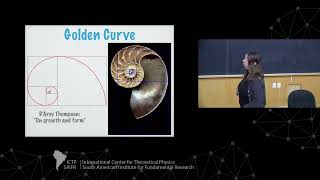
Integrating Different Levels of Pattern Formation: From Sub-cellular to Multi-cellular Structures - Class 4
Explore pattern formation across biological scales, from subcellular structures to multicellular systems, examining integrated mechanisms and hierarchical organization in living organisms.
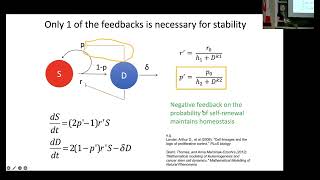
Mathematical Models of the Hematopoietic System at Homeostasis and the Clonal Evolution of Cells
Explore mathematical modeling approaches to understand hematopoietic system homeostasis and cellular clonal evolution patterns in cancer development and progression.
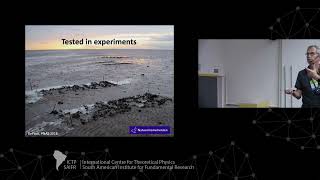
The Physics of Spatial Ecology - Class 4
Explore the fundamental principles of spatial ecology through physics-based approaches, examining pattern formation and biological systems across different scales in natural environments.
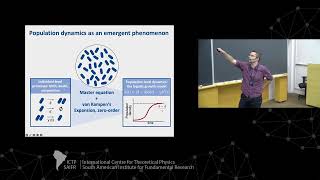
Integrating Different Levels of Pattern Formation: From Sub-cellular to Multi-cellular Structures - Class 1
Explore pattern formation across biological scales, from subcellular structures to multicellular systems, examining fundamental principles and mechanisms of biological organization.
Self-Organisation and Pattern Formation in Living and Synthetic Cells - Class 4
Explore advanced concepts in biological pattern formation, focusing on self-organization mechanisms within living and synthetic cellular systems and their fundamental principles.