
Using Seccomp to Limit the Kernel Attack Surface
Explore seccomp for system call filtering in Linux, covering BPF virtual machine basics, filter examples, and applications in sandboxing and security. Learn implementation techniques and considerations.
KernelShark 1.0 is Here - What Does that Mean?
Explore KernelShark 1.0, a powerful GUI for Linux kernel tracing. Learn its features, capabilities, and future developments through live demonstrations and insights.
Zephyr OS Memory Protection
Explore MPU-based memory protection in Zephyr RTOS, covering security domains, permission management, object allocation, system calls, and IPC mechanisms for embedded systems.
Speeding Up VM's I/O Sharing Host's io_uring Queues With Guests
Explore io_uring system calls and their application in virtualization to enhance VM I/O performance through queue sharing between hosts and guests.
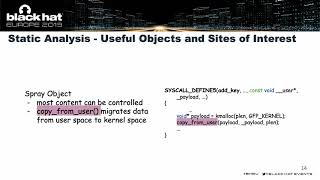
Hands Off and Putting SLAB - SLUB Feng Shui in a Blackbox
Automated memory layout manipulation technique for precise system call identification and assembly, enabling desired memory layouts for exploitation in SLAB/SLUB caches.

The Linux Kernel Hidden Inside Windows 10
Explore the Linux kernel in Windows 10, its implementation, security implications, and potential vulnerabilities. Learn about system calls, process management, and attack surfaces in this unique OS integration.
Sandboxing in Linux with Zero Lines of Code
Explore Linux sandboxing techniques without coding, focusing on process startup stages and practical examples. Learn to enhance security and control system calls effectively.
Inside the Linux Security Modules
Explore Linux Security Modules framework, architecture, and integration. Learn about security data fields, hooks, and configurations for enhanced kernel protection.
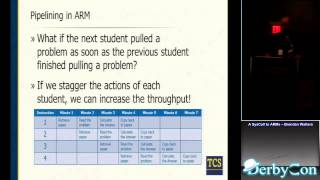
A Syscall to Arms
Explore system calls in Windows and Linux, understanding their role in security and exploitation. Learn techniques for analyzing and manipulating syscalls to enhance your cybersecurity skills.
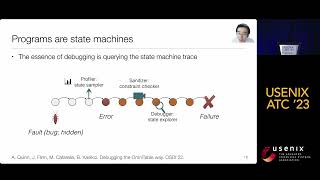
The Hitchhiker's Guide to Operating Systems
Innovative approach to teaching operating systems using state transition systems, featuring a minimal OS model with nine system calls and tools for exploring system behaviors.
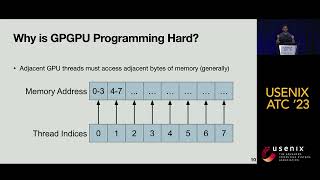
VectorVisor - A Binary Translation Scheme for Throughput-Oriented GPU Acceleration
Explore VectorVisor, a novel GPU acceleration approach for server-side applications, offering improved throughput and cost-efficiency through vectorized binary translation and CPU thread emulation.
Linux User - Kernel ABI - The Realities of How C and C++ Programs Really Talk to the OS
Explore the intricacies of Linux system calls, signal handlers, pthreads, and ptrace. Gain insights into low-level interactions between C/C++ programs and the operating system for advanced debugging and optimization.
Introduction to Memory Management
Explore Linux memory management basics, including paging, hardware mechanisms, and process memory usage. Learn to control overcommit, set limits, and use system calls for effective memory management.

Under the Hood - Assembly, System Calls, and Hardware in C++
Explore assembly, system calls, and hardware in C++. Dive deep into low-level computer operations, covering x86-64/Linux, Arm, and other systems. Gain insights into the underlying mechanics of C++ programming.
Indirect Syscalls: A Journey From High to Low
Dive into the mechanics of system calls, exploring both direct and indirect implementations while understanding their journey from high-level to low-level programming concepts and security implications.
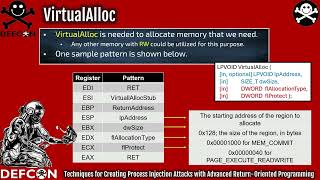
Process Injection Attacks with Return-Oriented Programming - Advanced Techniques and Methodologies
Discover advanced process injection techniques using return-oriented programming (ROP), including unique string comparison solutions, multiple WinAPI patterns, and practical methodologies for reliable implementation.
Using fexecve for Launch Services - What's Missing?
Explore the challenges and requirements for implementing fexecve (fd-based execve) in launching services, with insights from JĘDRZEJEWSKI-SZMEK, Zbigniew.
Closing the Script Execution Control Gap
Explore techniques for enhancing script execution control and security in Linux systems. Learn about potential vulnerabilities and mitigation strategies.
How We Almost Secured Our Project by Writing More Tests
Explore how increased testing nearly secured a project, delving into code coverage, seccomp profiles, and syscall extraction. Learn about Harpoon and the benefits of libbpfgo in Golang development.
Comparing Kernel System Calls Across Runtimes - Performance Analysis
Explore system call usage across runtimes using strace. Compare file reading performance in Node.js, Bun, Python, and C. Analyze kernel mode switches and their impact.

Combined I/O Enhancement in PostgreSQL 17
Explore PostgreSQL 17's game-changing feature: combined I/Os for faster database operations. Learn about optimized page reads, vectorized I/O, and potential performance impacts.