Causal Discovery and Representation Learning - Day 4
Explore causal discovery and representation learning in machine learning for drug discovery with Jason Hartford's insightful presentation.
Identifying Representations for Intervention Extrapolation
Explore identifiable representations for intervention extrapolation, improving generalizability in machine learning. Learn theoretical foundations and practical applications through simulations and Q&A.
Learning Probability Distributions: What Can and Can't Be Done
Explore statistical learning, focusing on guaranteed generalizations from finite samples and characterizing learnable distribution families. Gain insights into modern paradigms in generalization.
Statistical Limits of Causal Inference
Explore fundamental limits of causal effect estimation in observational data, examining personalized effects, non-smooth settings, and discrete scenarios without assuming prior causal inference knowledge.
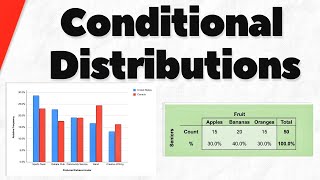
Conditional Distributions of Categorical Variables in Statistics
Explore conditional distributions of categorical variables through examples and charts. Learn to determine associations between variables and interpret data effectively.

Probability and Statistics: An Introductory Overview
Explore probability and statistics fundamentals, from basic concepts to advanced topics, covering applications, history, and key principles in data science and machine learning.

Statistical Methods for Data Analysis in Particle Physics - Lecture 4
Statistical techniques for particle physics data analysis, covering advanced methods and applications in experimental high-energy physics research.

Statistical Methods for Data Analysis in Particle Physics - Lecture 2
Explore advanced statistical techniques for particle physics data analysis, focusing on hypothesis testing, confidence intervals, and likelihood methods in experimental research.

Statistical Methods for Data Analysis in Particle Physics - Lecture 1
Explore statistical methods for particle physics data analysis, covering fundamental concepts and techniques essential for researchers in high-energy physics experiments.

Paired T-Test - Statistical Analysis for Comparing Group Means
Explore paired t-tests: comparing means in two scenarios. Learn calculation methods, standard error, and when to use nonparametric alternatives for statistical analysis.
An Introduction to Intertwining via Strong Stationary Duality - Developments and Open Problems
Explores advanced applications of dual chains in random walks, focusing on less symmetric scenarios and statistical applications, with examples from hyperplane arrangements and non-uniform duals.
Causal Machine Learning with CausalELM - JuliaCon 2024
Explore causal machine learning with CausalELM, covering potential outcomes, real-world examples, extreme learning machines, and estimators. Learn practical implementation for various applications without extensive statistical background.
Investigating Crimes Using Julia
Explore forensic science using Julia, applying math and science concepts to solve crime puzzles. Learn to utilize Julia packages for data analysis, visualization, and complex problem-solving in criminal investigations.
Dynamical Spectral Transition for Optimization in Very High Dimensions
Explore dynamical spectral transitions in high-dimensional optimization, examining mathematical concepts and their applications in complex systems and data analysis.
Applications of Duality - Lecture 3
Explore applications of dual processes in Markov chains, including strong stationary times, eigenvalue interpretation, and solutions to the Peres conjecture for Birth and Death chains.
Duality and Intertwining in Markov Chains - Lecture 2
Explore advanced Markov chain analysis through embedded processes, intertwining relations, and various dualities. Gain insights into stationarity and extensions to set and measure-valued duals.
An Introduction to Intertwining via Strong Stationary Duality - First Examples and Basic Setup
Explore Markov chains, mixing times, and card shuffling techniques. Learn about strong stationary times and their properties in this advanced probability theory lecture.
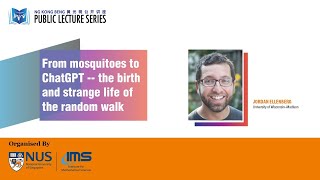
From Mosquitoes to ChatGPT - The Birth and Strange Life of the Random Walk
Explore the fascinating history and diverse applications of random walks, from mosquito control to AI, and their impact on modern technology and scientific understanding.
Optimal Transport and High Dimensional Probability in Wasserstein Spaces
Explore optimal transport theory and high-dimensional probability in Wasserstein spaces, delving into advanced mathematical concepts and their applications.
Optimal Transport and High-Dimensional Probability - Langevin Dynamics via Calculus
Explore optimal transport, high-dimensional probability, and Langevin dynamics through advanced calculus techniques in this mathematical deep dive.
Optimal Transport and High-Dimensional Probability - Otto's Calculus on Wasserstein Space
Explore optimal transport and high-dimensional probability through Otto's Calculus on Wasserstein spaces, delving into advanced mathematical concepts and their applications.