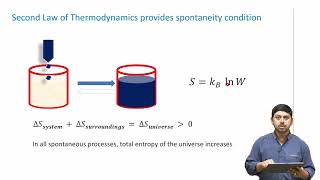
Chemical Principles II
In this course, a holistic approach covering three different approaches (classical, statistical, and postulate-based) of thermodynamics will be covered. The objective of this course is demystification the enigma of entropy.

Brain Criticality - Optimizing Neural Computations
Explore how the brain optimizes information processing by operating near critical points, examining phase transitions, neuronal avalanches, and scale-free properties in neural networks.
Data Compression I - Lecture 5: Asymptotic Equipartition Property
Explore the Asymptotic Equipartition Property in data compression, a fundamental concept for understanding information theory and efficient coding techniques.
Isoprenoids, Rubber, and Tuning Polymer Properties - Freshman Organic Chemistry II
Explore isoprenoids, rubber vulcanization, and polymer properties. Learn about biosynthesis, statistical mechanics, and free-radical polymerization in this comprehensive organic chemistry lecture.
The Boltzmann Constant and First Law of Thermodynamics - Lecture 22
Explore thermodynamics, heat generation, and measurement. Learn about the Boltzmann Constant, microscopic temperature, and the First Law of Thermodynamics. Gain insights into molecular mechanics and quasi-static processes.
The Science of Cities: Defining Size, Shape, Scale and Performance Using Percolation Theory
Exploring how city size impacts shape and performance using percolation theory, challenging the notion that bigger cities are always better through innovative spatial analysis methods.
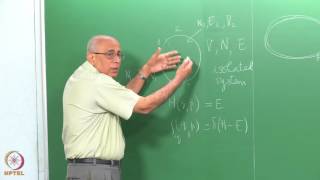
Physics - Nonequilibrium Statistical Mechanics
Explore advanced concepts in nonequilibrium statistical mechanics, including Langevin models, linear response theory, Fokker-Planck equations, and critical phenomena, with practical applications and quizzes.
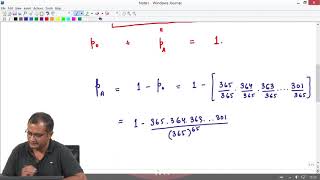
Statistical Mechanics
Comprehensive exploration of probability, statistical ensembles, and quantum mechanics, covering discrete and continuous distributions, entropy, and applications to physical systems.

Jonas Dalege on the Physics of Attitudes & Beliefs
Exploring statistical mechanics to understand belief formation and attitude dynamics. Insights into cognitive dissonance, ambivalence, and social interactions through physics-inspired models of opinion networks.
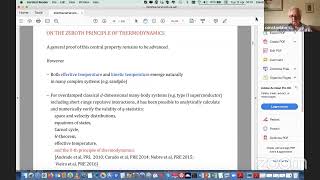
Nonadditive Entropies and Statistical Mechanics at the Edge of Chaos - Cornerstones
Explore nonadditive entropies and statistical mechanics at chaos' edge. Delve into Boltzmann-Gibbs entropy, Q-logarithm, and complex networks, challenging traditional thermodynamic principles.

Modeling the Micro-Macro Dialogue: Cross-Scale Dynamics Far from Steady State
Explore cross-scale dynamics in complex systems, focusing on micro and macro levels. Learn about MaxEnt inference, disturbed ecosystems, and a hybrid theory for reciprocal cross-scale influences.

The Swine Flu and You: Predicting and Controlling the H1N1 Pandemic
Explore the H1N1 pandemic: its impact, control strategies, and mathematical modeling for prediction and prevention. Learn about public health responses and the science behind epidemic management.
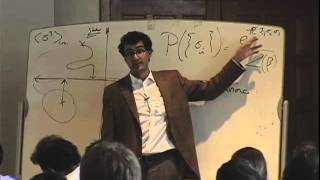
Coarse-Graining, Renormalization and Universality - Lecture 1
Explore coarse-graining, renormalization, and universality in complex systems. Learn key concepts and applications in mathematical, biological, cognitive, and social sciences.
Future Directions in SFI Science: Potential Ideas - 2012 Annual Science Board Symposium
Exploración de direcciones futuras en ciencia de sistemas complejos, abordando temas como computación cuántica, física no equilibrada, diversidad biológica y cultural, y leyes fundamentales de innovación y crecimiento social.
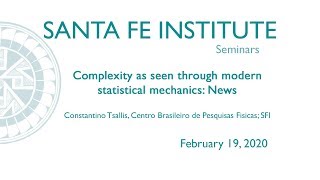
Complexity as Seen Through Modern Statistical Mechanics - New Perspectives
Explore nonextensive statistical mechanics and its applications in studying complex systems across various fields, with insights from Constantino Tsallis on recent developments and q-triplets.
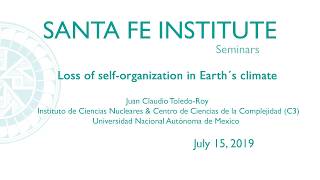
Loss of Self-Organization in Earth's Climate
Análisis de cambios en la autorregulación del clima terrestre mediante herramientas de sistemas complejos, comparando datos de temperatura global con el modelo Daisyworld.
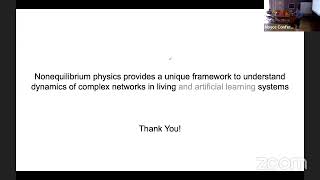
Nonequilibrium Physics in Living Systems
Explore the fascinating intersection of physics and biology, uncovering how nonequilibrium principles shape living systems and their complex behaviors.
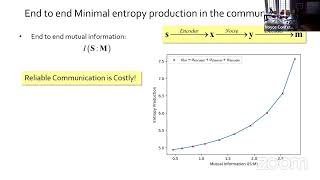
Minimal End-to-end Thermodynamic Costs of Communication Channels
Explore the thermodynamic costs of communication channels, examining minimal end-to-end requirements and their implications for information transfer efficiency.

Death and Resurrection of the Zeroth Principle
Explore the intriguing concept of the Zeroth Principle, its demise, and potential revival in this thought-provoking lecture from the Santa Fe Institute.
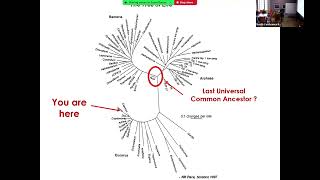
Topological Scaling Laws and the Mathematics of Evolution
Explore topological scaling laws in evolutionary biology, examining phylogenetic tree structures and their implications for understanding large-scale evolutionary patterns and processes.
Thermodynamics - Classical to Statistical
Comprehensive exploration of thermodynamics, from classical concepts to statistical mechanics, covering fundamental principles, applications, and advanced problem-solving techniques.