Finding Unmet Dependencies in Kconfig with the Kismet Static Analyzer
Explore Kismet static analyzer for detecting unmet dependencies in Kconfig, enhancing Linux kernel configurability and maintenance through automated build system analysis.

Practical Tips for Web Application Security in the Age of Agile and DevOps
Practical tips for adapting web application security to agile and DevOps environments, focusing on lightweight controls, visibility, and measuring maturity in modern development practices.
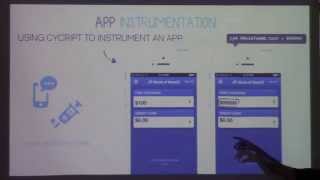
Uncovering OWASP's Mobile Risks in iOS Apps - AppSec California 2015
Explore iOS app vulnerabilities through reverse engineering techniques. Learn to extract, analyze, and identify common security risks in mobile applications using real-world examples.

iOS App Integrity: Enhancing Security with Encrypted Code Modules
Explore iOS app security vulnerabilities and learn advanced protection techniques like Encrypted Code Modules (ECM) to safeguard against static analysis, binary patching, and other common attacks.
Endpoint Finder: A Static Analysis Tool for Web Endpoint Discovery - Lightning Talk
Discover a static analysis tool for extracting web endpoints from JavaScript files, offering improved accuracy and reduced false positives compared to regex-based methods.
A Static Tainting Analysis Method for Aspect-Oriented Programs
Introduces a new method for detecting vulnerabilities in aspect-oriented web applications, focusing on static tainting analysis to improve security in languages like AspectJ.
Real World Static Analysis for Real Humans
Explore practical static analysis techniques for software security, focusing on real-world applications and human-centric approaches to code analysis.
Using Coccinelle to Detect and Fix Nested Execution Context Violations
Explore techniques for detecting and fixing nested execution context violations using Coccinelle, enhancing code quality and reliability in Linux kernel development.
Automatic Detection of Inadequate Authorization Checks in Web Applications
Automatic detection of missing authorization checks in web apps using static analysis. Explores techniques, real-world applications, and provides remediation suggestions for developers.
Clang as a Viable Static Compiler for Embedded Linux
Explore Clang as a viable static compiler for Embedded Linux, its modern design, sophisticated tools, and integration with Yocto Project. Learn about its advantages and use cases in embedded development.
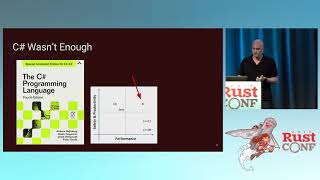
Safe Systems Software and the Future of Computing - Closing Keynote
Explore the future of safe systems programming and its impact on operating systems, drawing insights from Microsoft's innovative projects and addressing technical and cultural challenges.

Going Beyond Metadata - Adopting Static Analysis in Dependency Tools
Explore the importance of static analysis in dependency tools for enhanced software security and reliability beyond traditional metadata approaches.
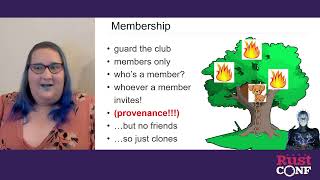
What If We Pretended Unsafe Code Was Nice, and Then It Was? - RustConf 2022
Explore Rust's Strict Provenance APIs for safer and more efficient unsafe code. Learn how pretending unsafe code is nice can lead to better documentation, libraries, and tools.
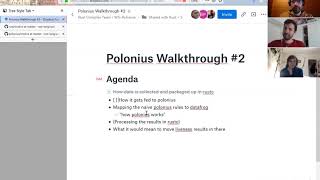
Polonius and Rustc Code Walkthrough
Explore rustc and Polonius codebases, understanding their connection and key components like IntroFax, compute regions, and liveness computation in this comprehensive walkthrough.
Rust-Analyzer Type-Checker Overview
Explore the inner workings of rust-analyzer's type checker and potential integrations with chalk for RLS 2.0 in this technical deep dive.
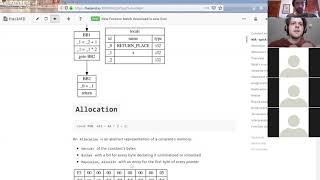
Miri and Constant Evaluation in Rust
Explore miri, Rust's MIR interpreter, and its role in compile-time evaluation. Learn about its architecture, memory representation, and capabilities for interpreting safe and unsafe Rust code.
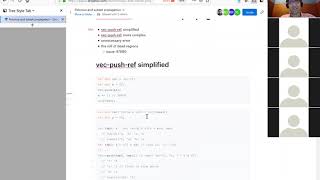
Polonius Working Group: The Role of Subset Relations in Rust
Explore subset relations in Polonius's design and a proposal for equality-only propagation, enhancing understanding of Rust's borrow checker implementation.
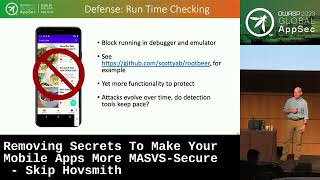
Removing Secrets to Make Mobile Apps More MASVS-Secure
Explore mobile app security, focusing on removing secrets and enhancing MASVS compliance. Learn defense strategies against various attacks and discover a resilient authentication architecture.
RustProof: Static Analysis Using MIR - PDXRust October 2016
Explore static analysis in Rust using MIR with PDXRust. Learn about formal verification, Hoare logic, and compiler plugins for enhanced code quality and reliability.

Static Analysis in C++ - Benefits and Tools
Explore static analysis tools for C++ to enhance code quality, detect bugs early, and improve overall software reliability.
Building Program Analyzers for Developers
Insights on designing and implementing effective program analysis ecosystems for software engineers, exploring user needs, integration in development processes, and result reporting.