Finding Vulnerabilities in Your Codebase Using Open Source Tools
Explore open-source tools for identifying vulnerabilities in your codebase. Learn effective techniques to enhance software security and protect against potential threats.

A Beginner's Guide to Code Review
Learn essential code review techniques to identify vulnerabilities, practice with labs, and discover resources for finding code to review. Improve your skills in detecting and fixing security issues.

Building Dynamic System Call Sandbox with Partial Order Analysis
Explore dynamic system call sandboxing using partial order analysis to enhance OS security. Learn how to restrict unnecessary system calls and reduce attack surfaces in program execution.
Quantitative Robustness for Vulnerability Assessment
Explore quantitative robust reachability for measuring bug triggering difficulty in software security. Learn about QRSE and functional E-MAJSAT for improved vulnerability assessment.
Automated Identification of Layering Violations in Embedded Applications - Work in Progress
Explore automated detection of layering violations in embedded systems, focusing on Non Conventional MMIO Accesses and their impact on software portability and design.
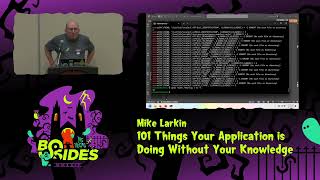
101 Things Your Application is Doing Without Your Knowledge
Uncover hidden behaviors in your applications, including unexpected file operations and network connections, even when using trusted dependencies. Learn to identify and manage these covert activities.
Practical Steps to False Positive Reduction and Benign File Analysis
Learn efficient techniques for identifying false positives and analyzing clean files in malware analysis. Gain actionable tips from real-world examples to enhance your workflow and save time and resources.

Removing AWS Policy Review Fatigue with Automated Terraform Resource Analysis
Automate AWS policy control with Terraform resource analysis, reducing security review fatigue and improving developer productivity through early-stage static analysis in IaC pipelines.

The Bounded Pathwidth of Control-Flow Graphs
Explore bounded pathwidth in control-flow graphs, its advantages over treewidth, and its applications in static analysis and compiler optimization. Gain insights into more efficient algorithms for program analysis.
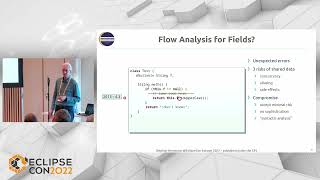
The Long Goodbye to NullPointerException - Eclipse Tools and Solutions
Explore practical strategies for reducing NullPointerExceptions in Java, covering improved tooling, safety levels, and external annotations for gradual risk reduction in legacy code.
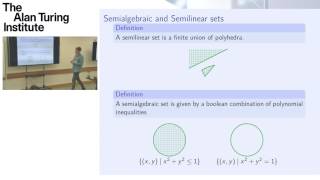
Invariant Synthesis for Linear Dynamical Systems - Pierre Ohlmann, ENS de Lyon
Explore linear dynamical systems, the Orbit Problem, and invariant synthesis. Learn about semialgebraic and semilinear invariants, Jordan blocks, and related concepts in computational mathematics.
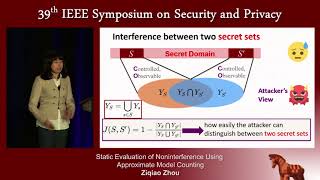
Static Evaluation of Noninterference Using Approximate Model Counting
Explore quantitative information flow and interference assessment in software security using approximate model counting, with applications to real-world scenarios like search engines and TCP.
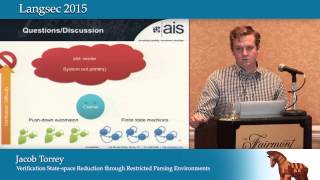
Verification State-Space Reduction Through Restricted Parsing Environments
Explore state-space reduction in verification through restricted parsing environments. Learn about Crema language and its application in simplifying input-handling software verification.
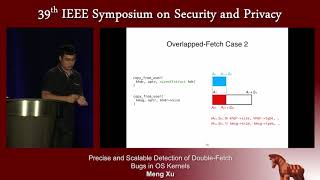
Precise and Scalable Detection of Double-Fetch Bugs in OS Kernels
Explore precise detection of double-fetch bugs in OS kernels, covering multi-read identification, symbolic checking, and mitigation strategies for enhanced system security.
Fuzzers, Analyzers, and Other Gophers Insecticides - Session 1
Explore techniques for discovering vulnerabilities in Go code, including static analysis, fuzzing, and fault injection. Learn about common bugs, concurrency issues, and tools for automated vulnerability detection in Go applications.
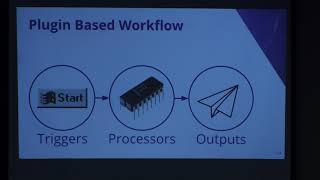
Orchestrating Security Tools with AWS Step Functions - 2018
Automate security reviews in CI/CD pipelines using AWS Step Functions. Learn to deploy serverless systems for integrating security tools like static analysis and container scanning into developer workflows.
Programming Languages and Software Engineering at the Allen School
Explore cutting-edge research in programming languages and software engineering, covering topics like automated coding, static analysis, distributed systems debugging, and web development optimization.
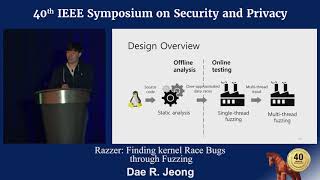
Razzer - Finding Kernel Race Bugs through Fuzzing
Discover efficient kernel race bug detection through fuzzing with Razzer. Learn static analysis and deterministic thread interleaving techniques to identify vulnerabilities in Linux kernels.
React Applications Structure Analysis Using AST - React.js Conf 2015
Explore how to leverage the Abstract Syntax Tree (AST) to unlock new possibilities in React applications, enabling powerful code analysis and transformations.
FOSS Static Analysis Tools for Embedded Systems and How to Use Them
Explore FOSS static analysis tools for embedded systems, covering kernel and userspace, local tools, and integrated solutions. Learn implementation techniques and best practices.
Software Quality and Testing - Recognize and Fix the Risks
Learn to recognize and mitigate software quality risks through static analysis, open source management, and best practices for improved development outcomes.