Digital Elevation Model of Lunar Poles with Cameras On-Board Chandrayaan-2 by Amitabh
Explore lunar pole topography using Chandrayaan-2 cameras to create digital elevation models, advancing our understanding of the Moon's polar regions.
Overview of the Indian Lunar Exploration Program by Tirtha Pratim Das
Explore India's lunar missions, their scientific objectives, and future plans. Gain insights into the country's space exploration efforts and contributions to lunar research.
Searching for Earth-like Planets in Our Solar System and Beyond
Explore Earth-like planets in our solar system and beyond, comparing climates of Mars, Venus, and Titan to Earth's. Learn about exoplanet detection and future space missions.
Automated Program Invention and Human Capabilities in Space Exploration
Explore the future of space exploration and program management in this thought-provoking lecture by Bruce Murray, addressing challenges and opportunities in robotic missions and Mars exploration.
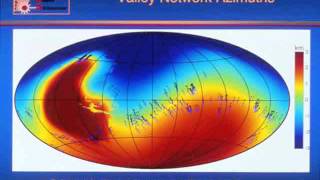
Exploring Planetary Surfaces - Carl Sagan Lecture
Explore planetary science insights with Maria T. Zuber's Carl Sagan Lecture, offering valuable perspectives on space exploration and celestial bodies despite the video's age.
Dawn Science Update: Ceres Composition and Features - Press Conference
Scientists discuss new findings on Ceres' composition and intriguing features from NASA's Dawn spacecraft, including impact craters, water ice, and cold traps.
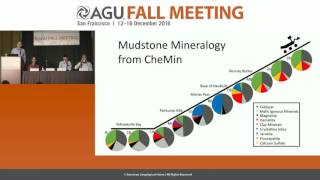
Recent Findings from NASA's Curiosity Mars Rover in Gale Crater
Discover Curiosity rover's latest findings on Mars' ancient water-rich environments, geological formations, and potential conditions for life in Gale Crater through expert analysis and mission updates.
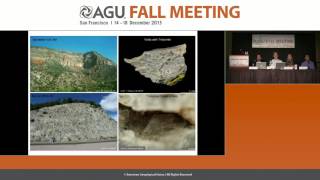
Latest Findings from NASA's Curiosity Mars Rover Mission - Fall 2015
NASA scientists discuss Curiosity rover's discovery of silica-rich rocks on Mount Sharp, comparing findings to other Martian sites and exploring implications for ancient wet environments on Mars.
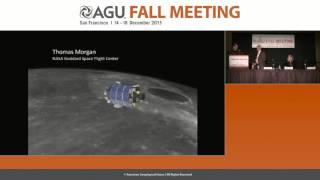
Fluctuations Within the Lunar Dust Cloud - LADEE Mission Findings
NASA researchers discuss observations from the LADEE mission, exploring the moon's exosphere and its interactions with the lunar surface, solar rays, and asteroids, providing insights for future planetary exploration.
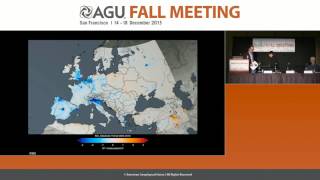
Global Air Quality - The Impacts of People and Cities
NASA scientists discuss a high-resolution global map of air quality, revealing how industrialization, economic activity, and civil unrest impact air pollution levels and their effects on human health and the environment from 2005 to 2014.
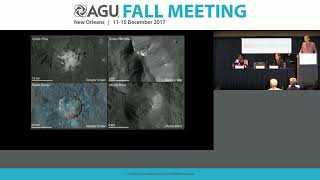
New Dawn Findings at Ceres - Bright Regions and Occator Crater
Explore NASA's Dawn mission findings on Ceres, including the discovery of over 300 bright patches and the intriguing Occator crater. Learn about the formation of surface features and their implications.
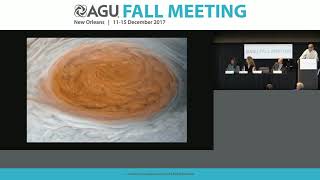
NASA's Juno Mission to Jupiter - Latest Findings and Discoveries
Latest findings from NASA's Juno mission to Jupiter, including insights on the Great Red Spot, radiation fields, and atmospheric dynamics. Experts discuss key discoveries from the spacecraft's first eight science passes.
The Venus Twilight Experience - Transit of Venus 2012
Explore the rare 2012 Transit of Venus through the eyes of scientists worldwide, uncovering atmospheric insights and continuing a centuries-old astronomical tradition.
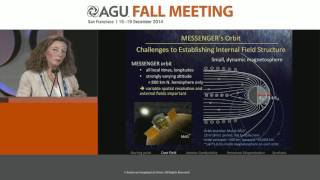
Mercury's Magnetic Field - Geomagnetism and Paleomagnetism
Explore Mercury's unique magnetic field, its origins, and implications for planetary formation in this comprehensive lecture by C. L. Johnson from the University of British Columbia.
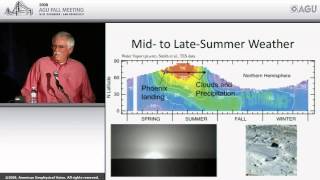
The Phoenix Mission Explores the Martian Arctic
Explore the groundbreaking Phoenix Mission to Mars' Arctic region, uncovering insights into the Red Planet's geology, climate, and potential for supporting life.
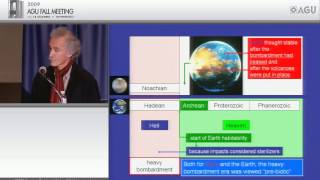
Mars Exploration: Bridging Our Past and Future
Explore Mars's geological history and its potential for hosting life through cutting-edge space missions and scientific discoveries, bridging our understanding of the Red Planet's past and future.
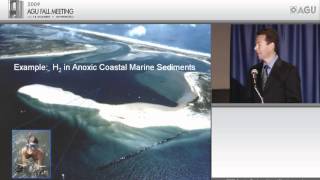
Life at the Common Denominator: Mechanistic and Quantitative Biology for Earth and Space Sciences
Explore life's fundamental requirements and potential across Earth and space through mechanistic and quantitative biology, examining energy, habitability, and environmental factors.
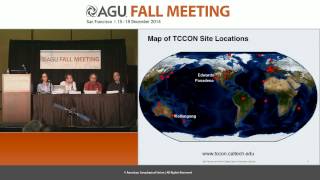
NASA's Orbiting Carbon Observatory Results - Fall Meeting 2014
Discover groundbreaking findings from NASA's Orbiting Carbon Observatory, revealing new insights into global carbon dioxide patterns and their impact on Earth's climate system.
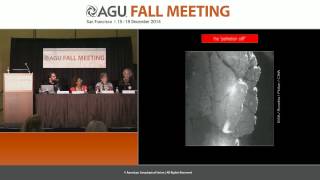
Rosetta Comet Science Results - Fall Meeting 2014
Explore groundbreaking findings from the Rosetta mission's comet encounter, including surface composition, structure, and atmospheric interactions, presented by leading space scientists.
New Horizons on Pluto's Doorstep
Explore the groundbreaking New Horizons mission as it approaches Pluto, offering unprecedented insights into the dwarf planet and its moons in this AGU Fall Meeting press workshop.
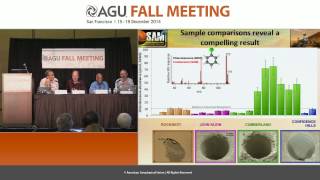
Recent Findings from Curiosity Rover - Mars Exploration Update
Recent findings from Mars Curiosity rover mission, including geological discoveries and atmospheric observations, presented by NASA scientists at AGU Fall Meeting 2014.