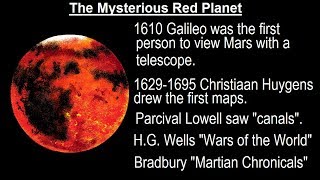
Astronomy - Mars
Explore Mars' mysteries, from its wet history to modern missions. Learn about surface features, atmosphere, moons, and the search for life on the Red Planet.
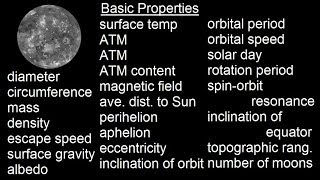
Astronomy - Mercury
Comprehensive exploration of Mercury's properties, orbit, geology, atmosphere, and space missions, including detailed analysis of Mariner 10 and MESSENGER missions and their discoveries.
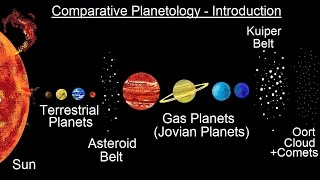
Astronomy - The Solar System
Comprehensive exploration of the solar system, covering planetary characteristics, orbits, composition, and celestial bodies. Gain in-depth knowledge of comparative planetology and astronomical phenomena.
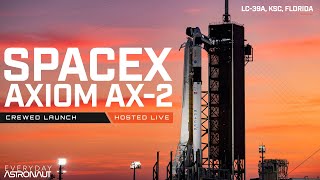
SpaceX Axiom Space Mission 2 - Crew Dragon Launch to ISS and Falcon 9 Booster Landing
Live coverage of SpaceX's Axiom Space Mission 2, launching four private astronauts to the ISS. Witness the Falcon 9 launch, stage separation, booster landing, and Dragon deployment in this historic fully private mission.

The Inexplicable Universe - Exploring Cosmic Mysteries
Explore the universe's mysteries with Neil deGrasse Tyson, from quarks to galaxies. Discover modern scientific approaches to cosmic enigmas and potential future breakthroughs in astronomy and physics.
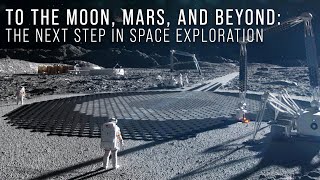
To the Moon, Mars, and Beyond - The Next Step in Space Exploration
Explore the Artemis mission and its role in future lunar and Mars expeditions with NASA's Thomas Zurbuchen and MIT's Dava Newman, moderated by Brian Greene. Discover the latest in space exploration advancements.
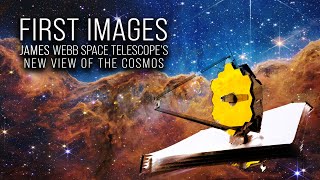
First Images - James Webb Space Telescope's New View of the Cosmos
Explore the groundbreaking first images from the James Webb Space Telescope with Nobel laureate John Mather and leading scientists, discussing their impact on our understanding of the universe's origins and evolution.
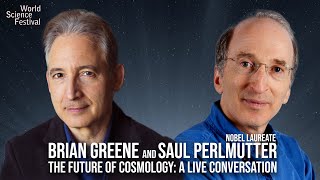
The Future of Cosmology - Space Telescopes and Cosmic Understanding
Nobel laureate Saul Perlmutter and Brian Greene explore revolutionary space telescopes and their potential impact on our understanding of the cosmos in this engaging scientific discussion.
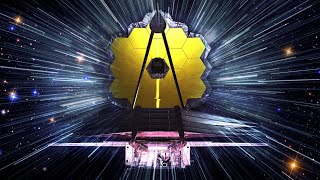
Things We've Never Seen - The James Webb Space Telescope Explores the Cosmos
Explore the universe's mysteries with leading scientists as they discuss the James Webb Space Telescope's potential to revolutionize our understanding of cosmic origins, planet formation, and the search for extraterrestrial life.
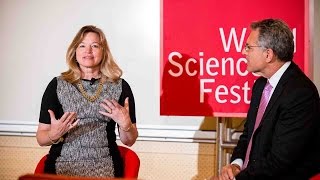
Pioneers in Science - Ellen Stofan, NASA Chief Scientist and Planetary Geologist
Engage with NASA chief scientist Ellen Stofan as she discusses her career, inspirations, and NASA's science programs, offering insights into planetary geology and space exploration.

Medicine and Health in Extreme Environments - From Space to Everest
Astronaut and mountaineer Scott Parazynski explores medicine and health in extreme environments, drawing insights from space and Everest expeditions.
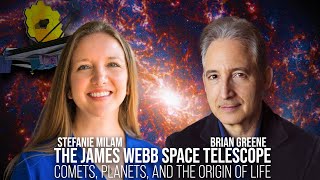
James Webb Space Telescope - Comets, Planets, and the Origin of Life
Explore JWST's groundbreaking discoveries about comets, planets, and Earth's water origins. Join Brian Greene and lead scientist Stefanie Milam for cutting-edge insights into our cosmic neighborhood.
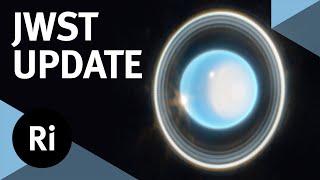
What Has the James Webb Space Telescope Discovered in Its First Year? – With Naomi Rowe-Gurney
Explore the James Webb Space Telescope's groundbreaking discoveries in our Solar System, from Mars to the Kuiper Belt, and learn about its unique capabilities, launch, and future missions in this comprehensive presentation.
Exoplanets and the Search for Life in the Universe - With Chris Impey
Explore the fascinating world of exoplanets and the search for extraterrestrial life. Learn about habitability, space exploration, and the potential for discovering Earth-like planets in our vast universe.
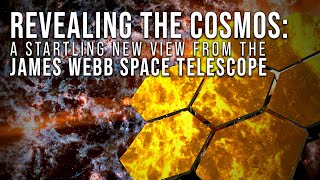
Revealing the Cosmos - A Startling New View from the James Webb Space Telescope
Explore the latest findings from the James Webb Space Telescope with Nobel Laureate John Mather and leading astronomers, discussing new clues about star and galaxy formation, and emerging cosmic mysteries.
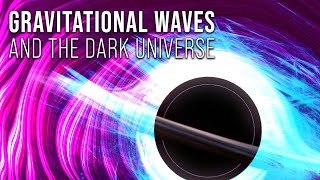
Gravitational Waves and the Dark Universe
Explore cutting-edge discoveries in gravitational waves and a new mission investigating the dark universe with experts Chiara Mingarelli and Jason Rhodes, moderated by Brian Greene.
White Dwarf - Neutron Star Binaries and Their Gravitational Wave Signatures by Alexey Bobrick
Explore gravitational wave signatures of white dwarf-neutron star binaries, examining their unique characteristics and implications for astrophysics and gravitational wave detection.
LION - Laser Interferometer on the Moon by Marie-Sophie Hartig and Pau Amaro Seoane
Explore lunar gravitational-wave detection concepts, technologies, and scientific potential. Discuss mission ideas, payload innovations, and implications for multi-messenger astronomy and lunar geophysics.
GW Signals from Tidal Disruption Events in the Decihertz Regime by Martina Toscani
Explore gravitational wave signals from tidal disruption events in the decihertz regime, focusing on lunar detection methods and their potential for breakthrough observations in astrophysics.
The Lunar South Pole Landing Mission - Joint Program of JAXA-ISRO by Dai Asoh
Explore Japan and India's joint lunar mission, focusing on the South Pole landing. Learn about spacecraft design, mission objectives, and international collaborations in lunar exploration.
Mineral Mapping & Volatiles at the Lunar Poles
Explore lunar mineral mapping and volatiles at the poles in this talk on gravitational-wave detection missions, discussing technological advancements and scientific opportunities for breakthrough observations.