Securing the Open Source Software Supply Chain
Explore tools and best practices for securing the open-source software supply chain, addressing vulnerabilities, and enhancing trust in the ecosystem. Learn about recent developments and future improvements.
Software Security and Slippery Slopes - How to Elevate an Entire Ecosystem at Scale
Explore strategies for enhancing software security in large open-source ecosystems, focusing on Python. Learn about community collaboration, automation, and practical approaches to implement security improvements at scale.
Ergonomic Codesigning for the Python Ecosystem with Sigstore
Explore Sigstore's integration into Python packaging, covering cryptographic fundamentals, security models, and the benefits of codesigning without long-term key material for developers and users.
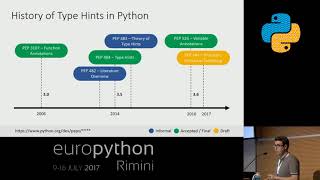
Type Annotations in Python 3 - Whats, Whys & Wows!
Explore Python 3 type annotations: syntax, benefits, and practical applications. Learn to enhance code security, leverage popular libraries, and build custom extensions using type hints.
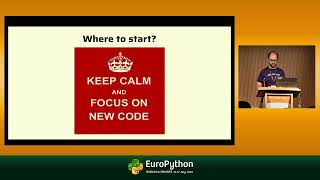
Managing the Code Quality of Your Project - Leave the Past Behind - Focus on New Code
Explore the "Clean as you code" approach for managing code quality in legacy projects, focusing on recent changes to improve deliverables incrementally while maintaining productivity.

Using Python to Manage Software Bill of Materials
Learn to create and manage Software Bill of Materials (SBOMs) using Python, enhancing software security and compliance tracking in complex development environments.

Don't Panic! A Developer's Guide to Security
Learn to enhance project security using industry standards like the OWASP DevSecOps Maturity Model. Gain practical insights for developers to systematically improve security without being an expert.

Testing and Fuzzing MC
Explore advanced techniques for testing and fuzzing in Linux systems, focusing on enhancing security and reliability through innovative methodologies and tools.

Designing UAPI for Fuzz-ability
Explore techniques for designing user-space APIs that are more amenable to fuzzing, enhancing system security and reliability through improved testing methodologies.
Notary v2 - Redesigning the Secure Supply Chain for Containers
Explore Notary v2's redesign for secure container supply chains, focusing on OCI registry-native protocols and improved ecosystem security based on community experience.
Cloud Native Supply Chain Security with Tekton and Sigstore
Hands-on overview of creating a secure zero-trust supply chain on Kubernetes using Tekton, Tekton Chains, and sigstore. Learn to protect pipelines, generate provenance, and integrate with In-Toto and SPIRE.
State of the Art Supply Chain Security - In-toto, TUF, and SigStore
Explore cutting-edge supply chain security with in-toto, TUF, and SigStore. Learn how these tools create a transparent, hack-proof system to protect software from developer to end-user.
Create an Extensible Cloud Native Application with WebAssembly
Explore WebAssembly's potential to create extensible cloud-native applications, enabling developers to customize and extend platforms securely and efficiently using open-source tools.
Squashing Security Bugs with Rubocop
Learn to detect and prevent security vulnerabilities in Ruby code using Rubocop. Explore custom cops, abstract syntax trees, and security antipatterns to enhance code quality and safety.
Node Security - NodeConf ONE-SHOT
Explore core security principles, Node.js ecosystem security, and enterprise application strategies. Learn from past vulnerabilities, present challenges, and future best practices in software security.

R-Evolution - A Story of Rust Adoption
Exploring Rust's potential to revolutionize software security, industry-wide adoption challenges, and collaborative efforts to enhance the language as it gains traction in companies.

Continuous Security
Explore integrating security into Agile development, focusing on tools, techniques, and processes for building secure software without compromising velocity or innovation.
C++ Core Guidelines - Safer C++
Explore safer C++ practices with Core Guidelines, focusing on efficiency, const usage, and minimizing raw pointers. Learn to modernize code and improve quality through automated tooling and refactoring techniques.
Security Vulnerabilities Decomposition - Another Way to Look at Vulnerabilities
Explore a developer-friendly approach to software security by decomposing vulnerabilities into familiar security controls, shifting focus from compliance to proactive implementation throughout the development cycle.
Lightning Talks
Explore data storytelling, non-relational database design, Blockchain-AI correlation, and open-source software trust in four concise lightning talks by industry experts.
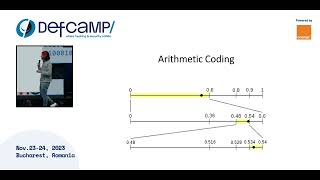
Building a Private Game Server by Reverse Engineering - DefCamp 2023
Explore reverse engineering techniques to build private game servers, enhancing cybersecurity skills and understanding network protocols in online gaming environments.