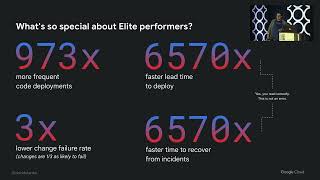
DO, RE, Me - Measuring the Effectiveness of Site Reliability Engineering
Explore the relationship between DevOps and SRE, their effectiveness, and how elite software delivery teams can benefit from modernizing technical operations.
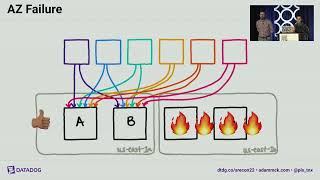
How the Metrics Backend Works at Datadog
Explore Datadog's metrics backend evolution, scaling challenges, and reliability solutions. Learn about distributed systems, Kafka implementation, and strategies for handling failures at various levels.
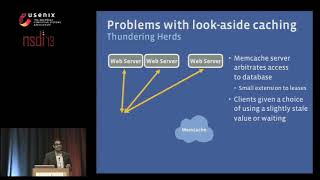
Scaling Memcache at Facebook
Explore Facebook's scaling of memcached to support billions of requests per second and trillions of items, enabling a rich experience for over a billion users worldwide.

Applicable and Achievable Formal Verification
Introductory overview of formal verification techniques in industry, focusing on safety-critical systems. Explores tools, applications, and adaptability to existing infrastructures.
SLOs for Data-Intensive Services
Explore the journey of defining effective SLOs for data-intensive services, focusing on search engines. Learn about monitoring processes, consistency, and automated mitigation strategies for complex systems.

Principles of Chaos Engineering
Explore principles of Chaos Engineering to improve resilience in distributed systems. Learn techniques for surfacing inherent chaos and building confidence in system behavior at scale.
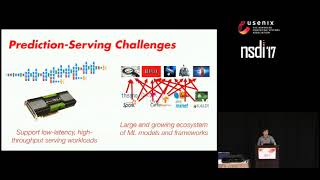
Clipper - A Low-Latency Online Prediction Serving System
Explore Clipper, a low-latency prediction serving system that enhances machine learning deployment with improved latency, throughput, accuracy, and robustness across various frameworks and applications.
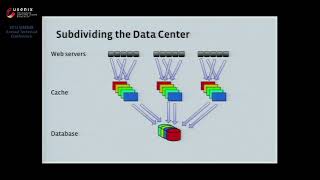
TAO - Facebook’s Distributed Data Store for the Social Graph
Explore Facebook's TAO, a distributed data store designed for efficient social graph access. Learn about its architecture, API, and how it handles billions of reads and millions of writes per second.
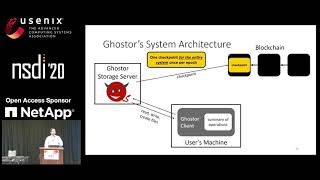
Ghostor - Toward a Secure Data Sharing System from Decentralized Trust
Explore a secure data-sharing system that protects user privacy and ensures data integrity through decentralized trust, hiding identities and detecting server-side violations.
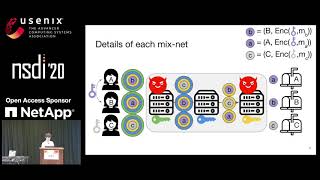
XRD - Scalable Messaging System with Cryptographic Privacy
Scalable messaging system offering cryptographic privacy, using parallel mix networks and novel techniques to support millions of users with low latency while protecting communication metadata.
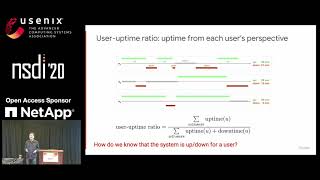
Meaningful Availability
Explores a new availability metric for cloud applications: windowed user-uptime. Discusses its advantages over traditional metrics in accurately reflecting user experience and distinguishing outage patterns.
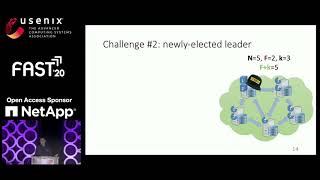
CRaft - An Erasure-coding-supported Version of Raft for Reducing Storage Cost
Explores CRaft, an erasure-coding-supported version of Raft consensus protocol, reducing storage and network costs while maintaining fault tolerance and liveness. Presents design, challenges, and performance improvements.
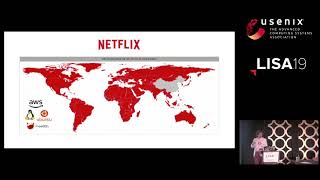
Linux Systems Performance
Comprehensive overview of Linux systems performance, covering tools, methodologies, and techniques for analysis and tuning. Ideal for developers and sysadmins seeking to optimize Linux environments.
What Happens When You Type en.wikipedia.org
Explore Wikipedia's server-side architecture, from routers to microservices, and learn how open-source technologies power one of the world's top websites.
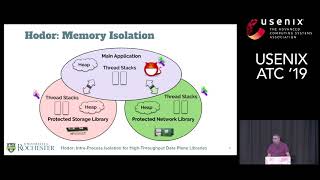
Hodor - Intra-Process Isolation for High-Throughput Data Plane Libraries
Explores intra-process isolation for high-throughput data plane libraries, proposing protected libraries as a new OS abstraction to achieve safety and performance in kernel-bypass approaches for managing high-speed devices.
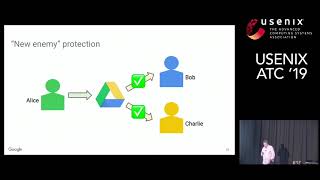
Zanzibar - Google’s Consistent, Global Authorization System
Explore Google's Zanzibar, a global authorization system for storing and evaluating access control lists, offering scalability, consistency, and high performance across various services.
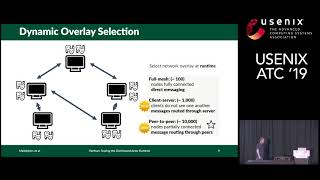
Scaling the Distributed Actor Runtime - PARTISAN
Presentation on PARTISAN, a runtime system for actor applications offering improved scalability and reduced latency through dynamic overlay selection, named channels, and affinitized parallelism.
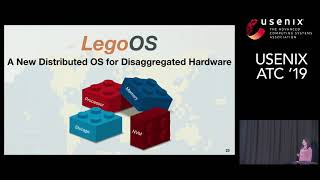
LegoOS - A Disseminated, Distributed OS for Hardware Resource Disaggregation
Explore LegoOS, a revolutionary distributed OS for disaggregated hardware resources in datacenters. Learn about its splitkernel model, improved resource utilization, and enhanced failure handling capabilities.
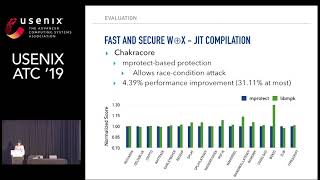
Libmpk - Software Abstraction for Intel Memory Protection Keys
Explore libmpk, a software abstraction enhancing Intel MPK's security and scalability. Learn about its implementation, benefits, and applications in OpenSSL, JavaScript JIT, and Memcached.
Implementing Distributed Consensus
Explore distributed consensus through "Skinny," a lock service. Learn Paxos protocol, design a simple consensus protocol, and tackle implementation challenges from theory to coding.
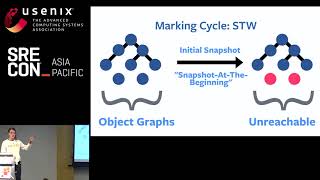
Tuning Java's G1 Garbage Collector for Realtime Services
Explore Java's G1 Garbage Collector tuning for realtime services, focusing on performance measurement, latency optimization, and effective settings for large heaps.