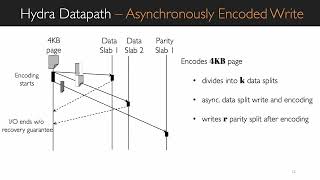
Hydra - Resilient and Highly Available Remote Memory
Resilient remote memory system with low latency, high availability, and efficient erasure coding. Improves performance-efficiency tradeoff and reduces data loss probability under correlated failures.
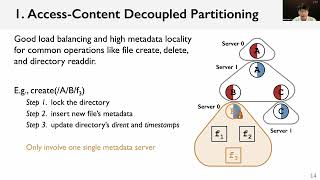
InfiniFS - An Efficient Metadata Service for Large-Scale Distributed Filesystems
Explore InfiniFS, an efficient metadata service for large-scale distributed filesystems, addressing challenges like load balancing, path resolution, and near-root hotspots.
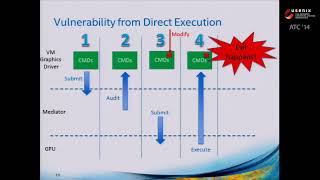
A Full GPU Virtualization Solution with Mediated Pass-Through
Explore GPU virtualization with gVirt, achieving 95% native performance and scalability up to 7 VMs through mediated pass-through technology for secure isolation and full feature support.
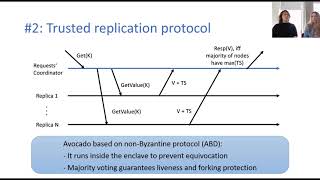
Avocado - A Secure In-Memory Distributed Storage System
Explore Avocado, a secure in-memory distributed storage system for untrusted cloud environments, offering strong security, fault-tolerance, consistency, and performance through innovative design and implementation.
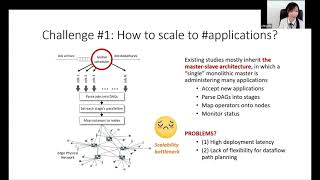
DART - A Scalable and Adaptive Edge Stream Processing Engine
Scalable, adaptive edge stream processing engine for IoT applications, enabling fast processing of concurrent queries in dynamic environments through dynamic dataflow abstraction and P2P overlay networks.
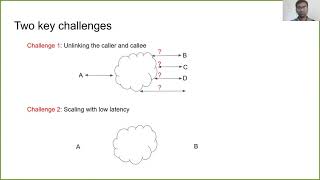
Addra - Metadata-Private Voice Communication Over Fully Untrusted Infrastructure
Innovative system for metadata-private voice communication, scaling to 32K users with low latency. Utilizes untrusted infrastructure and novel mailbox assignment, improving on existing solutions for secure communication.
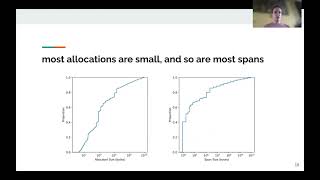
Beyond Malloc Efficiency to Fleet Efficiency - A Hugepage-Aware Memory Allocator
Explore TEMERAIRE, a hugepage-aware memory allocator enhancing TCMALLOC to reduce CPU overheads, improve application performance, and optimize fleet efficiency in warehouse-scale computing.
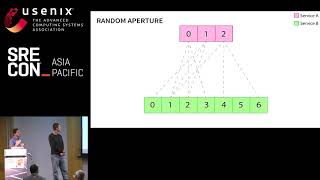
Aperture - A Non-Cooperative, Client-Side Load Balancing Algorithm
Explore Twitter's Aperture algorithm for client-side load balancing, addressing scalability challenges in large service clusters and improving RPC framework efficiency.

Tackling Kafka with a Small Team
Explore scaling Kafka with limited resources, covering challenges, failures, and tactical approaches for managing complex distributed systems in a fast-growing business environment.
Creating a Code Review Culture
Explore best practices for implementing and improving code review processes, focusing on organizational culture, author communication, and reviewer strategies for high-quality software development.

Complexity - The Crucial Ingredient in Your Kitchen
Explore how software engineering can learn from NASA's Challenger incident, drawing parallels to modern reliability challenges and navigating complexity in system architecture.
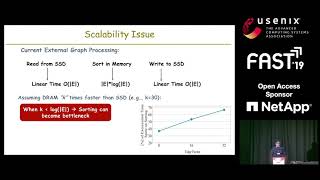
Large-Scale Graph Processing on Emerging Storage Devices
Explores efficient graph processing on emerging storage devices, proposing a new partitioning framework that leverages improved random access capabilities for 2X better performance than state-of-the-art solutions.
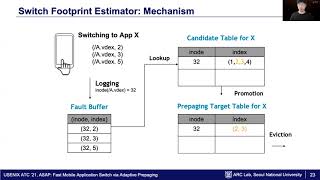
ASAP - Fast Mobile Application Switch via Adaptive Prepaging
Innovative mobile OS technique reducing app switch time by up to 35.7% through adaptive prepaging, enhancing user experience and resource utilization on memory-constrained devices.
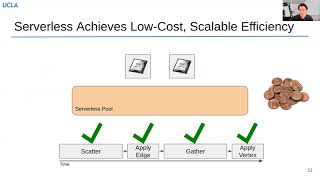
Dorylus - Affordable, Scalable, and Accurate GNN Training with Distributed CPU Servers and Serverless Threads
Distributed system for training Graph Neural Networks using serverless computing, offering affordable scalability for billion-edge graphs with improved performance-per-dollar compared to GPU servers.
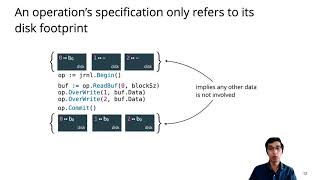
GoJournal - A Verified, Concurrent, Crash-Safe Journaling System
Explore GoJournal, a verified concurrent journaling system for storage applications. Learn about its implementation, performance, and the challenges overcome in its development and verification process.
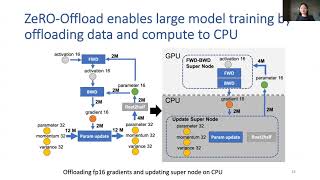
ZeRO-Offload - Democratizing Billion-Scale Model Training
ZeRO-Offload: Enabling billion-scale model training on a single GPU by offloading data and compute to CPU, minimizing data movement, and optimizing efficiency. Scales to multiple GPUs and works with model parallelism.
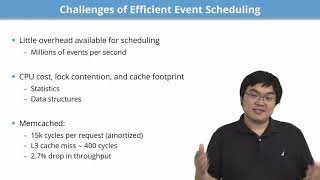
SKQ - Event Scheduling for Optimizing Tail Latency in a Traditional OS Kernel
Explore SKQ, a FreeBSD Kqueue redesign that significantly improves application tail latency and low-latency throughput through scalable architecture and event scheduling policies.
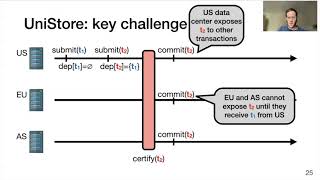
UniStore - A Fault-Tolerant Marriage of Causal and Strong Consistency
Explores a fault-tolerant data store combining causal and strong consistency for geo-distributed systems, addressing liveness challenges and optimizing durability costs in multi-consistency environments.
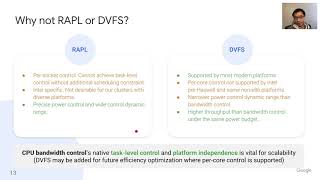
Thunderbolt - Throughput-Optimized, Quality-of-Service-Aware Power Capping at Scale
Explore power capping in data centers with Thunderbolt, a system optimizing throughput and quality of service. Learn about hardware-agnostic solutions for safe power oversubscription and task-level QoS differentiation.

Project Everest - Fast, Correct, and Secure Software for Deployment Now
Explore Project Everest's verified, high-performance secure communication components. Learn about F* programming, EverCrypt, EverParse, and EverQuic-transport, and their adoption in major projects.
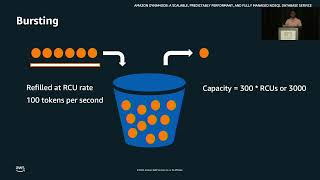
Amazon DynamoDB - A Scalable, Predictably Performant, and Fully Managed NoSQL Database Service
Explore Amazon DynamoDB's architecture, scalability, and performance optimizations. Learn how it handles massive workloads, ensures reliability, and evolves to meet increasing demands.