
Reno - A New Way to Manage Release Notes
Explore reno, a tool for managing release notes in multi-branch projects. Learn its design, usage, and impact on project and release processes.
Python 2 Is Dead! Drag Your Old Code into the Modern Age
Learn strategies and tools for upgrading large Python 2 projects to Python 3, based on a real-world case study of modernizing a 65,000-line Django codebase. Gain practical insights for a smooth transition.
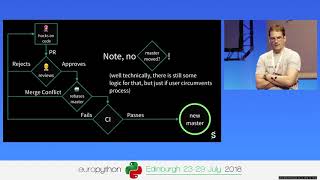
Marge - A Bot for Better Git'ing
Discover Marge-bot, an innovative tool enhancing Git workflows by testing pull requests against target branches and offering additional conveniences for improved Continuous Integration practices.
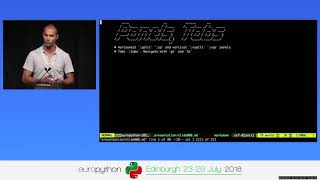
Developing in a Black Hole - Vim, Tmux, Httpie and Jq
Explore vim, tmux, httpie, and jq for a streamlined, keyboard-centric development environment. Boost productivity with powerful terminal-based tools and techniques.
Asyncio in Practice - We Did It Wrong
Explore common pitfalls and best practices in asyncio programming, including avoiding callback hell, ensuring thread safety, and achieving true concurrency in Python.
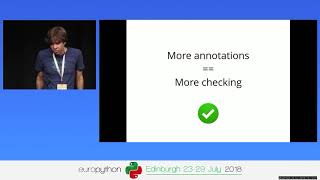
Getting Started with Mypy and Type Checking
Learn how to introduce type checking in Python projects using mypy, with insights from Dropbox's experience in annotating large codebases. Discover step-by-step approaches to improve code clarity and catch bugs early.
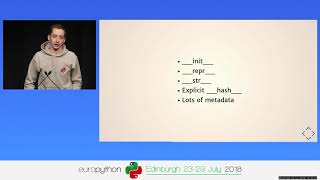
PEP 557 Versus the World
Exploración profunda del módulo dataclasses de Python 3.7, comparándolo con alternativas existentes y analizando su diseño, propósito y beneficios para los desarrolladores.
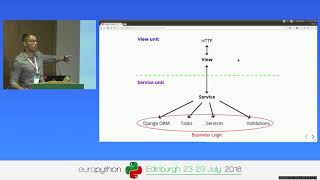
Proper Django Testing
Learn effective Django testing strategies to improve development speed and maintain project quality. Covers unit testing, mocking, project structure, and other testing methods.
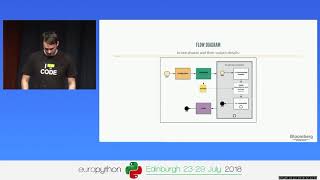
Standardize Testing in Python
Discover tox: an open-source tool for standardizing Python testing, simplifying CI processes, and ensuring high-quality, maintainable packages across various environments.
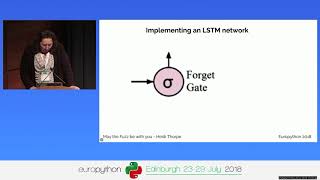
May the Fuzz Be with You
Explore how LSTM neural networks and Python can generate AI-driven test inputs for software testing and network security, improving upon traditional fuzzing techniques.
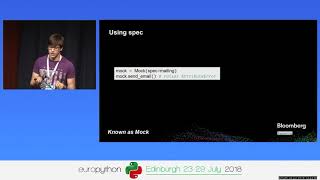
Mocks, Dummies, Stubs & Spies
Explore testing doubles in Python: mocks, fakes, dummies, stubs, and spies. Learn their differences, use cases, and implementation techniques for effective unit testing and dependency isolation.
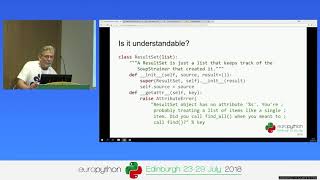
Writing Good Error Messages
Learn to craft clear, actionable error messages for better code readability and user experience. Explore common pitfalls and effective techniques for writing informative error messages in Python.
Creating a Culture of Software Craftsmanship
Explore strategies to manage software complexity, prevent common pitfalls, and foster a culture of craftsmanship for sustainable development and improved project outcomes.
Exploring the Python AST Ecosystem
Dive into Python's abstract syntax tree ecosystem, exploring tools for visualization, creation, and transformation. Learn practical applications in static analysis and metaprogramming for enhanced code manipulation.
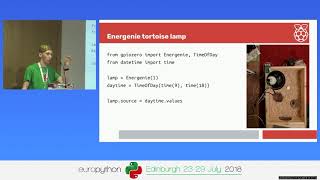
Programming Paradigms for Physical Computing and IoT
Explore multi-paradigm programming for GPIO devices on Raspberry Pi, from simple scripts to complex interactions, using Pythonic code for IoT and physical computing applications.
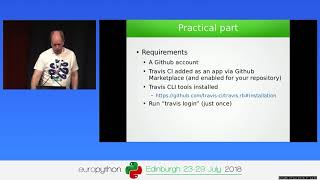
Automating Testing and Deployment with Github and Travis
Streamline open-source project maintenance by automating testing and deployment using Github and Travis. Learn to create an efficient release pipeline, reducing errors and simplifying the process.
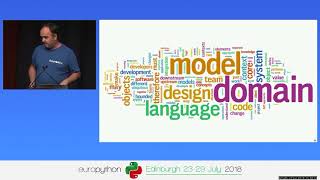
Domain Driven Design Patterns in Python
Explore Domain-Driven Design patterns in Python, learning to model complex domains and implement tactical patterns for robust, maintainable software in large-scale projects.
Rehabilitating Pickle
Explore Pickle's security risks, potential defenses, and alternatives for safe Python object serialization in distributed systems.
Quart - A asyncio Alternative to Flask
Explore Quart, an asyncio-based alternative to Flask, offering enhanced features like HTTP/2 and websockets while maintaining Flask's API for efficient web development.
Faster Python Startup
Explore techniques to optimize Python startup speed by embedding code objects into the cPython binary, reducing module loading time and improving performance for frequently launched applications.
Sprint Orientation
Orientación para participar en sprints de desarrollo colaborativo en Python, explorando oportunidades de contribución y mejora de proyectos de código abierto.