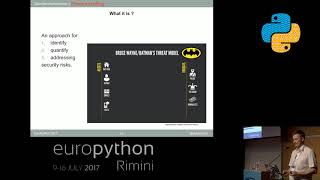
CyberSecurity.bootcamp
Explore cybersecurity essentials for Python applications, covering threat modeling, attack vectors, security testing, and best practices to protect your servers from malicious threats.
You Need More Security in Your Application Packaging
Explore secure application packaging methods, focusing on Python, to balance ease of installation with robust security measures for different environments and audiences.
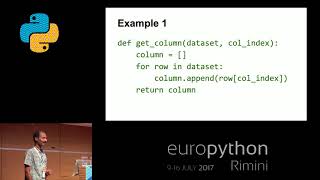
Writing Beautiful Code
Discover techniques for crafting elegant, readable Python code. Learn to choose meaningful names, structure logic effectively, and write clear comments for improved maintainability and understanding.
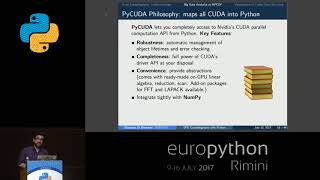
Big Data Analytics at the MPCDF - GPU Crystallography with Python
Explore GPU-accelerated Python for big data analytics in atom probe crystallography, focusing on Fourier spectral analysis, scalability across multiple GPUs, and interactive visualization techniques.
Teach Your -Microservices- Speak Protocol Buffers with gRPC
Explore Protocol Buffers and gRPC for efficient microservice communication, covering schema enforcement, serialization, and API evolution with practical examples and best practices.
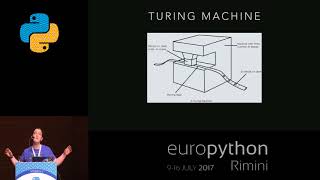
Writing Code - Evolve It Instead
Explore genetic algorithms as a biologically-inspired AI approach to code generation, discussing their potential impact on software development and the future of programming.
Automating Instagram with Python and Selenium
Explore Instagram automation using Python and Selenium, learning about open-source project growth, tackling challenges, and implementing the Page Object design pattern for effective social media automation.
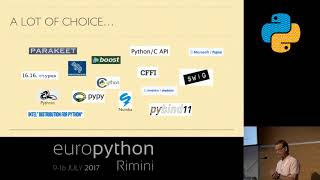
A Faster Python? You Have These Choices
Explore options for optimizing Python performance, from C extensions to PyPy. Learn trade-offs between speed and code maintainability, with real-world examples and benchmarks.
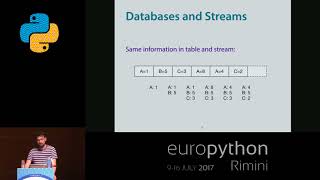
Streaming - Why Should I Care?
Discover how stream-oriented processing can revolutionize your approach to application development, offering natural service boundaries, flexible data schemas, and improved scalability.
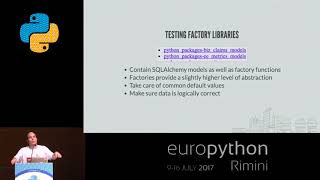
Fixture Factories for Faster End-to-End Tests
Explore fixture factories for faster end-to-end tests in service-oriented architectures. Learn implementation techniques, pytest integration, and benefits like improved maintainability and parallel test execution.
When Django is Too Bloated - Specialized Web-Applications with Werkzeug
Explore Werkzeug, a lightweight Python HTTP/WSGI utility, for building flexible web applications. Learn how to create custom stacks beyond traditional frameworks for specialized needs.
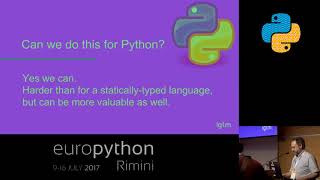
Finding Bugs for Free - The Magic of Static Analysis
Explore static analysis techniques for Python to improve code quality and find bugs without annotations. Learn about LGTM's powerful tools and their applications.
Rethinking How We Build HTTP APIs
Explore a minimalist approach to building HTTP APIs using Pico, a framework focused on simplicity and flexibility. Learn about its evolution and key features for creating efficient, self-describing APIs.
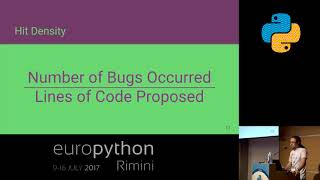
Linespots - Predicting Bugs in Your Code
Discover Linespots, an algorithm predicting code bugs with 50% accuracy by analyzing just 0.5% of high-risk lines, enhancing code review efficiency and reducing technical debt.
Writing Awesome PyPI Packages in Python
Learn best practices for creating PyPI packages, including project structure, testing, configuration, and tools to enhance development and collaboration.
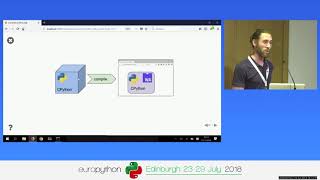
Let's Embrace WebAssembly
Explore WebAssembly's potential in Python: compile functions to WASM for browser execution and use Python as a platform to run and bind WASM modules, enhancing performance and interoperability.
Python, Docker, Kubernetes, and Beyond
Journey through deploying Python applications: from standalone to Docker containers, and finally to Kubernetes. Learn about CI implementation, image storage, and efficient deployment using YAML and templating.

The Naïve Programmer
Explore the value of unsophisticated programmers in software development, drawing parallels with naïve artists in modern art and offering insights for the programming industry.
From Zero to Azure with Python, Docker Containers, and Visual Studio Code
Aprenda a criar e implantar aplicativos web Python no Azure usando Docker e Visual Studio Code. Explore notebooks Jupyter hospedados e armazenamento de dados com CosmosDB. Ideal para iniciantes em nuvem e contêineres.
A Jupyter Enhancement Proposal Story
Explore the journey of submitting a Jupyter Enhancement Proposal, from conception to implementation, and learn about programmatic notebook conversions using custom metadata and templates.
Washing Away Code Smells
Learn to identify and eliminate code smells in Python, mastering the art of refactoring for cleaner, more maintainable, and Pythonic code. Discover practical tips for implementing refactoring in your development process.