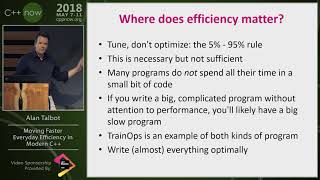
Moving Faster - Everyday Efficiency in Modern C++
Explore modern C++ efficiency techniques, from value semantics to container choice, for writing performant code that meets user expectations in everyday programming scenarios.
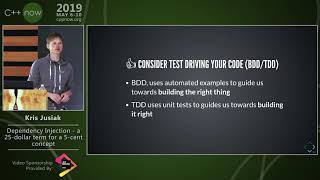
Dependency Injection - A 25-Dollar Term for a 5-Cent Concept
Explore dependency injection in C++, its benefits for maintainable code, and various implementation approaches. Learn to apply DI effectively in projects with changing requirements.
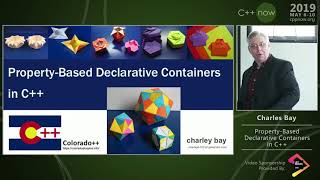
Property-Based Declarative Containers in C++
Explore declarative containers in C++, offering simplified APIs for complex systems while maintaining efficiency. Learn to design opaque, property-based containers and domain-specific algorithms.
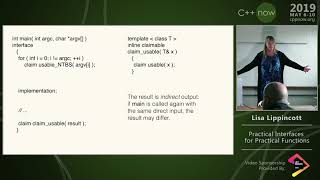
Practical Interfaces for Practical Functions
Explores practical approaches to developing formal interfaces for familiar functions in C++, drawing lessons for effective interface design and building on previous work in software architecture.
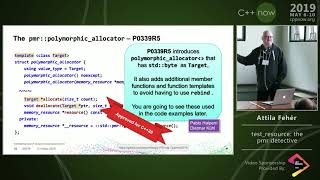
Test Resource - The PMR Detective
Explore pmr::test_resource for detecting memory allocation bugs in C++. Learn to diagnose and fix issues like leaks, overruns, and exception-safety failures using real-world examples.

Better CTAD for C++20
Explore improvements to Class Template Argument Deduction in C++20, addressing flaws and pitfalls from C++17 for cleaner, safer, and more intuitive code.
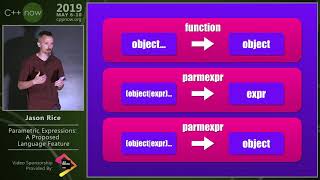
Parametric Expressions - A Proposed Language Feature
Proposed C++ feature: Parametric Expressions explained. Explores use cases, benefits for library authors, and potential impact on build times. Encourages audience participation in discussing this hygienic macro concept.
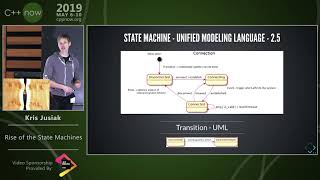
Rise of the State Machines
Comprehensive comparison of state machine implementations in modern C++, exploring trade-offs in compilation time, performance, memory usage, and readability using a connection example and various C++ techniques.
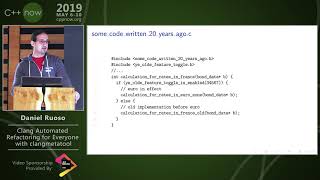
Clang Automated Refactoring for Everyone with Clangmetatool
Explore clang tooling for automated C++ refactoring, focusing on Bloomberg's open-source framework clangmetatool. Learn about static analysis tools and the development process for creating refactoring tools.
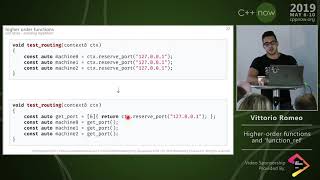
Higher-Order Functions and Function Ref
Explore higher-order functions in C++, their practical applications, and the proposed `function_ref` abstraction for C++20, enhancing code flexibility and performance.
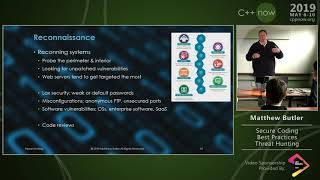
Secure Coding Best Practices - Threat Hunting
Explore threat modeling and secure coding practices in C++, focusing on identifying attack surfaces, analyzing vulnerabilities, and implementing effective defense strategies for robust software design.
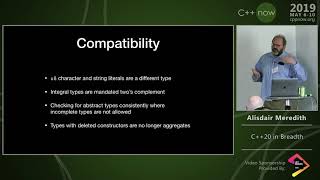
C++20 in Breadth
Comprehensive overview of C++20's major features and changes, exploring language updates, new capabilities, and their impact on C++ development and standardization.
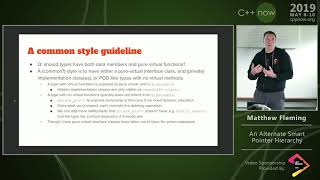
An Alternate Smart Pointer Hierarchy
Explore Pure Storage's custom smart pointers: owned and delete_ptr. Learn their semantics, conventions, and advantages over C++'s std::unique_ptr and std::shared_ptr.
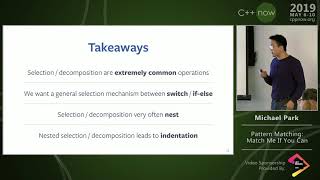
Pattern Matching - Match Me If You Can
Explore pattern matching in C++: declarative data inspection, proposal details, and code simplification examples. Learn about this powerful feature and its potential impact on C++ programming.
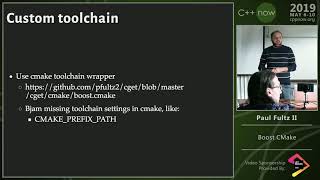
Taking the Plunge Towards CMake in Boost
Exploring CMake integration for Boost: benefits, user needs, script structure, modules, and migration strategies to enhance accessibility and community support.
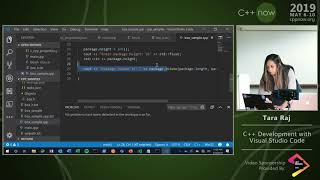
C++ Development with Visual Studio Code
Explore Visual Studio Code's powerful features for C++ development, including editing, building, and debugging, with live demonstrations and insights on remote development capabilities.

CMake - One Tool To Build Them All
Explore CMake's vital role in C++ development, its history, and key features for building, testing, and deploying software across platforms with Bill Hoffman, CMake's creator.

Converting a State Machine to a C++ 20 Coroutine
Explore converting state machines to C++20 coroutines, leveraging async operations and co_await. Learn to simplify complex code using modern C++ features for more readable and maintainable asynchronous programming.
Using Concepts - C++ Design in a Concept World - Part 2 of 2
Explore advanced C++ concept design, implementation, and application in real projects. Learn to write, use, and design with concepts for improved code clarity and functionality.

What is an ABI and Why is Breaking it a Problem?
Explore the concept of Application Binary Interface (ABI), its importance in C++ development, and the implications of breaking it, with examples and historical context.

The Concepts of Concepts
Explore C++20 concepts: motivations, template limitations, usage methods, and hands-on concept creation. Learn to enhance code clarity and reduce maintenance costs with this powerful feature.