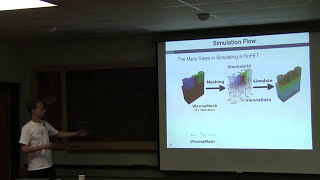
A Discussion of Selected Vienna-Libraries for Computational Science
Explore Vienna-Libraries for computational science: ViennaCL, ViennaGrid, ViennaData, ViennaMath, and ViennaFEM. Learn how C++ can better meet scientific computing needs.
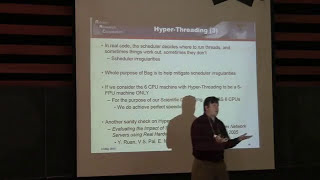
Thread-Safe and Thread-Neutral Bags
Explores implementing thread-safe and thread-neutral bags in C++, introducing drawer and cupboard abstractions using C++11 multi-threading features for efficient concurrent data access.
Look Ma, Update DB to HTML5 Using C++ - No Hands
Explore seamless data transport from SQL databases to HTML5 interfaces using WebSocket and POCO framework, enhancing performance and enabling real-time updates without polling.
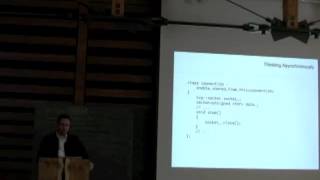
Thinking Asynchronously - Designing Applications with Boost.Asio
Explore asynchronous design principles using Boost.Asio, covering alternative approaches, common pitfalls, and techniques for managing complexity and optimizing performance in C++ applications.
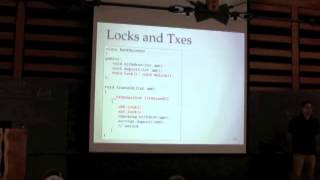
Intel's C++ STM Compiler and Transactional Language Constructs for C++
Explore Intel's C++ STM compiler and transactional language constructs, focusing on type-safety, optimization, and complex operations in parallel programming using transactional memory.
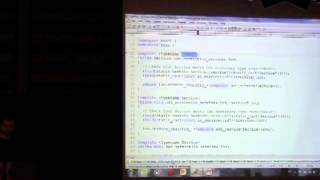
Creating Boost.Asio Extensions
Learn to extend Boost.Asio's asynchronous framework beyond networking, exploring custom operations and limitations through practical examples like directory monitoring.
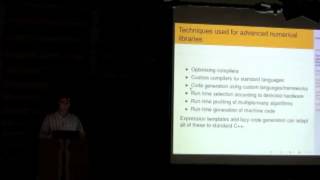
Fast Numerical Computation in C++ - Expression Templates
Optimizing numerical computations in C++ using expression templates, exploring limitations and advanced techniques for performance beyond traditional C++-only libraries.
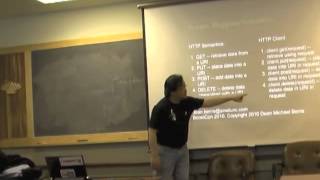
Techniques in Flexible Header-Only C++ Network Library Implementations
Explores techniques for creating flexible header-only C++ network libraries, focusing on cpp-netlib's modular design, generic programming principles, and implementation of key components like message types and URI parsers.
Ryppl - A New Platform for Boost Development
Unveiling Ryppl: A revolutionary system for managing complex software projects, addressing Boost's development challenges and potentially transforming open-source collaboration.
An Asio Based Flash XML Server
Build an Asio-based server for reactive systems, utilizing Boost libraries to handle asynchronous resources, route data streams, and communicate with Flash displays via XMLSocket.
Production Use of Boost.Test
Explore advanced Boost.Test usage in production, including execution monitoring, floating point exception handling, in-place unit testing, and integrating test tools into components.

Beware of C++
Explore potential pitfalls and complexities in C++ programming with expert insights on language features, best practices, and common misconceptions to enhance code quality and efficiency.
Multiplatform C++
Learn techniques for writing portable C++ code across platforms, addressing common challenges in file systems, networking, and multithreading for Windows, Unix, and Mac OS.
Octopus - A Policy-Driven Framework for CFD Simulations
Explore a policy-driven framework for computational fluid dynamics, emphasizing flexibility and performance in scientific simulations using modern C++ techniques.

How to Design C++ Implementations of Complex Combinatorial Algorithms
Learn techniques for implementing complex combinatorial algorithms in C++, focusing on design patterns, data structures, and optimization strategies for efficient and maintainable code.
My Thoughts on Large Code Base Change Ripple Management in C++
Strategies for managing code changes in large C++ projects, focusing on minimizing ripple effects and maintaining stability during updates and refactoring.
Functional Reactive Programming - Cleanly Abstracted Interactivity
Explore functional reactive programming for clean, abstracted interactivity in C++. Learn key concepts, benefits, and implementation techniques for more efficient and maintainable code.
Testing Battle.net - Before Deploying to Millions of Players
Explore designing testable components in distributed systems, focusing on Battle.net's development. Learn practical strategies for structuring classes, ensuring correctness, and evaluating performance without full-scale deployment.
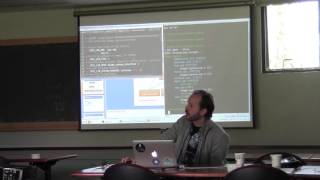
Biicode - A C - C++ Dependency Manager with a Hosting Service
Hands-on workshop exploring biicode, a C/C++ dependency manager. Learn to develop, publish, and reuse packages while managing dependencies, versions, and conflicts in C++ projects.
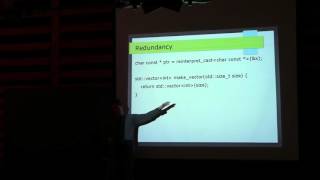
Type Deduction in C++14
Explore C++14 type deduction, its applications in library design, and best practices for balancing power with readability. Learn about auto, decltype, return type deduction, and their impact on modern C++ development.
A Review of C++ 11/14 Only Boost Libraries - Fiber, AFIO, DI, and APIBind
Explore upcoming C++11/14-only Boost libraries: Fiber, AFIO, DI, and APIBind. Examine their design choices, C++11/14 feature usage, integration with other libraries, and potential contributions to C++ standardization.