Malicious Office Doc Analysis for Everyone
Explore techniques for analyzing malicious Office documents, from initial triage to static analysis. Learn precautions, tools, and strategies for effective malware investigation.

Attacking EvilCorp - Anatomy of a Corporate Hack
Explore corporate hacking techniques, from enumerating targets to exploiting Kerberos, with insights on attack paths and essential mitigations for enhanced cybersecurity.
Simplifying Asynchronous Code With Scala Async
Simplifying asynchronous programming in Scala using Async, enabling developers to write concurrent code that looks sequential and integrates seamlessly with Futures and Promises API.
Web Apps in Clojure and ClojureScript with Pedestal
Explore Pedestal for building collaborative Clojure/ClojureScript apps. Learn dataflow, pure functions, and state management to create complex applications with simplified code.
Why Ruby Isn't Slow
Explore Ruby's performance challenges and solutions through Topaz VM, addressing method dispatch, constant lookups, and allocation issues for improved speed and efficiency.
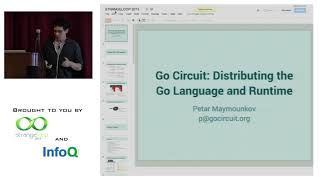
Distributing the Go Language and Runtime
Explore Go Circuit, an extension to Go for distributed systems. Learn about spawning remote goroutines, simplified cloud application development, and powerful lifecycle maintenance tools.

Clojure Core.async
Explore core.async in Clojure: Learn about independent threads, queue-like channels, and efficient communication between components. Discover how to build more manageable and scalable systems.
Deterministic Docker Images with Go Microservices
Explore deterministic Docker image building for Go microservices, covering challenges in infrastructure, code patterns, and design to achieve faster, more efficient deployments.
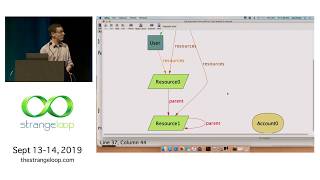
Finding Bugs Without Running or Even Looking at Code
Discover how model checkers like Alloy can find complex bugs and validate architectural proposals without running or viewing code, through formal specifications and simulations of system operations.
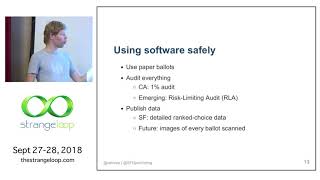
Freeing the Software That Runs Our Elections
Explore open-source software projects for US elections, focusing on San Francisco's initiative. Learn about voting systems, ballot processing, and the advantages of transparent election technology.
The Magical Rebalance Protocol of Apache Kafka
Explore Apache Kafka's hidden protocol for managing work assignments, including leader election and task distribution. Learn its internals, applications, and how to extend it for custom implementations.
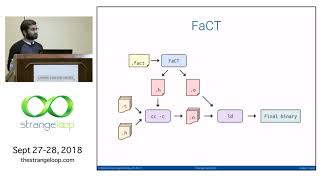
FaCT - A New Language for Constant-Time Programming
FaCT: A new language for writing constant-time cryptographic code, addressing security vulnerabilities in traditional methods. Enables high-level programming constructs while ensuring timing side-channel resistance.
Exploring Conversational Interfaces with Amazon Alexa and Go
Explore conversational interfaces with Amazon Alexa, focusing on platform diversity, best practices, and creating Alexa Skills using Go. Learn about major players and their strengths in this emerging field.
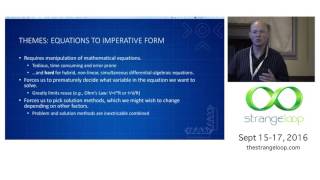
Modelica - Component Oriented Modeling of Physical Systems
Explore component-oriented modeling of physical systems using Modelica, a language for simulating complex devices in various industries. Learn about compilation processes and algorithms.
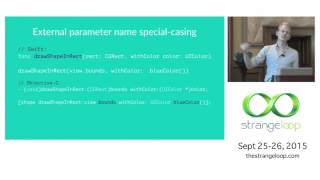
Feet in Both Worlds - From Objective-C to Swift
Explore the transition from Objective-C to Swift, focusing on interoperability challenges, design impacts, and practical adoption strategies in existing codebases.
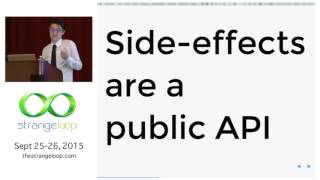
Side Effects Are a Public API
Explore techniques for isolating and representing side effects as intents, improving code testability and maintainability in Python and functional programming paradigms.
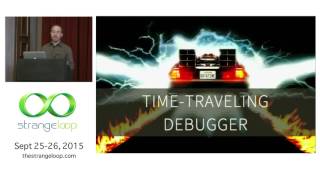
Make the Back-End Team Jealous - Elm in Production
Discover how Elm can revolutionize front-end development, offering reliability, performance, and clean code. Learn to integrate Elm into existing JS projects and explore its unique features and benefits.
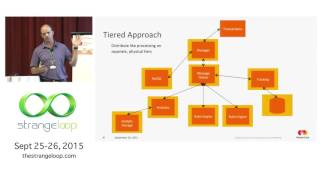
Performance Engineering at MasterCard
Explore high-volume, low-latency performance engineering at MasterCard, covering real-time fraud detection, system architecture, testing strategies, and optimization techniques for millisecond-level transaction processing.
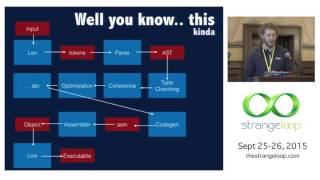
Rustc in Userland
Explore Rust's compiler architecture to build static analysis tools and compilers. Learn to implement a simple LISP and create JIT-like compilers using Rust's codegen machinery.
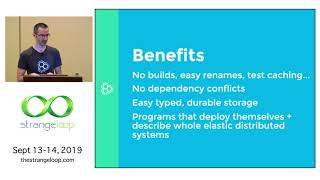
Unison - A New Distributed Programming Language
Explore Unison, a functional language for distributed systems. Learn its unique features, including self-deployment, elastic scaling, and simplified code management for building complex distributed applications.

Myths and Metaphors of Open Source
Exploring myths and metaphors in open source software, examining their impact on perception, value, and funding models for a healthier ecosystem.