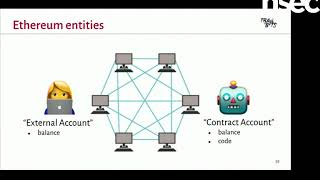
Binary Analysis, Meet the Blockchain
Explore symbolic execution for Ethereum smart contract analysis, addressing technical challenges and introducing Manticore, an open-source tool for enhancing contract security audits.
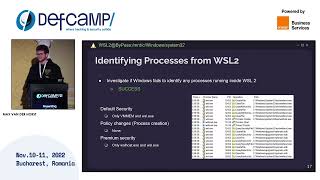
WSL 2 and Security - Productivity Booster or Achilles Heel
Explore WSL 2's security implications: productivity enhancer or potential vulnerability? Gain insights from cybersecurity experts on leveraging this technology safely in your development workflow.
Deanonymization of TOR HTTP Hidden Services
Explore techniques for deanonymizing TOR hidden services, presented by an Application Security Engineer. Gain insights into vulnerabilities and potential risks in anonymous web services.
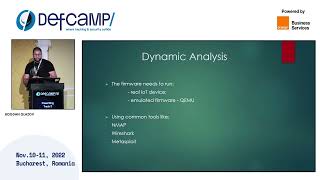
IoT Firmware Analysis
Explore IoT firmware analysis techniques with Bogdan Glazov, Senior Security Researcher. Learn about vulnerabilities, hacking methods, and cybersecurity strategies in the rapidly evolving IoT landscape.
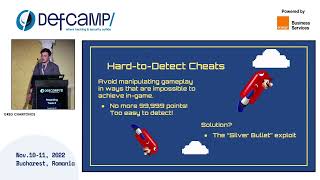
Mario Kart Tour - Owned
Explore vulnerabilities in Mario Kart Tour's network infrastructure, uncovering potential security risks and discussing mitigation strategies for mobile game developers.

The Mind Behind Linux - Linus Torvalds
Linus Torvalds discusses his engineering-focused approach to technology, sharing insights on Linux, Git, and his pragmatic philosophy in this rare interview with TED Curator Chris Anderson.
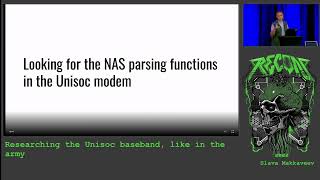
Researching the Unisoc Baseband
Exploring Unisoc baseband security: reverse-engineering and fuzzing LTE protocol stack to uncover vulnerabilities in budget smartphone chipsets, disrupting radio communication.
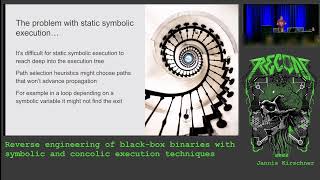
Reverse Engineering of Black Box Binaries with Symbolic and Concolic Execution Technique
Explore symbolic and concolic execution techniques to simplify reverse engineering of complex binaries. Learn to use the angr framework for efficient crackme solving and deobfuscation.
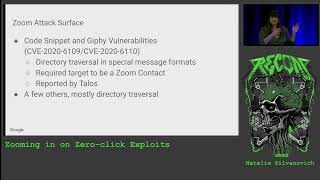
Zooming in on Zero Clicks Exploits
Dive into Zoom's security analysis, exploring reverse engineering challenges, large system understanding, and fuzzing techniques for non-relocatable binaries in video conferencing software.
Instrumenting System Applications on Android Images
Instrumenting Android system apps on stock images using Frida for dynamic analysis. Explores various approaches, their limitations, and a successful method for analyzing Google Play Protect Services.

PreVice - Static Detection of Hooking Capabilities in Machine Code
Explore static analysis techniques for detecting hooking capabilities in Windows executables, including Detours, import, and syscall hooking, with insights from scanning millions of files.
Meet Salinas - The First Ever SMS-Commanded Car Infotainment RAT
Discover how researchers created the first SMS-controlled malware for car infotainment systems, exploring vulnerabilities and potential threats in modern vehicle technology.
Pwning Intel PIN
Exploring vulnerabilities in Intel PIN's dynamic binary instrumentation framework, challenging assumptions of isolation and stealthiness, and demonstrating potential security risks in instrumented programs.
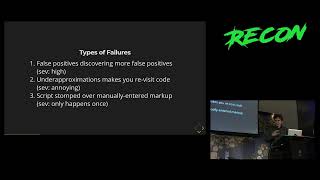
Sum Total of ISA Knowledge - Analyzing Your Binary Analysis Tools
Explore techniques to measure and verify architecture support in binary analysis tools, enhancing firmware reverse engineering through selective application of dynamic analysis methods.
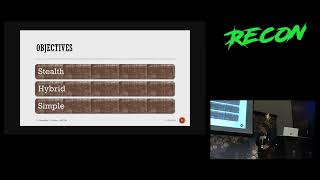
Sandbagility - Reverse Engineering Framework for Windows Dynamic Analysis
Hybrid framework for Windows malware analysis combining dynamic and sandbox approaches. Offers stealthy, adaptive solution to reduce analysis time, demonstrated with WannaCry case study.
Rattle - An Ethereum EVM Binary Analysis Framework
Explore Rattle, an innovative framework for analyzing Ethereum smart contracts, enhancing auditability and security in blockchain interactions through advanced binary analysis techniques.
Under the Hood of Wslink Multilayered Virtual Machine
Análisis detallado de la máquina virtual multicapa Wslink, explorando técnicas de ofuscación avanzadas y presentando un enfoque semiautomático para desobfuscar el malware de forma eficiente.
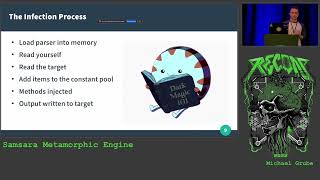
Samsara Metamorphic Engine
Explore Samsara, a viral metamorphic engine for JVM that transforms compiled targets, complicating analysis and enabling supply chain attacks from within IDEs, with added anti-debugging features.
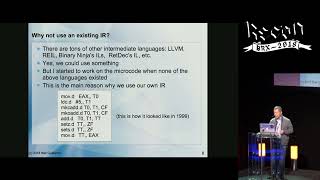
Decompiler Internals - Microcode
Explore the intermediate language used in Hex-Rays Decompiler, its simplicity and power in representing programs, and plans for publication and programmatic access.
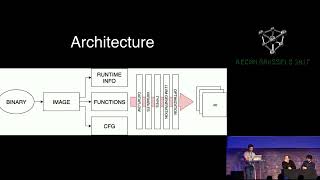
Analyzing iOS Apps - Road from AppStore to Security Analysis Report
Toolset for detecting vulnerabilities in iOS apps: download and decrypt, decompile, statically analyze, and present results. Focuses on high-level semantics reconstruction and common mobile app security flaws.
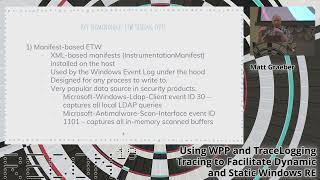
Using WPP and TraceLogging Tracing to Facilitate Dynamic and Static Windows
Explore advanced Windows tracing techniques using WPP and TraceLogging for enhanced dynamic and static analysis in cybersecurity investigations.