AI Engineer Skills for Beginners: Code Generation Techniques
Explore AI code generation techniques using GPT-4, GitHub Copilot, and open-source models. Learn practical skills for data analysis, API integration, and leveraging AI tools in engineering projects.

Using GitHub Actions Environment Variables and Secrets
Learn to use GitHub Actions Environment Variables and Secrets for secure and efficient CI/CD pipelines. Covers workflow, job, and step-level variables, built-in variables, and integrating Snyk for security.

How Architecture and Culture Go Hand in Hand - Evolving Software Architecture
Explore the evolution of software architecture, emphasizing continuous architecture, agile methodologies, and the importance of people skills and open communication in creating collaborative environments.
QEC Demonstrations Leveraging Dynamic Circuits
Explore quantum error correction demonstrations using dynamic circuits, focusing on advancements in fault tolerance and quantum computing applications.
GitOps - Proposing, Promoting, and Reverting Changes
Explore an opinionated GitOps workflow covering change proposals, promotions, and rollbacks. Learn how automatic management of previews and Pull Requests enhances the user experience and solves real-world problems.
Accelerating GitOps Adoption with Flux
Discover how CoreCard implemented GitOps with Flux to enhance developer productivity, security, and consistency in cloud-native microservices development on Kubernetes.

GitOps for Application Authorization in Cloud Native Environments
Explore GitOps for application authorization in cloud-native environments, focusing on best practices, implementation strategies, and security considerations.
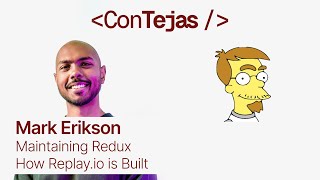
How Replay.io is Built and Maintaining Redux
Explore how Replay.io captures browser interactions for debugging, its architecture, and future features. Gain insights on modernizing legacy codebases and migrating to TypeScript.
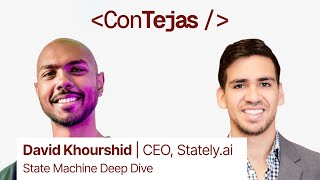
How State Machines Create Robust Software - Deep Dive
Explore XState for robust software development using state machines and actor models. Learn about state charts, AI integration, and practical applications while gaining insights into founding a tech startup.
Setting Up a RAG Demo on NVIDIA AI Workbench - Step-by-Step Tutorial
Step-by-step guide to set up a retrieval-augmented generation (RAG) system using NVIDIA AI Workbench, enabling developers to create AI projects on their local machines without a GPU in about an hour.
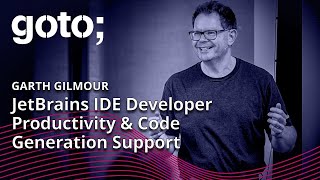
JetBrains IDE Developer Productivity and Code Generation with AI Assistant - GOTO 2024
Explore JetBrains AI Assistant's capabilities in enhancing developer productivity, from regex to microservices, with practical examples and insights on integrating AI into coding workflows.
Hacker Traction Through GitHub Actions - Is Your Open Source Project Safe?
Explore potential security vulnerabilities in GitHub Actions and learn strategies to safeguard open source projects from malicious exploitation.
TDD for Absolute Beginners - RailsConf 2024
Discover a simpler approach to test-driven development, challenging traditional methods and exploring why we follow certain practices in TDD for more effective coding.
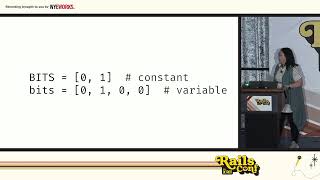
What's in a Name: From Variables to Domain-Driven Design
Explore semantic theory and its impact on naming in software engineering, from variables to domain-driven design. Improve code quality through effective naming practices.

Anthropic's AI Advancements vs OpenAI's Progress - Claude 3.5 Features Demo
Explore Anthropic AI's latest advancements, including Claude 3.5 Sonnet, Artifacts, and developer tools, while comparing its progress to OpenAI's recent developments and demonstrating practical applications.
Fine-Tuning Auto-Instrumentation for Observability
Explore techniques for optimizing automatic instrumentation in observability, focusing on configuration options, practical use cases, and recommendations for tailoring telemetry to specific needs.
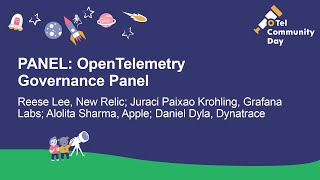
OpenTelemetry Governance Panel
Explore OpenTelemetry governance with industry experts discussing project management, community involvement, and future directions in observability and monitoring.
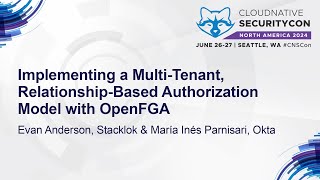
Implementing a Multi-Tenant, Relationship-Based Authorization Model with OpenFGA
Explore implementing multi-tenant, relationship-based authorization using OpenFGA. Learn to model permissions, perform checks, and integrate with identity providers for enhanced security in cloud-native applications.

Empowering Security with Generative AI - Fundamentals and Applications of GPT Models
Explore GPT models' potential in security research, covering semantic searching, few-shot learning, and code generation. Gain insights and inspiration for leveraging AI to empower security teams.
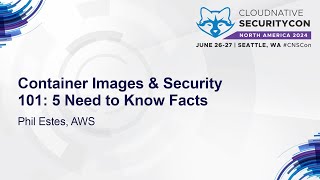
Container Images and Security 101: 5 Need to Know Facts
Explore 5 essential facts about container image formats, security tools, and best practices for confident application deployment in cloud and Kubernetes environments.
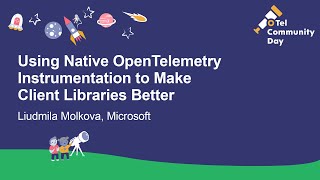
Using Native OpenTelemetry Instrumentation to Make Client Libraries Better
Discover how native OpenTelemetry instrumentation enhances Azure client libraries, optimizing performance and reliability through stress testing and observability insights.