Understanding Weak and Strong Artificial Consciousness
Explores the distinction between simulating and instantiating consciousness, using the free energy principle to analyze the difference between weak and strong artificial consciousness.
A Conscious Agent Model and the Physical World
Explores how consciousness may be fundamental, challenging traditional views of reality and perception through scientific findings and proposing a new framework for understanding the physical world.
Quantum Instrument Models in Cognitive Science
Explores quantum instrument models in cognitive science, explaining non-Bayesian belief updates in the "question order effect" while maintaining response replicability, challenging previous quantum approaches.
Model Templates for Minimal Models of Consciousness
Exploring model templates as a tool for analyzing consciousness theories, focusing on the free energy principle and its application across disciplines.
Consciousness and Free Will - A Physical Hypothesis for Distinguishing Humans from AI
Exploring a physical hypothesis for free will and consciousness based on quantum processes in the brain, distinguishing human cognition from AI through perception of parallel worlds.
Wishful Thinking About Consciousness
Explores three mathematical approaches to consciousness: quantum consciousness, IIT, and large-scale dynamic systems simulation. Analyzes strengths, weaknesses, and alignments to promote high-level dialogue on the hard problem.
Local Friendliness Violations - Experimental Metaphysics and the Nature of the Observer
Exploring quantum mechanics' challenge to local agency and objectivity through experimental metaphysics, with implications for understanding consciousness and the nature of observers.
Are Subjective Measures of Consciousness Reliable?
Exploring the reliability of subjective consciousness measures through introspection types and evaluating the Perceptual Awareness Scale.
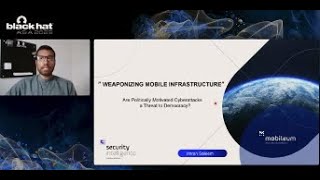
Weaponizing Mobile Infrastructure - Are Politically Motivated Cyber Attacks a Threat to Democracy?
Explore politically motivated cyber attacks on mobile infrastructure and their potential threat to democracy, with insights on cyber resilience against nation-state attacks during conflicts.
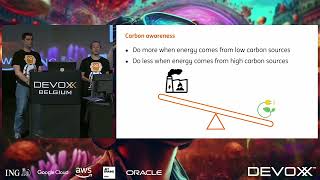
The Fast and the Sustainable - Unleash the Power of Sustainable IT & High Performance Green Code
Explore sustainable IT practices and high-performance green code techniques to optimize software efficiency and reduce environmental impact.
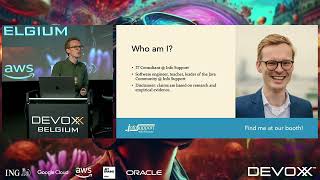
Battling Your Biased Brain
Explore cognitive biases and their impact on decision-making, learning strategies to overcome mental pitfalls and enhance critical thinking skills.
Toward a Carbon Aware Cloud
Explore strategies for reducing carbon emissions in cloud computing, focusing on energy-efficient practices and sustainable infrastructure design.
Wired! How Your Brain Learns New Programming Languages
Explore the cognitive processes behind learning programming languages, enhancing your ability to acquire new coding skills efficiently and effectively.
The Battle of the AI Coding Assistants
Explore the competition between AI coding assistants, comparing their capabilities, strengths, and potential impact on software development.
That Tough But Necessary Conversation With Parents
Julie Lythcott-Haims offers practical advice for teens and young adults on self-discovery, navigating parental expectations, and forging a healthy identity amid the stresses of growing up.
Agile Teams, Agile Talk - Lessons for Workplace Communication
Insights into effective communication in agile teams, highlighting how structured dialogue fosters collaboration, ownership, and inclusion of diverse perspectives in professional settings.
Diversity Through Empathy
Explore the ongoing importance of diversity and gender equality, focusing on empathy and women supporting each other to effect change in deeply rooted stereotypes.

Embracing the Unknown
Explore four principles for thriving in uncertainty: curiosity, risk-taking, accepting change, and self-molding. Learn strategies to navigate unknown possibilities with courage and adaptability.
Creating Design Experiences
Explore the impact of spatial design on emotions and well-being, uncovering how psychology-based interventions shape our built environment and influence daily life.
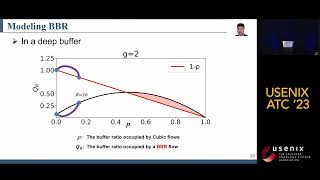
oBBR - Optimize Retransmissions of BBR Flows on the Internet
Optimizing BBR algorithm to reduce retransmissions while maintaining high throughput. Adaptive scaling of in-flight data cap and timely bandwidth estimate updates improve Internet streaming performance.
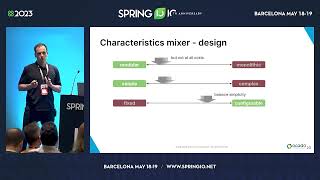
Building Spring Boot Based Modular Libraries for 120 Teams - Our Findings
Insights on developing modular Spring Boot libraries for large-scale use, covering design practices, engineering routines, community building, and lifecycle management.