Faces
Explore primate face recognition, from neural substrates to computational principles, examining face cells, processing systems, and recognition architectures in this comprehensive overview.
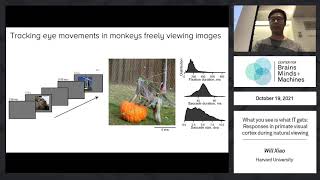
What You See Is What IT Gets - Responses in Primate Visual Cortex During Natural Viewing
Explores primate visual cortex responses during natural viewing, revealing how neurons in the interior temporal cortex react to faces and repeated fixations, providing insights into our stable visual perception.
Faces and Social Interactions
Explore primate social intelligence, face perception, and neural mechanisms behind facial recognition and social interactions.
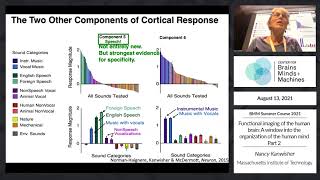
Functional Imaging of the Human Brain- A Window into the Organization of the Human Mind
Explore brain imaging techniques, functional specialization, and neural networks in understanding human cognition. Insights on face recognition, predictive models, and the organization of mental processes.
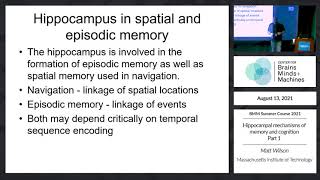
Hippocampal Mechanisms of Memory and Cognition - Part 1
Explore hippocampal mechanisms underlying memory and cognition, including structure, storage, retrieval, brain oscillations, and spatial firing patterns.
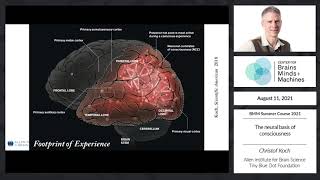
The Neural Basis of Consciousness
Explore the neural foundations of consciousness, examining brain structures and theories with neuroscientist Christof Koch in this thought-provoking lecture.
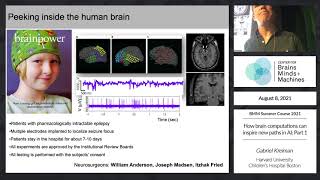
How Brain Computations Can Inspire New Paths in AI - Part 1
Explore how brain computations inspire AI advancements, covering visual illusions, neural connectivity, and deep learning networks to uncover new paths in artificial intelligence research.
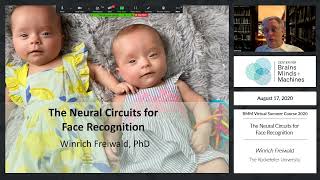
The Neural Circuits for Face Recognition
Explore neural circuits for face recognition, including a newly discovered temporal pole region. Learn about face processing systems, computational principles, and their implications for visual intelligence.
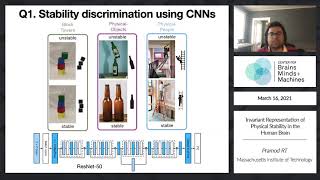
Invariant Representation of Physical Stability in the Human Brain
Explore how the human brain represents physical stability, from infant intuition to neural computations, and its applications in robotics and computer vision.
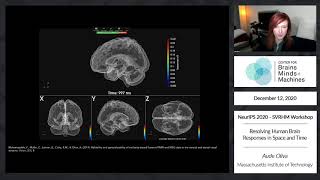
Resolving Human Brain Responses in Space and Time
Explore cutting-edge techniques for mapping brain responses, uncovering insights into visual and auditory perception, memory, and cognitive processes.
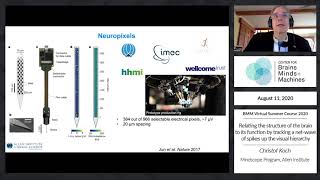
Relating the Structure of the Brain to Its Function by Tracking a Net-Wave of Spikes
Explore brain structure-function relationships through spike tracking in the visual hierarchy, using advanced techniques like neural pixels and high-resolution 3D atlases.
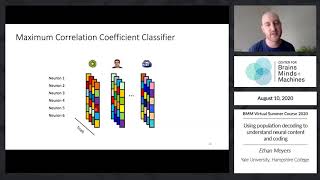
Using Population Decoding to Understand Neural Content and Coding
Explore neural population decoding to uncover abstract representations in the brain, analyzing experiments on invariance and information processing in visual cognition.
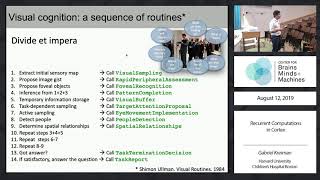
Recurrent Computations in Cortex
Explore recurrent computations in the brain's cortex, focusing on visual processing, neural networks, and cognitive models to understand human perception and cognition.
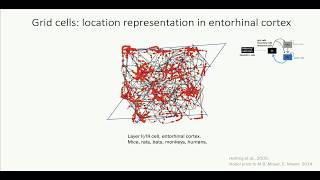
Circuitry and Mathematical Codes for Navigation in the Brain
Explore neural circuits and mathematical codes underlying animal navigation, focusing on computational problems and spatial representations in the brain.
Pattern Separation and Completion in Subregions of the Hippocampus
Explore cognitive map theory, pattern separation, and memory processes in the hippocampus with insights from neuroscientific research and computational models.
Eocene K - Chumstick Basin with Matt McClincy & Erin Donaghy
Explore the Eocene geology of the Chumstick Basin with experts, discussing sedimentary layers, dating techniques, and research findings. Gain insights into North Cascades geology and environmental work.

Environmental Science - Introduction
Explore environmental science fundamentals, including natural resources, population impacts, sustainability, and the scientific method. Learn to differentiate environmental science from environmentalism.
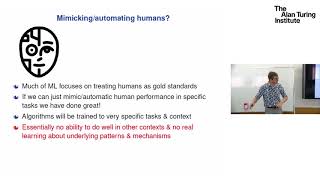
Beyond Tech - Machine Learning in Science & Policy - Professor David Dunson, Duke
Exploring machine learning applications beyond tech, highlighting challenges in science and policy. Discusses fair algorithms, interpretable models, and the need for targeted methods in complex domains.
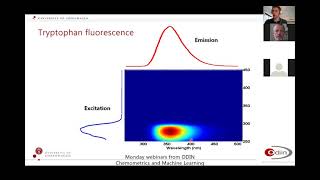
Fluorescence in One Hour
Explore fluorescence spectroscopy's principles, applications, and limitations. Learn about factors affecting signals, measurement techniques, and data analysis methods for sensitive compound detection.
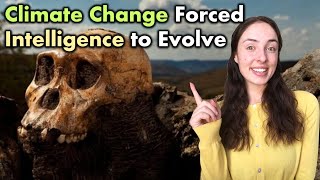
Neogene Life and Human Evolution from Early Apes to Australopithecus to Homo
Explore Neogene life and human evolution, from early apes to Australopithecus and Homo. Learn about key evolutionary events, environmental changes, and the development of human traits like bipedalism and tool use.
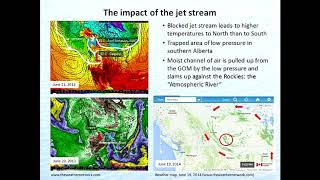
The 2013 Alberta Flood: Causes and Consequences
Exploration of the 2013 Alberta flood's causes, impacts, and geological consequences, with insights on future flood prevention and management strategies.