Chromatin 'Readers' as Molecular Architects in Shaping Metabolic Landscape
Explore chromatin 'readers' as molecular architects shaping metabolic landscapes, delving into interdisciplinary aspects of chromatin organization and gene regulation.
AI-based Chromatin Imaging Biomarkers in Health and Disease
Explore AI-based chromatin imaging biomarkers and their applications in health and disease. Gain insights into cutting-edge techniques for analyzing chromatin organization and gene regulation.
Genome Organization and Regulation: Chromatin Domains, Boundaries and Epigenetics
Explore chromatin organization and gene regulation through advanced genomics, microscopy, and single-cell measurements. Gain insights into 4D genetic code arrangement and epigenetic influences on gene expression.
Super-silencer Perturbation by EZH2 and REST Inhibition Leads to Large Loss of Gene Repression
Explore chromatin organization and gene regulation through EZH2 and REST inhibition, focusing on super-silencer perturbation and its significant impacts.
H3S10p Preserves Interphase Memory by Compaction of Active Chromatin in Mitosis
Explore how H3S10p compacts active chromatin during mitosis, preserving interphase memory. Gain insights into chromatin organization and gene regulation mechanisms.
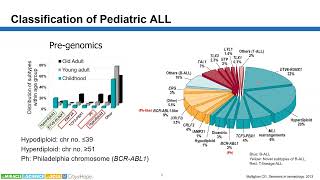
Deconvoluting the Heterogeneous Signatures of B-cell Acute Lymphoblastic Leukemia
Explore genomic signatures of B-cell acute lymphoblastic leukemia subtypes and their impact on classification, diagnosis, and treatment strategies for improved patient outcomes.
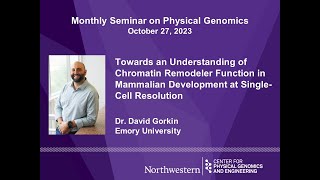
Towards an Understanding of Chromatin Remodeler Function in Development at Single-Cell Resolution
Explore chromatin regulators' role in mammalian development and human disorders through single-cell analysis of mouse knockouts, uncovering developmental impacts and gene networks.
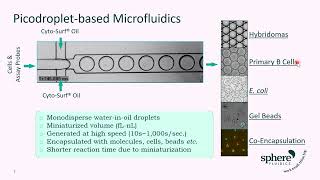
Picodroplets Enabling High Throughput Single Cell Screening and Isolation
Explore high-throughput single cell screening and isolation techniques using picodroplets. Learn about innovative technologies advancing cellular biology research and disease mechanism understanding.
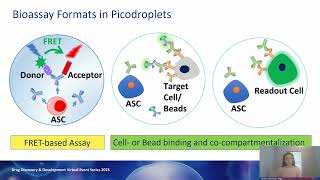
Novel Bioassays in Picodroplets for Single-Cell Analysis
Explore microfluidic devices for high-throughput bioassays using picodroplets as miniaturized test tubes, revolutionizing drug discovery and preclinical development with efficient single-cell analysis techniques.
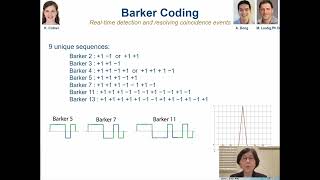
Node-Pore-Sensing: A Versatile Method to Phenotype Cells
Explore Node-Pore Sensing, an innovative electronic method for cell phenotyping. Learn how this technique measures cell properties and distinguishes sublineages in human mammary epithelial cells.
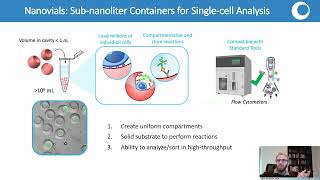
Linking Single-Cell Function to Multi-omic Analysis Using 'Lab on a Particle' Technology
Explore innovative 'Lab on a Particle' technology for single-cell analysis, linking cell function to multi-omic data. Learn about hydrogel microparticles for cell capture and secretion analysis in various applications.
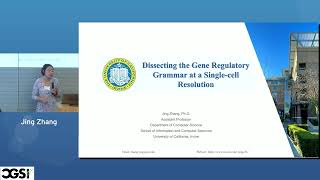
Dissecting the Gene Regulatory Grammar at a Single Cell Resolution
Explore gene regulatory mechanisms at single-cell resolution. Discover cutting-edge techniques for analyzing multimodal data and constructing regulatory networks in genomics research.
Meta Flow Matching - Integrating Vector Fields on the Wasserstein Manifold
Explore advanced flow-based modeling techniques for predicting biological system dynamics, focusing on population-level evolution and personalized medicine applications using Graph Neural Networks.
Machine Learning for Single-Cell 3D Epigenomics
Explore machine learning techniques for analyzing single-cell 3D epigenomics, focusing on genome structure and integrative Hi-C analysis methods for advanced biomedical research.
Contextual AI Models for Single-cell Protein Biology
Explore PINNACLE, a geometric deep learning approach generating context-aware protein representations for enhanced understanding of protein function and interactions across biological contexts.
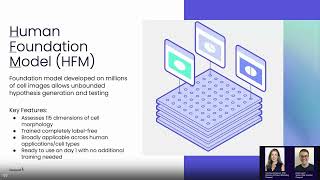
Introducing REM-I: Deepcell's AI-Powered Instrument for Single Cell High-Dimensional Morphology Analysis
Explore AI-powered single-cell morphology analysis with REM-I, combining high-resolution imaging and deep learning for comprehensive cellular insights.
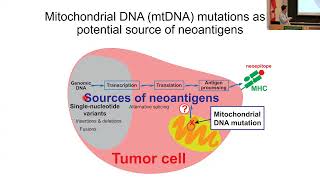
How to Generate New Hypotheses and Research Directions by Single-Cell Data Analysis
Discover advanced techniques for analyzing single-cell data to develop innovative research hypotheses and explore new directions in cancer research and mathematical oncology.

Microbial Metabolism in Acidic Brines of Western Australia
Explore microbial metabolism in acidic brines of Western Australia, examining water activity limits, single-cell analysis, and implications for astrobiology and Mars analogs.
Spatial Modeling of Single-Cell Data Using Deep Learning
Explore deep learning approaches for spatial modeling of single-cell data, focusing on Hi-C reads imputation and transcriptomic data prediction through graph-based methodologies.
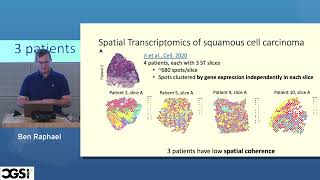
Alignment, Integration, and Modeling of Spatial Transcriptomics Data
Explore alignment, integration, and modeling techniques for spatial transcriptomics data, focusing on innovative approaches to analyze gene expression patterns in tissue samples.
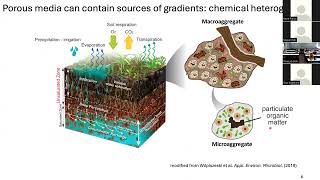
Microbial Behavior in Porous Media: Hydrodynamics Control on Bacterial Chemotaxis and Biofilm Morphogenesis
Explore microbial behavior in porous media, focusing on bacterial chemotaxis and biofilm formation. Discover how fluid flow and chemical landscapes impact microbial life and applications in bioremediation and biomineralization.