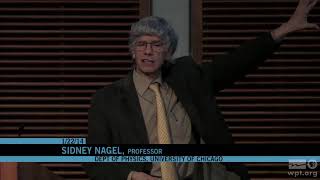
The Life and Death of a Drop - C4 Public Lectures
Explore the fascinating physics of droplet formation, breakup, and splashing, revealing surprising insights into fluid dynamics and their importance in nature and everyday life.
Demonology - Intelligence in Physics & Biology
Explore the historical role of intelligence in physics and biology, from Laplace's demon to modern information theory, and its implications for understanding natural phenomena.
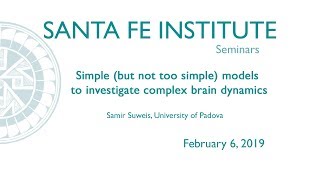
Simple - But Not Too Simple - Models to Investigate Complex Brain Dynamics
Exploring brain dynamics through simple models, linking structural and functional networks, and investigating criticality in neural systems for clinical applications and cognitive state transitions.
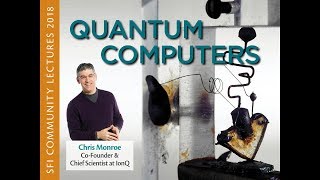
Quantum Computers - Christopher Monroe
Explore quantum computing's potential through atomic-based architecture, addressing challenges and possibilities in scaling this technology for practical applications and societal impact.
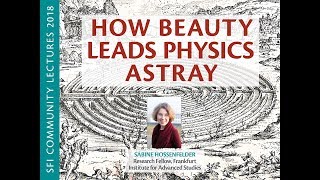
How Beauty Leads Physics Astray
Explore how physicists' reliance on beauty in theory development has led to stagnation, failed experiments, and a crisis in the field, with insights on moving forward.
IP Fest 2018: Autonomous Ecosystems
Explore the complexities of self-sustaining ecosystems, planetary habitability, and ecological design in this panel discussion featuring experts from diverse fields. Gain insights into the challenges of creating autonomous ecosystems.
Origins of Life in Space
Explore the origins of life in space with experts Caleb Scharf and Chris Kempes, discussing planetary models, the Drake Equation, and the probability of extraterrestrial life.
Estimating Indirect Effects in a Wild and Anti-Social Mammal
Exploring indirect genetic effects in wild red squirrels, examining how spatial and temporal neighbors influence phenotypes and potential evolutionary impacts in varying population densities.
Tokens and Complex Systems - Part 1
Explore complex systems, tokenized ecosystems, and AI DAOs. Learn how blockchains function as life forms and democratize AI access. Discover evolutionary algorithms in token design and agent-based systems for simulation.
Fluid Mechanics of the Cardiovascular System - Interesting, Impossible Problems in Bio, Phys, & Math
Explore cardiovascular fluid mechanics, its impact on health, and challenges in modeling complex systems. Discover research on cell responses, oxygen transport, and nanoparticle dynamics in blood vessels.
Complex Time - Hallmarks of Biological Failure
Explore biological failure through interdisciplinary perspectives, examining hallmarks, causes, and potential interventions in aging and disease processes across species and systems.
Preventing the Next Pandemic
Network epidemiology: using complex systems science to uncover contagion drivers, identify transmission hotspots, detect emerging threats early, and optimize strategies for vaccines, antivirals, and social distancing interventions.
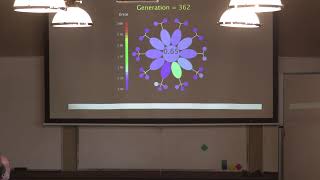
Modelling the Role of the Microbiome in Evolution
Explore how microorganisms influence multicellular evolution, adaptability, and biological functions. Learn about holobiont fitness, specialized diversity, and the emergence of complex organisms through coevolution.
ECoG Dog's Dream - Electroencephalosophy and Critical Neurophysiology
Explores limitations of scalp EEG for mind reading, proposes ECoG as superior alternative, and discusses potential for groundbreaking advancements in neuroscience through implantable high-density wireless ECoG systems.
Zen and the Art of Space Exploration
Explore the physical and psychological challenges of extreme feats, from polar expeditions to space missions, with insights from adventurers and experts on preparation, risks, and mindset.
Engineering Crypto-Economies Through the Lens of Complex Systems
Explore cryptoeconomics through complex systems, covering agent-based modeling, game theory, and optimization. Includes live demo of DAO simulation based on Ising model in statistical mechanics.
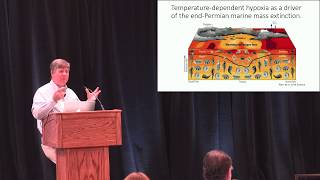
The Collapse of Ecosystems
Explore ecosystem collapse through the lens of mass extinctions, focusing on the End-Permian event and its aftermath. Gain insights into biodiversity patterns and ecological dynamics.
Sara Walker on the Physics of Life and Planet-Scale Intelligence
Exploring the physics of life, planetary intelligence, and the nature of information. Delves into cutting-edge research on origins of life, assembly theory, and expanding our understanding of living systems across scales.
Complex Conceptions of Time Panel Discussion - InterPlanetary 2022
Explore complex conceptions of time with experts discussing representations, models, and observations of time, from classical theories to future possibilities and time travel.
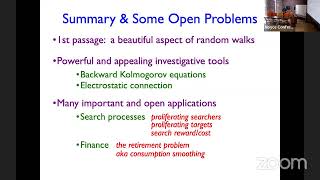
First-Passage Processes in Physics and Beyond
Explore first-passage processes in physics and their applications, from diffusion equations to extreme value statistics and convection. Gain insights into stochastic hunting and open problems in the field.
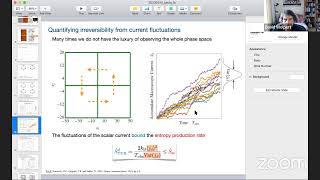
Irreversibility of Biological Active Matter
Explore the fascinating world of biological active matter, focusing on irreversibility in living systems and its implications for understanding complex dynamics and nonreciprocal behaviors.