Structure-Independent Peptide Binder Design via Generative Language Models
Explore innovative peptide design techniques using generative language models for targeting undruggable proteins, with applications in disease treatment and protein modulation.
Multimodal Deep Learning for Protein Engineering
Explore multimodal deep learning for protein engineering, covering sequence-based models, structural approaches, and biophysical features to predict and generate functional proteins.
Systematic Analysis of Biomolecular Conformational Ensembles with PENSA
Explore biomolecular conformational ensembles using PENSA. Learn systematic analysis techniques, featurization methods, and state-specific information quantification for efficient molecular mechanism determination.
Molecular Representations for Drug Discovery
Explore molecular representations for drug discovery, covering QSAR modeling, latent chemistry representations, bioactivity modeling, and de-novo design with phenotypic screens.
Molecular Modeling of Complex Biological Systems
Explore molecular modeling techniques for complex biological systems, focusing on chromatin dynamics, DNA methylation effects, and histone tail modeling. Learn to predict system responses to modifications and mutations.
Learning Quantum Mechanics Using Embedding, Symmetric Polynomials and Composition
Explore quantum mechanics through embedding, symmetric polynomials, and composition. Gain insights into molecular dynamics, atomic cluster expansion, and catalysis with practical demonstrations.
Characterization and Modeling of Compound Flooding Events and Their Environmental Impacts
Explore compound flooding events, their environmental impacts, and advanced modeling techniques for coastal hazard assessment and mitigation strategies.
Interpretation from Space: Salt Tectonics and Deposition in Iran Using Remote-Sensing Imagery
Explore salt tectonics and deposition in Iran through remote-sensing imagery, revealing unique geological structures and modern depositional systems as analogs for ancient formations.
Perfect Storms: A Regional Earth System Modeling Platform for Coastal Hazards in the Gulf of Mexico
Explore a Regional Earth System Model for Gulf of Mexico coastal hazards, integrating atmospheric, oceanic, and river processes to analyze and manage climate-related disasters.
Modeling Nearshore Stratigraphic Response to Structural Deformation
Explore nearshore stratigraphic evolution due to tilting using coupled landscape-stratigraphic models. Discover how sediment supply and tectonic forces shape basin-margin facies and depositional patterns.
An Overview of WGRFC Capabilities - Weather, Hydrology, and Communication in River Forecasting
Explore weather forecasting and hydrology concepts used by the West Gulf River Forecast Center to provide accurate and timely forecasts for public safety.
Sediment Transport over Complex Salt Topography: Fill and Spill Revisited
Explore sediment transport in complex salt topographies, focusing on 3D structural analysis and evolving spill points. Gain insights into predicting facies arrangements and reservoir connectivity.
Composite Confining Systems: Rethinking Petroleum Seals for CO2 Storage
Explore composite confining systems for CO2 storage, offering ultra-secure storage through dispersal and attenuation of CO2. Learn about rethinking traditional petroleum seals for climate change mitigation.
Geological Net Zero: How We Will Stop Fossil Fuels from Causing Global Warming
Explore geological net zero's role in halting global warming, rethinking fossil fuel industry obligations, and achieving Paris Agreement goals through carbon capture and storage.
Statistics and Attributes of Earthquakes Across Texas
Explore Texas earthquake patterns, causes, and risks across major basins, examining man-made seismicity, injection types, and geological factors influencing unexpected seismic events.
Structural Geology and Crustal Evolution of the Sierra Madre Oriental During the Mexican Orogeny
Explore the structural geology of Mexico's Sierra Madre Oriental, examining crustal evolution, folding processes, and tectonic implications during the Mexican Orogeny between 80-47 Ma.
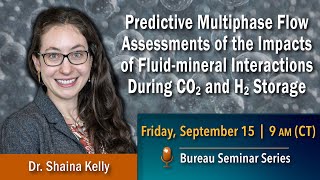
Predictive Multiphase Flow Assessments of Fluid-Mineral Interactions During CO2 and H2 Storage
Explore multiphase flow assessments for CO2 and H2 storage, combining experimental and numerical methods to evaluate fluid-mineral interactions and petrophysical implications in various rock types.
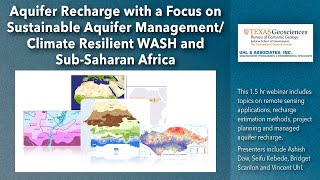
Aquifer Recharge and Sustainable Aquifer Management - Climate Resilient WASH and Sub-Saharan Africa
Explore sustainable aquifer management techniques for climate-resilient water systems in Sub-Saharan Africa, focusing on recharge methods and long-term sustainability.
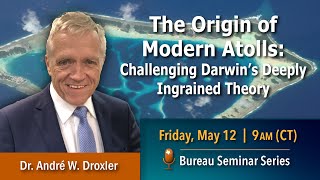
The Origin of Modern Atolls: Challenging Darwin's Deeply Ingrained Theory
Explore the evolution of atoll formation theories, challenging Darwin's model with new insights on Quaternary glaciations, karst processes, and sea-level fluctuations in reef development.
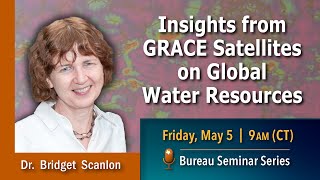
Insights from GRACE Satellites on Global Water Resources
Explore GRACE satellite data's impact on global hydrology, revealing water storage changes, groundwater depletion, and climate-human interactions. Learn how this technology influences water policy worldwide.
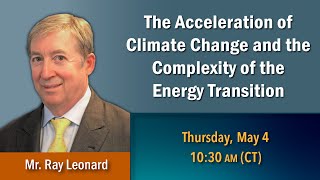
The Acceleration of Climate Change and the Complexity of the Energy Transition
Explore the acceleration of climate change, its impacts, and the complexities of energy transition. Gain insights into future climate scenarios and potential solutions for mitigating global warming effects.