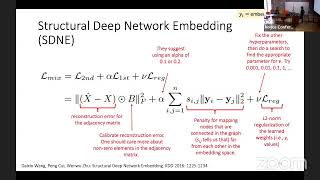
Trustworthy Network Science - Measuring Instability and Reliability in Data Algorithms
Explore network science methodologies, focusing on measuring instability, data algorithms, embedding methods, and reliability metrics for robust analysis and insights.
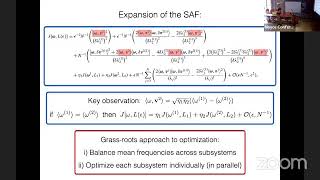
Practical Questions and Unexpected Answers in Network Synchronization - Optimization and Control
Explore network synchronization optimization and control, covering cardiac pacemakers, E. coli cell cycles, and Kuramoto oscillators. Discover strategies for optimal network structures and frequency-synchronized states.
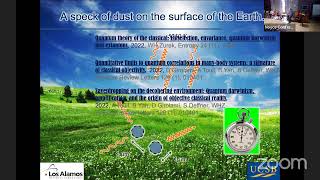
Quantum Theory of the Classical
Explore the intriguing intersection of quantum mechanics and classical physics, delving into how quantum principles shape our understanding of everyday phenomena and macroscopic objects.
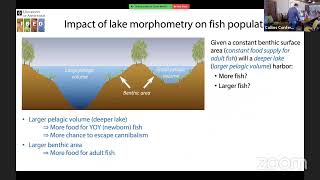
The Effects of Intergenerational Conflict on Ecological and Evolutionary Dynamics
Explore intergenerational conflict's impact on ecological and evolutionary dynamics, examining management strategies, adaptive dynamics, and conservation efforts in marine ecosystems.
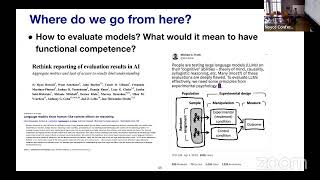
Formal and Functional Competence in Large Language Models - A Cognitive Perspective
Explore cognitive perspectives on large language models, examining formal and functional competence, linguistic confidence, and implications for AI development and evaluation.
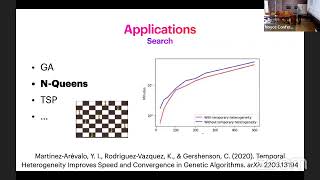
Heterogeneity and Temporal Balance in Complex Systems
Explore dynamics, heterogeneity, and complexity in systems through Random Boolean Networks, examining effects on stability, antifragility, and functional diversity.
The Future of Physics
Exploring physics beyond fundamental laws: designing new forms of matter and addressing Anthropocene challenges. Insights into the evolving landscape of physics research and its societal implications.
Is Mathematics Obsolete?
Explore the evolving role of mathematics in the age of AI and computational power, examining its relevance and potential obsolescence in modern scientific inquiry.
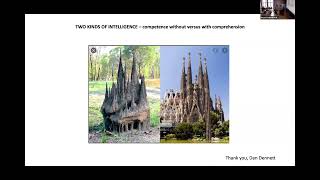
What Understanding Adds to Cambrian Intelligence - A Taxonomy
Explore the intersection of understanding and intelligence with John Krakauer, delving into a taxonomy that enhances our perspective on cognitive processes and artificial intelligence.
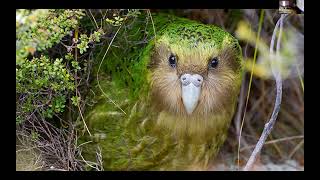
Dimensions of Meaning and Understanding - Raphaël Millière
Explore dimensions of meaning and understanding, from lexical semantics to complex reasoning, with insights on knowledge acquisition and cognitive pitfalls.
Meaning Through Modeling
Explore how modeling can create meaning and understanding in complex systems, with insights from Zenna Tavares on innovative approaches to scientific inquiry and knowledge representation.
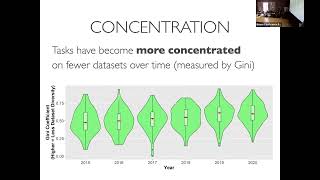
Deconstructing the Barrier of Meaning
Explore the concept of meaning and its barriers with Jacob Foster in this thought-provoking talk, delving into complex ideas and their implications for understanding our world.
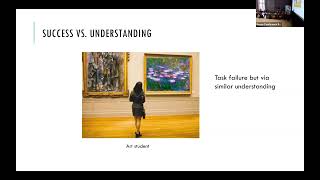
How Do We Know What an Animal Understands?
Explore animal cognition and communication through innovative research methods, uncovering insights into how non-human species perceive and interact with their world.
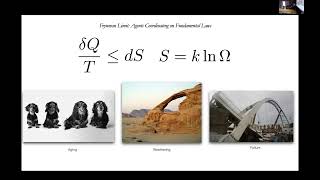
Feynman, Shannon, and Darwin Worry About Understanding
Explore how Feynman, Shannon, and Darwin's ideas intersect in the pursuit of understanding complex systems and scientific knowledge.
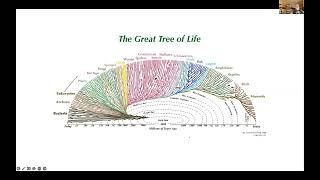
The Evolution of Understanding on Several Levels
Explore the evolution of understanding across multiple levels with philosopher Dan Dennett, delving into complex concepts and their implications for human knowledge and cognition.
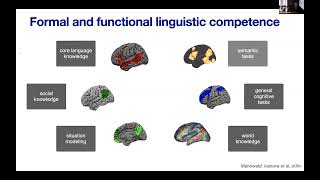
Language Understanding Goes Beyond Language Processing
Explore how language comprehension extends beyond traditional processing, delving into cognitive mechanisms and neural networks that shape our understanding of communication and meaning.
Community Detection and Data Topology in Network Science
Exploring network science and mathematical approaches to uncover hidden structures in complex data. Discusses community detection, data topology, and applications in social networks and opinion dynamics.

What Makes a Reaction Network "Chemical"?
Explore the fundamental principles of chemical reaction networks, from basic concepts to modern applications, emphasizing reversibility, conservation, and complex systems.
Balance, Criticality, and Antifragility in Complex Systems
Explore complex systems thinking and its philosophical implications with Carlos Gershenson. Delve into balance, criticality, antifragility, and the intersections between Eastern and Western philosophical traditions and modern scientific concepts.
Complex Conceptions of Time - Exploring Scientific and Literary Perspectives
Exploring time through physics, philosophy, and science fiction. Experts discuss metaphors, mathematical concepts, and narrative approaches to understanding time, challenging conventional perceptions and exploring its complexities.
The Neuroscience and Philosophy of Curious Minds - Exploring Curiosity as a Network Phenomenon
Exploring curiosity as a networked phenomenon, bridging neuroscience and philosophy to reframe how we understand desire, wonder, and discovery in both the brain and society.