
Music, Brain, and Networks: A Search for Universality
Explore the intersection of music, neuroscience, and complex systems with experts discussing universal features and evolutionary perspectives across cultures.
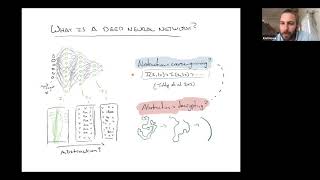
Swimming Without a Lifeguard in the Ocean of Ideas - Abstraction and Unsupervised Deep Learning
Explore unsupervised deep learning techniques for discovering hierarchical latent feature spaces, improving interpretability and performance in downstream tasks, and bridging neural and symbolic learning systems.
Andromeda Strain and the Meaning of Life - Part 8: Searching for Extraterrestrial Life
Explore astrobiology, life detection, and the origins of life with experts Jeremy England and David Krakauer in this thought-provoking discussion on extraterrestrial life and its implications for our understanding of existence.
Andromeda Strain and the Meaning of Life: Searching for Extraterrestrial Life - Part 6
Explore the search for extraterrestrial life with experts Lee Cronin and Pete Worden, discussing detection methods, potential locations, and tools for identifying life in the universe.
Testing Our Way Out of COVID-19: A Bumpy but Possible Path Forward
Explore how frequent, widespread testing with lower sensitivity could dramatically reduce COVID-19 spread and potentially end the pandemic while reopening the economy.
Time Scales and Tradeoffs in Crisis Management - Daniel Schrag Excerpt
Exploring tradeoffs between health, economics, and environment during COVID-19, with insights on managing complex, multi-timescale challenges for coordinated solutions and crisis mitigation.
Time Scales and Tradeoffs in Crisis Management - An Excerpt
Exploring tradeoffs in pandemic response: balancing health, economics, and long-term impacts. Insights on managing complex challenges across different time scales, drawing from climate science, network dynamics, and global policy.
Epidemic Spread Through Segregated Spaces - Racial Disparities in COVID-19
Explore racial disparities in COVID-19 impact, examining structural factors and spatial segregation. Learn how to improve epidemic models by incorporating multi-scale spatial interactions and socio-economic factors.
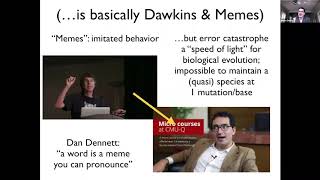
Explosive Proofs of Mathematical Truths
Explore how mathematical proofs achieve certainty through network structure, enabling explosive emergence of belief even under skepticism. Data science analysis reveals insights into proof validity and mathematical reasoning.
Complexity as Seen Through Modern Statistical Mechanics - New Perspectives
Explore nonextensive statistical mechanics and its applications in studying complex systems across various fields, with insights from Constantino Tsallis on recent developments and q-triplets.
Mutualistic Networks: Moving Towards a Predictive Theory
Explore predictive theories for plant-pollinator networks, including foraging preferences, invasion impacts, and drought responses. Brief insight into integrating human dynamics in ecological food-web models for fisheries.
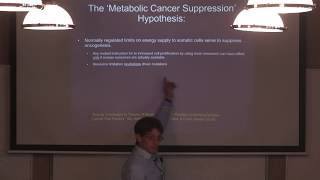
Does the Ecology of Somatic Tissue Normally Constrain Cancer Evolution?
Exploring how energy supply to tissues affects cancer evolution, proposing that normal physiological limits on cellular energy may suppress oncogenesis, with implications for cancer risk factors and prevention.
Networks, Complexity, and Disease Dynamics
Explore the intricate relationship between network structures, complex systems, and the spread of diseases in this insightful seminar by Dirk Brockmann from Humboldt University.
Projects in Time Series Analysis - Chaos Detection with Persistent Homology and Process Monitoring
Explore chaos detection in time series using persistent homology and process monitoring techniques, with applications in complex systems analysis and data-driven decision making.
Loss of Self-Organization in Earth's Climate
Análisis de cambios en la autorregulación del clima terrestre mediante herramientas de sistemas complejos, comparando datos de temperatura global con el modelo Daisyworld.

Olivia Judson on Major Energy Transitions in Evolutionary History
Explore major energy transitions in evolutionary history with Olivia Judson, examining how life's processes shaped Earth's atmosphere, ecosystems, and geological features over billions of years.
Swarming Across Scales - From Robotic Swarms to Nanoparticles
Explore swarm intelligence and its applications in robotics, medicine, and engineering. Learn how simple rules create complex behaviors, revolutionizing technology across various fields.
On Coronavirus, Crisis, and Creative Opportunity
Exploring how crises reshape opportunities, this talk examines evolutionary strategies for navigating disruptions and the potential for innovation amidst catastrophe in a post-coronavirus world.
Halting the Spread of COVID-19 - Network Epidemiology and Containment Measures
Network epidemiology insights on COVID-19 spread, discussing contagion across scales, co-infections' impact, and evidence supporting containment measures. Explores complexities of pandemic modeling and intervention strategies.
The Origins of Life - From Darwin's Warm Little Pond to Modern Theories
Explore theories on life's origins with experts discussing abiogenesis, evolutionary processes, and the implications for interplanetary exploration and our understanding of life itself.

After the First Wave - Strategies for Public Health and Economic Recovery Post-COVID-19
Experts discuss strategies for public health and economic recovery post-COVID-19, exploring testing, modeling, interventions, and balancing epidemiological and economic concerns for future pandemic waves.