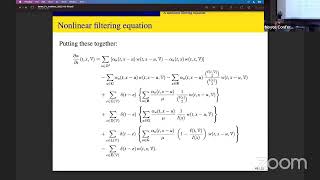
Phylodynamics and Markov Genealogy Processes
Explore phylodynamics and Markov genealogy processes to infer disease transmission from genomic data. Learn about a unified approach using exact likelihood expressions and dynamic genealogy evolution.
On the Shape of Epidemics
Explore the patterns and dynamics of epidemic spread, examining factors that influence their shape and progression through populations.
Sci-Fi Science and Complex Systems - Exploring Alien Civilizations
Explore the intersection of sci-fi and science as researchers model a three-parent alien civilization, discussing societal implications, speculative research, and the impact of small changes on complex systems.
Canopy Biology and Human Societies - Lessons from Treetops to Urban Jungles
Explore canopy biology's insights into ecosystem diversity and human societies. Discover how structural ecology in treetops reveals lessons for urban life and the organization of super-organisms like ant colonies and human groups.
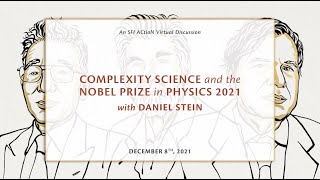
Complexity Science and the Nobel Prize in Physics 2021
Explore Parisi's groundbreaking work on spin glasses and its impact on understanding complex systems across physics, biology, and computer science, from atomic to planetary scales.
Prim Dreams of Order vs. Messy Vitality in Economics, Math, and Physics - Part 2
Exploring the limitations of algebraic theory in economics and advocating for algorithmic approaches to capture the evolving nature of innovation and exchange in complex systems.
Thoughts on Rational Inference - Is Information Theoretic Inference Rational?
Exploring rational inference approaches for incomplete information in complex sciences. Discusses defining and implementing rational methods, handling misspecifications, and addressing model uncertainty and robustness.

Comparative Canopy Biology and the Structure of Ecosystems
Explore the emerging field of comparative canopy biology, its challenges, and potential for understanding ecosystem structures across various biological communities, from forest canopies to periphyton.
Time Scales and Tradeoffs in Crisis Management - SFI Flash Workshop
Exploring complex tradeoffs in COVID-19 response: balancing health, economics, and long-term impacts. Experts discuss managing conflicting timescales and applying insights from climate science and sustainability to navigate the crisis.
Geoffrey West on Scaling, Open-Ended Growth, and Accelerating Crisis/Innovation Cycles
Geoffrey West explores scaling laws in cities, discussing how urban environments amplify human creativity and challenges, and examines the accelerating cycle of crisis and innovation driving our global economy towards potential peril.
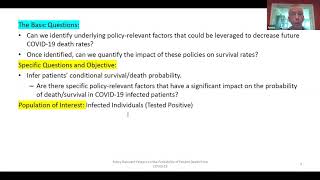
Effect of Universal TB Vaccination and Other Factors on Probability of Patient Death from COVID-19
Explore how universal TB vaccination, air pollution, and health expenditure impact COVID-19 survival rates across countries, with quantified probability changes by age and sex using information-theoretic methods.
Scaling Laws and Social Networks in the Time of COVID-19 - Part 1
Exploring scaling laws in biology, cities, and economies, and their implications for societal challenges like pandemics and sustainability. Insights from complex systems science for understanding human civilization.
Better Scientific Modeling for Ecological and Social Justice
Exploring how mathematical models can encode blind spots and create externalities, emphasizing the need for rigorous empiricism to achieve ecological and social justice through better scientific modeling.
The Future of the Economy - Technology Evolution and AI Impact
Exploring technology's evolution through biology, this talk examines how AI reshapes labor and finance, offering insights into designing human systems that align with physical and biological laws.
Mimicking Simple Life Without Biochemistry
Explore the creation of life-like chemical systems exhibiting growth, replication, and evolution through non-biochemical processes, offering insights into artificial biology and early Earth proto-life formation.
Artificial Intelligence: What We Still Don't Know - Melanie Mitchell
Explore AI's challenges, limitations, and future potential with computer scientist Melanie Mitchell. Delve into fundamental questions about intelligence, cognition, and the intersection of technology and human understanding.

Data Art and the Future of Science Communication
Explore data art's role in science communication with Kirell Benzi. Learn how visual representation enhances understanding, bridges disciplines, and shapes the future of scientific dissemination.
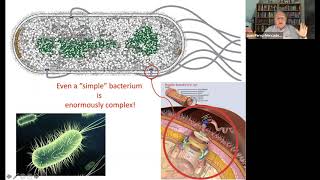
The Physical Constraints on Life and Evolution
Explore how physics and scale shape biological evolution, from bacterial structures to complex organisms, revealing universal constraints and evolutionary strategies that apply to both life and human institutions.
The Future of the Economy - Technology Evolution and AI Impact
Exploring technology's evolution through biology, this talk examines how AI reshapes labor and finance, offering insights into designing human systems that align with physical and biological laws.
Social and Economic Networks - Understanding Power, Beliefs, and Behaviors
Explore how social networks shape power, beliefs, and behaviors, and their impact on information spread, economic resilience, and societal structures with Stanford economist Matthew Jackson.
Metabolic Scaling in Biology and Computation
Explore metabolic scaling in biology and computation, examining energy requirements, evolutionary processes, and complex systems. Discover implications for space exploration, economics, and technology design.