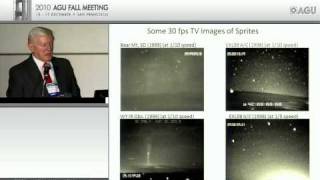
Twenty-Five Years of New Discoveries in Atmospheric and Space Electricity
Explore groundbreaking discoveries in atmospheric and space electricity over the past quarter-century, presented by D. D. Sentman from the University of Alaska, Fairbanks.
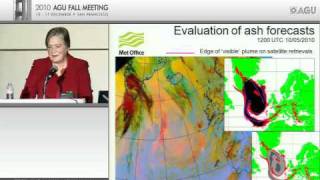
Society's Growing Vulnerability to Natural Hazards and Implications for Geophysics Research
Explore natural hazards' impact on society, geophysics research implications, and strategies for addressing vulnerabilities through case studies and scientific advancements.
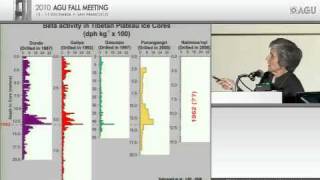
Past and Contemporary Climate Change: Evidence From Earth's Ice Cover
Explore Earth's climate history through ice core analysis, examining past changes and current trends to understand global warming's impact on our planet's future.
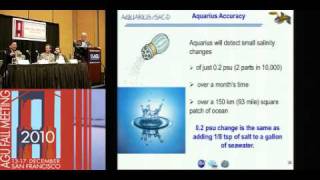
Glory and Aquarius - New Climate Sentinels
New spacecraft Glory and Aquarius to study Earth's climate by measuring solar irradiance, aerosols, and ocean salinity, providing insights into complex climate processes and ocean circulation.
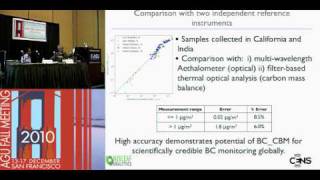
Black Carbon - Reducing a Major Climate-Warming Agent from the Atmosphere
Explores black carbon's impact on global warming, California's clean air progress, and innovative monitoring tools for developing countries. Highlights latest research and technological advancements in addressing this climate challenge.
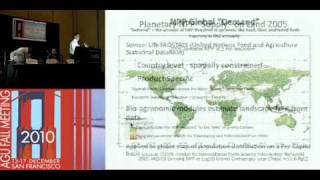
Carbon Consumption and Earth's Carrying Capacity: Challenges Ahead
Exploring Earth's carrying capacity as human consumption of plant resources increases, raising concerns about biodiversity, climate vulnerability, and global resource imbalances.
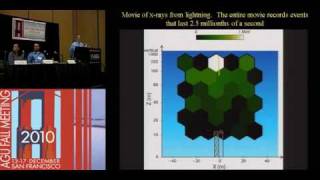
Catching Lightning in the Act - New Insights from X-Ray Imaging
Groundbreaking x-ray imaging and high-speed video reveal new insights into lightning's mysterious journey from cloud to ground, advancing our understanding of this powerful natural phenomenon.
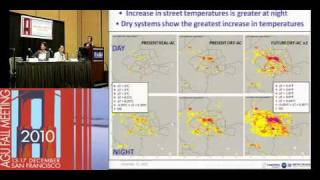
New Views of Urban Heat Islands
Explore satellite data insights on urban heat islands, their variations across cities, public health impacts, and potential exacerbation of heat waves through increased air conditioning usage.
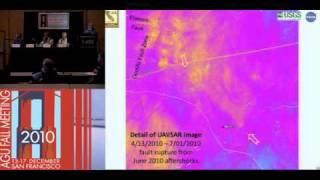
The April 2010 M7.2 Baja California Earthquake - Observations and Implications for Southern California
Explore the complex M7.2 Baja earthquake of 2010, its impacts, and implications for Southern California's seismic future through remote sensing, field observations, and new data analysis techniques.
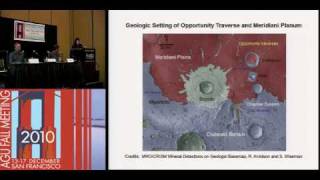
Opportunity Rover's Journey to Endeavour Crater on Mars - Orbital Observations Reveal New Insights
Explore Mars with Opportunity rover as it heads to Endeavour Crater, guided by orbital observations revealing clay minerals and potential new discoveries in this ancient Martian landscape.
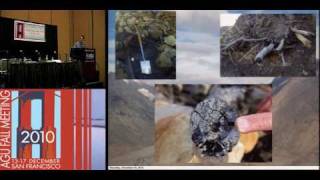
Mummified Arctic Forest Reveals Ancient Climate Change Clues
Discover ancient Arctic forests preserved in ice, revealing a warmer past and offering insights into ecosystem responses to dramatic climate shifts.
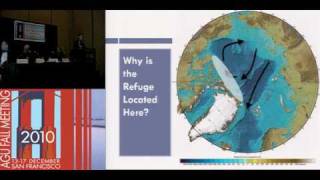
The Last Arctic Sea Ice Refuge - Projections and Implications
Exploring potential year-round Arctic sea ice refuges and their importance for polar ecosystems. Research on ice formation, currents, and habitat requirements for Arctic wildlife preservation.
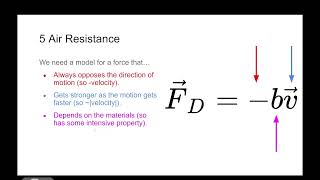
Drag Force Simulation Using VPython for Physics 1
Learn to simulate drag force using VPython, enhancing your understanding of physics concepts through interactive coding and visualization techniques.
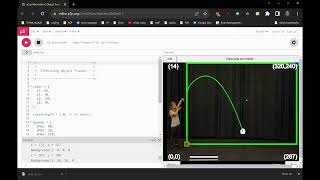
Trying Out the STEMCoding Object Tracker - Episode 1
Explore a user-friendly object tracking app for physics analysis, featuring hands-on demonstrations and practical applications in STEM education.
Jupyter Notebook Assignment - Euler-Cromer Method Development - Part 2
Explore the Euler-Cromer Method for computational physics through a guided Jupyter notebook project. Learn to implement and analyze this numerical integration technique for solving differential equations.
Toy Chemistry - Three Bonds
Explore a computational model of chemical bonding, examining bond formation probabilities and their impact on molecular structures.
Projectile Motion with Lift Force - Part 13
Explore advanced projectile motion by incorporating lift forces, enhancing 3D simulations with drag, wind, and realistic physics modeling using VPython.
Projectile Motion with Drag - Lecture 11
Explore projectile motion with drag forces, using VPython to simulate and visualize realistic trajectories in 3D, enhancing understanding of physics concepts.
Projectile Motion in Soccer Goal Scoring - Part 8
Explore projectile motion through soccer goal scoring, using VPython to simulate and analyze trajectories. Learn practical applications of physics in sports.
Projectile Motion - Shooting Over Walls and Into Pits
Explore projectile motion simulations involving walls and pits using VPython. Learn to code physics scenarios and visualize trajectories in this hands-on tutorial.
Projectile Motion - Simple Gravity Simulation
Explore the basics of projectile motion simulation using the Euler-Cromer method in VPython, focusing on simple gravity and its effects on object trajectories.