
State of the Climate System - Climate Science Lecture
Explore climate change impacts on Earth's ice, focusing on Arctic sea ice and coastal regions of Greenland and West Antarctica. Learn about cryospheric projections and potential sea-level rise consequences.
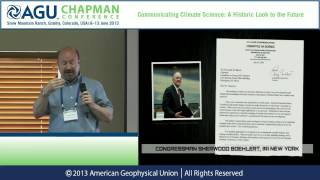
The Battle to Communicate Climate Change - Lessons from the Front Lines
Insights on communicating climate change science effectively, addressing challenges, and countering disinformation while maintaining scientific integrity and public engagement.
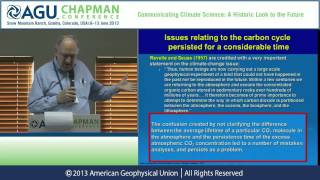
Retrospective on Early Climate Science: A Physical Scientist's Point of View
Explore early climate science through a physical scientist's perspective, covering key figures, models, and milestones in understanding climate change and its implications.
Melting Sea Ice in the Arctic - Five Myths and Current Research
Explore Arctic sea ice myths, current data, climate models, and societal impacts. Learn about unprecedented ice loss and the potential for a seasonal ice-free Arctic from expert speakers.
Curiosity-Driven Mars Exploration - Latest Activities and Discoveries
Explore Mars through Curiosity's advanced sensors. Scientists discuss the rover's mission, its sophisticated instruments, and the excitement of robotic exploration on the Red Planet.
The Arctic System: From Critical Process Studies to Global Perspectives - 2012
Explore cutting-edge research on Arctic climate systems, from regional modeling to global impacts. Gain insights into processes driving Arctic change and implications for climate predictions.
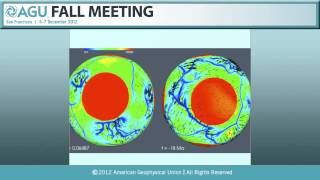
The Geodynamics of Plate Tectonics I
Explore cutting-edge research on plate tectonics, mantle dynamics, and Earth's evolution. Gain insights into continental buoyancy, seafloor dynamics, supercontinental cycles, and their impacts on climate and geomagnetism.
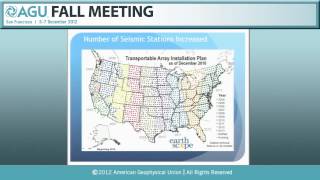
Understanding Recent and Historical Seismicity in the Central and Eastern U.S. - Part 2
Explore recent seismic activity in Central and Eastern U.S., including challenges, data integration, and insights into specific earthquake events. Gain understanding of regional seismicity patterns and their implications.
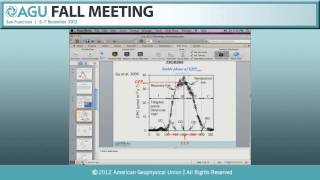
Climatic Controls on Net Ecosystem Exchange - Part 2
Explore cutting-edge research on climate's impact on ecosystem carbon exchange, featuring studies on North American forests, drought effects, and photosynthetic capacity across various landscapes.
Designing a Road Map for Workflow Cyberinfrastructure in the Geosciences - 2012
Explore geoscience workflow cyberinfrastructure advancements, from metadata standards to community modeling frameworks. Learn about innovative tools and approaches for managing big data and enhancing scientific research efficiency.
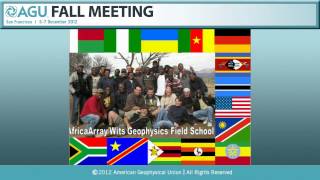
Applied Geophysics in the Global Marketplace - 2012
Explore diverse applications of geophysical methods in groundwater, mining, petroleum, and environmental surveys. Gain insights into emerging technologies and expanding opportunities in applied geophysics.
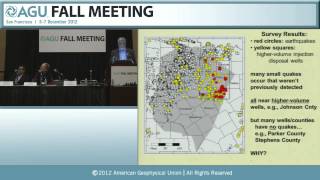
Natural or Man-Made? Triggers and Limits to Induced Earthquakes
Exploring the surge in Oklahoma earthquakes since 2010, scientists investigate potential links to hydraulic fracturing and present new findings on induced seismicity in Oklahoma and Texas.
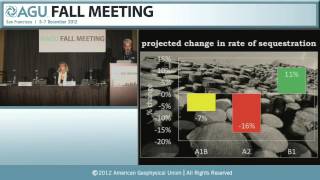
Carbon Storage in Western U.S. Ecosystems - USGS Report Findings
Explore USGS findings on carbon storage in Western U.S. ecosystems, covering 2 million square miles. Learn about current sequestration rates and future projections under various scenarios.
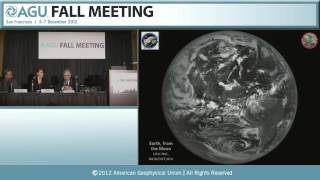
Apollo Lunar Samples at 40 - New Data and Discoveries
Discover how Apollo lunar samples continue to reveal new insights 40 years later, with digitization uncovering lost data and LRO missions providing context for our evolving understanding of the Moon.
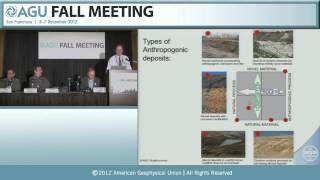
Setting Boundaries for the Anthropocene
Exploración del Antropoceno: científicos debaten su definición como época geológica, analizando marcadores estratigráficos y el impacto humano en el planeta a través de fósiles, contaminantes y alteraciones del terreno.
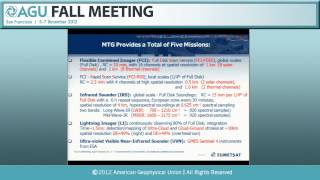
Geostationary Satellite Data Generation II - Fall Meeting 2012
Explore advancements in geostationary satellite technology, including GOES-R, Himawari-8/9, and Meteosat Third Generation. Learn about data generation, downlink specifications, and applications in weather observation and solar dynamics.
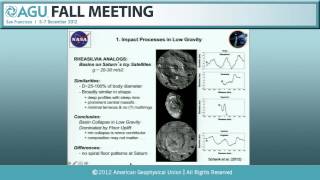
Dawn Mission Findings from Mapping Vesta - AGU Fall Meeting 2012
Explore Dawn mission's comprehensive mapping of Vesta, including impact basin morphologies, surface mineralogy, and large-scale troughs. Gain insights into asteroid differentiation and comparative planetology.
Cryospheric Contribution to Sea Level Rise - Current Estimates and Projections - Part 1
Explore current research on ice sheet mass balance, glacier melt, and sea level rise projections. Gain insights into cryospheric changes and their global impacts from leading climate scientists.
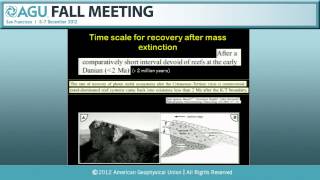
Ocean Acidification: Impacts and Challenges - Special Lecture
Explores the impacts of rising CO2 levels on ocean chemistry and marine life, discussing potential consequences for calcification, adaptation, and ecosystem survival in the face of rapid acidification.
Using Historical Information to Improve Seismic Data Processing Methods I
Explore innovative seismic data processing techniques, including Bayesian methods, machine learning, and waveform cross-correlation, to enhance earthquake monitoring and location accuracy.
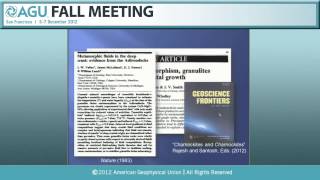
Deep Crustal Metamorphic Carbon Cycling in Collisional Orogens - Daly Lecture
Explore deep crustal metamorphic carbon cycling in mountain belts, examining CO2 release processes, flux rates, and potential impacts on global carbon cycles and climate change.