Smart Machines and What They Can Still Learn from People
Cognitive scientist Gary Marcus explores AI's progress, challenges, and potential lessons from human cognition, offering insights into the future of machine intelligence.
The Urban Species - How Domesticated Humans Evolved
Explore the evolutionary impact of urbanization on humans, comparing modern megacities to Neolithic settlements and examining potential future changes in our civilization.
Touching a Nerve: The Self as Brain
Explore the biological basis of consciousness, identity, and decision-making with neurophilosopher Patricia Churchland as she examines how brain activity shapes our thoughts, feelings, and experiences.
Questioning the Science of Gender Difference - A New Perspective
Explores how cultural beliefs influence gender research, challenging long-held assumptions about biological differences between sexes and offering a fresh perspective on gender in society.
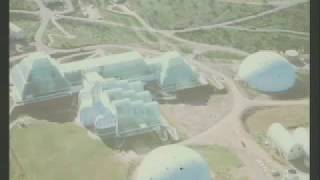
Biosphere 2: Cutting-Edge Laboratory for Biospherics and Closed Ecological Systems
Explore the challenges and achievements of Biosphere 2, the world's largest biospherics lab, including its closed ecological system experiments and sustainable technologies research.
After Trump and Brexit: A New Economics - Towards a Sustainable and Just Global Future
Economists discuss a new economic paradigm for a sustainable and just global future, addressing the failures of unregulated profit pursuit and the rise of economic nationalism.
Naturalness - How Religion Turned into Math
Explore the historical roots and problems of naturalness arguments in physics, examining their influence on theory development and scientific reasoning.
Using Buckingham's Π Theorem for Dimensionless Similarity Parameters in Macroecology
Explore dimensionless similarity parameters in macroecology using Buckingham's Π theorem, presented by Sandra Chapman from the University of Warwick.
Symmetry and Collective Dynamics - Noether's Theorem and Conservation Laws
Explore Emmy Noether's theorem and its impact on theoretical physics, focusing on symmetry transformations and their role in expressing collective dynamics and conservation laws.
Technological Requirements for Sustaining Socio-ecosystems with Hyper-dense Humans
Exploring ecological theory to analyze human societies' energy use and density compared to other mammals, and modeling sustainable conditions for hyper-dense populations through green technologies.
Quantifying Resilience in Complex Systems - From Humans to Ecosystems
Explore quantitative methods for measuring resilience in diverse systems, from ecosystems to human psychology, using critical slowing down and probabilistic approaches to understand tipping points and recovery.
Component Systems: Understanding Complex Systems Through Building Blocks
Explore complex systems composed of defined building blocks, from Lego sets to genomes. Learn about common theoretical frameworks and data analysis tools for understanding these "component systems" across various fields.
Fluctuations and Order in Randomly Evolving Environments
Explore non-equilibrium systems where giant fluctuations coexist with long-range order, examining particle behavior, interface properties, and applications in various scientific domains.
Living in Space
Explore the challenges and possibilities of human habitation beyond Earth, examining scientific, technological, and societal aspects of space colonization.
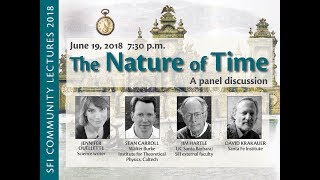
The Nature of Time - Panel Discussion on Physics, Biology, and Culture
Explore the mysteries of time with experts discussing its physical, biological, and cultural aspects, focusing on the arrow of time, entropy, and adaptive systems.
The Effects of Personality, Networks, and Space on Collective Behavior
Explore how environment, interactions, group composition, and genetics shape collective outcomes in complex biological systems through field studies, simulations, and novel analytical methods.
Social and Economic Engineering - InterPlanetary Festival 2018
Explore social and economic engineering with experts discussing future challenges and opportunities in technology, society, and economics.
The Search for Life in the Universe
Explore the possibilities of extraterrestrial life and interstellar travel with astrophysics expert Pete Worden. Learn about cutting-edge initiatives, propulsion technologies, and recent discoveries in space exploration.
Computational Tools for Biology: Sandboxes to Think and Play With
Explore computational tools for biology, focusing on Gelbox - a simulation for teaching gel electrophoresis. Learn about DNA nanotechnology, science communication, and the power of interactive simulations in research and education.
Time Design: Exploring Concepts of Time Across Disciplines - InterPlanetary Festival 2018
Explore time's multifaceted nature through biology, archaeology, and physics in this panel discussion featuring experts Stefani Crabtree, Martine Rothblatt, and Van Savage.
Time Design and Motion & Energy Technology Panels - InterPlanetary Festival Day 1
Explore time design, motion & energy technology, and the search for extraterrestrial life with expert panels and a keynote on cutting-edge scientific topics.