The Threat from Thwaites - The Retreat of Antarctica's Riskiest Glacier
Experts discuss the rapid retreat of Antarctica's Thwaites Glacier, its potential impact on global sea levels, and the urgency of understanding its weakening process to address future flooding risks in coastal areas.
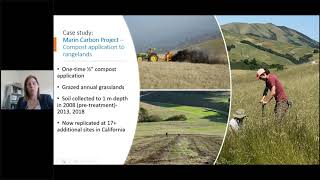
Carbon Sequestration Potential of Organic Amendments in Agriculture - Part 7
Explore case studies on manure and compost amendments' impact on soil carbon sequestration in agricultural ecosystems, featuring insights from UK and US research.

Latest NASA Juno Mission Science Results
Latest findings from NASA's Juno mission on Jupiter's polar cyclones, magnetosphere, Great Red Spot, atmosphere, and interior. Highlights scientific and aesthetic contributions of citizen scientists to the mission.
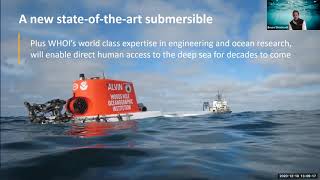
Overhaul of Human Occupied Vehicle Alvin for Deep-Sea Exploration - Press Briefing
Upgrades to Alvin submarine will enable exploration of 98% of ocean floor, including abyssal region. Scientists discuss potential for new discoveries in deep-sea ecosystems, hydrothermal vents, and submarine geology.
2020 Arctic Report Card - 15 Years of Environmental Observations and Analysis
Annual NOAA-led Arctic Report Card reveals dramatic environmental changes in the Arctic, including trends in Bowhead whale populations and wildland fires. Includes a 15-year retrospective on Arctic transformations and their global impacts.
Meet the Epic-N Network with Thriving Earth Exchange
Explore how EPIC-N connects universities with local governments to improve quality of life. Learn about leveraging resources, follow-on engagement, and growing community science initiatives.
Frontiers in Subsurface Transport - 2020 Hydrology Early Career Award Lecture
Explore cutting-edge research in subsurface transport with Dr. Veronica Morales from UC Davis. Part of AGU's Hydrology Early Career Award lecture series, showcasing emerging leaders in hydrology.
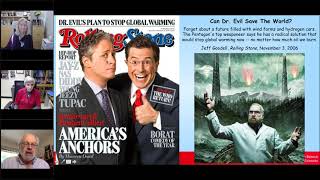
Two Approaches for Mitigating Global Climate Change
Explore two climate change mitigation strategies: stratospheric sulfur geoengineering and state-level carbon footprint reduction, examining their potential benefits, risks, and implementation challenges.

Exoplanetary Ecosystems - What We Know and Need to Know
Explore the fascinating world of exoplanetary ecosystems, examining current knowledge and future research directions in this captivating plenary talk by Hilairy E. Hartnett.

Building a Borderless World of Geoscience for the Future of Earth and Humanity
Explore the vision for a unified global geoscience community and its potential impact on Earth's future and humanity's well-being with AGU President Robin Bell.
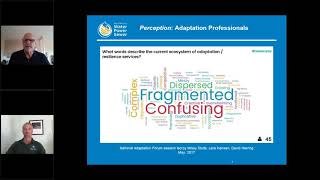
Toward Solution Science: Lessons from a Decade of Climate Scientist-Practitioner Dialog
Explore the journey towards solution-oriented science through a decade-long dialogue between a climate scientist and adaptation practitioner, focusing on making research relevant to societal challenges and decision-making.
Climatological, Meteorological and Environmental Factors in COVID-19 Pandemic - Day 3 Part 1
Experts discuss environmental and meteorological factors in COVID-19 forecasting, addressing challenges in communicating predictions and informing decision-makers amidst uncertainty.
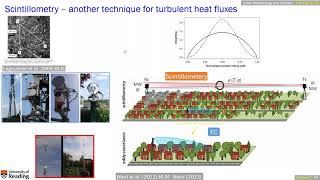
Urban Climates and Ozone Depletion - From the Past Into the Future - Part 2
Explore urban climates and ozone depletion with experts Sue Grimmond and Guy Brasseur. Learn about cloud computing in urban settings and the journey of ozone layer recovery in this insightful atmospheric sciences webinar.
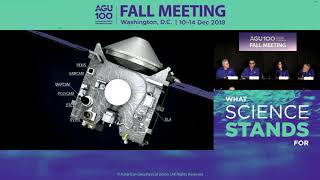
First Asteroid Science Data from OSIRIS-REx Mission - Fall 2018
Discover groundbreaking findings from NASA's OSIRIS-REx mission to asteroid Bennu. Scientists reveal new data on shape, imaging, spectral properties, and comparisons to Earth-based observations.
Fire: Bringing Fire Back to the Land - Indigenous Cultural Burning Practices
Indigenous cultural burning: Preventing blazes, creating resilient ecosystems, and providing resources. Explore the practice, its impact on land, and connection to social justice.
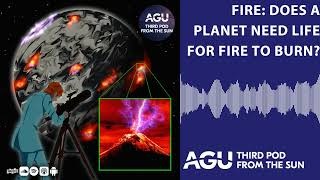
Fire on Exoplanets - Exploring the Relationship Between Life and Combustion
Explore the connection between fire and life on Earth and other planets. Discover unique planetary phenomena and their potential role in astrobiology and the search for extraterrestrial life.
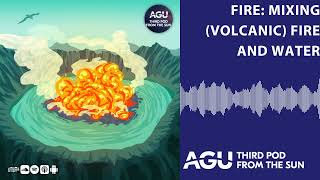
Fire: Mixing Volcanic Fire and Water - Crater Lakes and Volcanic Hydrology
Explore the fascinating interplay between volcanic activity and water, from Kīlauea's surprising crater lake to massive Lake Taupo, uncovering geological insights into fire-water interactions in volcanic settings.
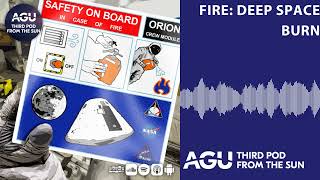
Fire Safety in Deep Space: Challenges and Preparations for Artemis Missions
Explore fire safety challenges in deep space missions, including NASA's Artemis program, and learn about innovative solutions for preventing and extinguishing fires on spacecraft.
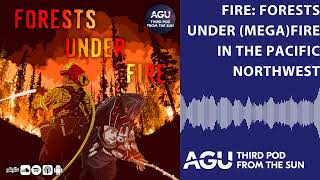
Forests Under Megafire in the Pacific Northwest - Climate Change Impact
Explore megafires in the Pacific Northwest, their causes, and future implications with forest scientist Matthew Reilly. Gain insights on forest ecology, historical fire patterns, and climate change impacts.
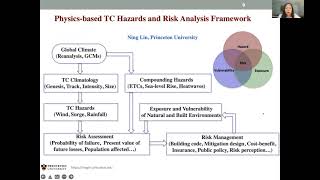
Hurricane Hazards and Risk in a Changing Climate
Explore hurricane hazards and risks in a changing climate, focusing on potential worsening impacts due to coastal development, sea-level rise, and climate change effects on hurricane activity.
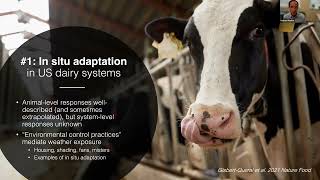
Adapting Agriculture to a Changing Climate: Risks and Adaptation Mechanisms
Explore climate change impacts on agriculture, adaptation strategies, and research on risks to agricultural systems, including dairy sensitivity and hydrologic stress on crop yields.