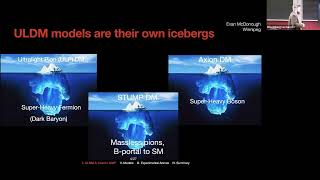
Ultralight Dark Matter and Cosmological Condensed Matter Physics - Evan McDonough
Explore ultralight dark matter theories, their exotic phenomena, and experimental tests across cosmic scales. Delve into composite models and their observables, connecting to early dark energy and the Hubble tension.
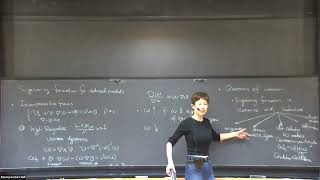
Singularity Formation for Reduced Models of Fluid Equations - Mimi Dai
Explore singularity formation in reduced fluid equation models, focusing on electron magnetohydrodynamics and its connection to Euler equations. Gain insights into nonlinear dynamics and finite-time singularities.
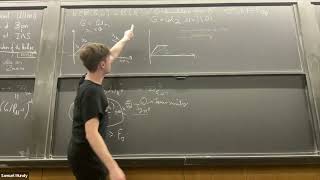
Some Progress on Categorical Local Langlands - Linus Hamann
Exploration of categorical local Langlands correspondence, discussing recent progress, proofs, and implications for number theory and algebraic geometry.
Random Matrix Models, 2D Quantum Gravity, and Holography - Part 1 - Clifford Johnson
Explore random matrix models, focusing on the Gaussian Unitary Ensemble and its applications to gravity, holography, and quantum physics. Discover new insights into discrete spectra and non-perturbative information.
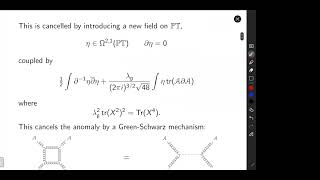
Scattering Amplitudes in Gauge Theory as Chiral Algebra Correlators - Kevin Costello
Explore gauge theory scattering amplitudes as chiral algebra correlators, connecting to celestial holography and deriving expressions for form factors using innovative mathematical approaches.
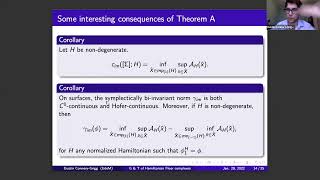
Geometry and Topology of Hamiltonian Floer Complexes in Low-Dimension - Dustin Connery-Grigg
Explore Hamiltonian Floer complexes on surfaces, connecting dynamics to Floer chain structure. Discover a new symplectic norm and geometric interpretations of chain complexes using transverse foliations.
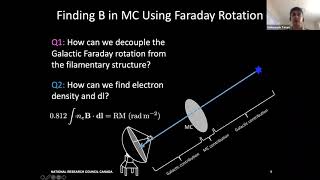
3D Magnetic Field Observations Associated With Filamentary Molecular Clouds - Mehrnoosh Tahani
Exploration of 3D magnetic field observations in filamentary molecular clouds, discussing techniques, results, and implications for understanding cloud morphologies and magnetic field structures.
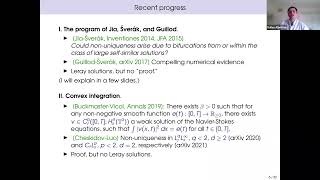
Non-Uniqueness of Leray Solutions of the Forced Navier-Stokes Equations - Dallas Albritton
Explore non-uniqueness in Navier-Stokes equations, focusing on Leray solutions, unstable manifolds, and vortex dynamics in fluid mechanics.
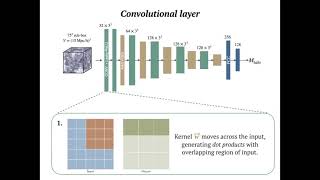
Deep Learning Insights into Cosmological Structure Formation - Luisa Lucie-Smith
Explore deep learning's insights into dark matter halo formation and cosmic structure, uncovering key features in initial conditions that predict final halo mass in N-body simulations.
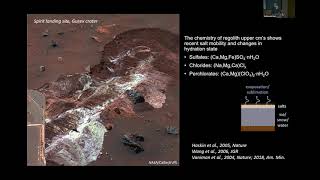
Mars- History of a Habitable World and Lessons for Terrestrial Planet Evolution - Bethany Ehlmann
Explore Mars' geological history, habitability, and lessons for planetary evolution. Discover diverse aqueous environments, climate changes, and implications for exoplanets through recent scientific findings and ongoing missions.
Fluid Equations - Regularity and Kolmogorov’s Turbulence Theory
Explore fluid dynamics, Navier-Stokes equations, and Kolmogorov's turbulence theory. Gain insights into regularity results and mathematical confirmations of phenomenological theories.
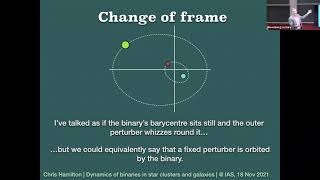
Dynamical Evolution of Binaries in Star Clusters and Galaxies - Chris Hamilton
Explore binary system evolution in star clusters and galaxies, focusing on tidal forces, Lidov-Kozai theory, and compact object mergers. Gain insights into celestial mechanics and astrophysical phenomena.
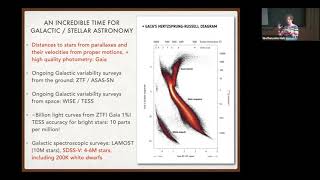
Astrophysics of White Dwarfs in the Era of Modern Surveys - Nadia Zakamska
Explore white dwarf astrophysics through modern surveys, examining ultra-compact binaries, supernova progenitors, and stellar evolution. Gain insights into equation of state, short-period binaries, and mass loss processes.
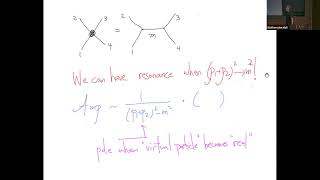
Spacetime and Quantum Mechanics; Particles and Strings; Polytopes, Binary Geometries and Quiver Categories - Nima Arkani-Hamed
Explore connections between particle physics and mathematics, revealing how spacetime and quantum mechanics emerge from fundamental mathematical structures in combinatorics, algebra, and geometry.
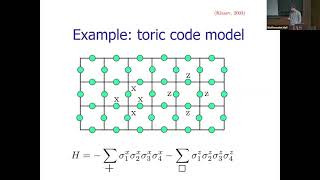
Lattice Edge Theories for Topological Phases of Matter - Michael Levin
Explore lattice edge theories for topological phases, focusing on finite-dimensional edge theories and their unique properties, including ungappable examples with implications for quantum systems.
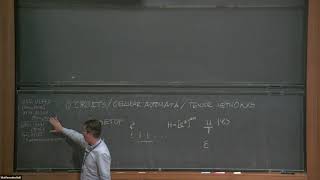
Quantum Circuits, Cellular Automata and Tensor Networks - Ignacio Cirac
Explore quantum circuits, cellular automata, and tensor networks, focusing on their representations, entanglement properties, and generalizations to quantum channels and measurement-assisted dynamics.
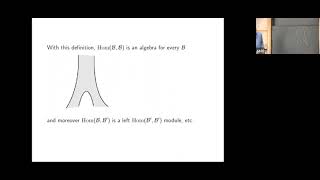
Gauge Theory and the Analytic Approach to Geometric Langlands - Edward Witten
Explore gauge theory's role in geometric Langlands correspondence, comparing categorical and analytic approaches through quantum states, operators, and gauge theory interpretations.
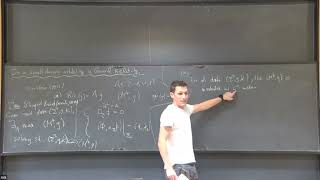
An Unexpected Small Divisors Instability in General Relativity - Christoph Kehle
Explore an unexpected instability in general relativity, focusing on small divisors and their impact on predictability and uniqueness in gravitational systems.
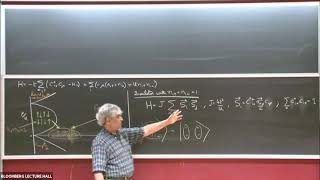
The Quantum Phases of Matter VI - Antiferromagnetism and Superconductivity in the Electron Hubbard Model
Explore antiferromagnetism and superconductivity in the electron Hubbard model with Harvard physicist Subir Sachdev, covering quantum states, symmetry breaking, and doping in this advanced lecture.
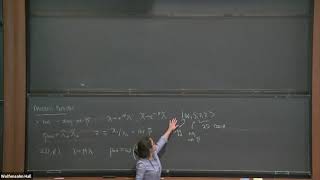
Celestial Operator Product Expansions and W1+Infinity Symmetry for All Spins - Monica Pate
Explore celestial operator product expansions, w1+infinity symmetry, and their implications for massless particles of all spins in gravitational theories and high-energy physics.
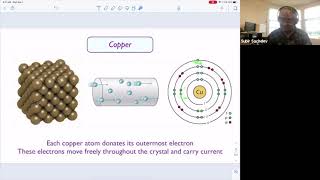
The Quantum Phases of Matter I - Survey of Experiments
Explore quantum phases of matter through experiments, covering topics like Fermi surfaces, insulators, and symmetry breaking. Gain insights into critical points and long-range entanglement in various lattice structures.