Flooded? Forget It!
Explore hydraulic design principles for low-water crossings, vehicle stability in flood flows, and the dangers of crossing flooded roadways. Learn from experts about latest research and engineering considerations.
From Courant to Saint Venant
Explore the foundations of hydraulic modeling, from conservation principles to Saint-Venant equations, with real-world analogies and expert insights on key concepts like the Courant Number and solution methods.
Operational Structure Modelling Using TUFLOW
Explore operational structures in TUFLOW for water resource management, including pumps, gates, and weirs. Learn modeling techniques through real-world examples and case studies.
Groundwater Time Series Analysis
Explore advanced groundwater analysis techniques using Python, including time series processing, barometric and Earth tide effects removal, and aquifer characterization methods for enhanced monitoring insights.
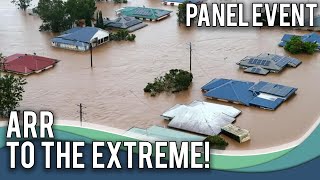
Panel Event - Australian Rainfall and Runoff - To the Extreme!
Expert panel discusses implications of extreme Australian rainfall events on flood modeling, management, and mitigation practices, covering topics from IFD data to climate change effects and flood resilience.
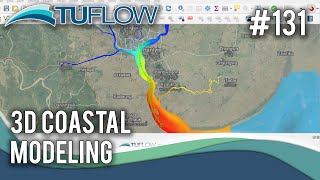
3D Coastal Modelling
Explore 3D coastal modelling approaches, including ocean circulation, model setup, result visualization, and real-world challenges. Learn to extend 2D models to 3D for comprehensive nearshore hydrodynamic analysis.
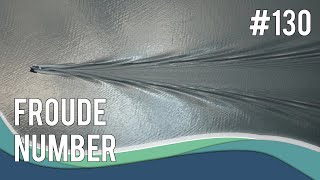
Froude, Dude!
Explore the Froude Number's principles and applications in hydraulic design, from naval architecture to static structures, covering subcritical and supercritical flow concepts.
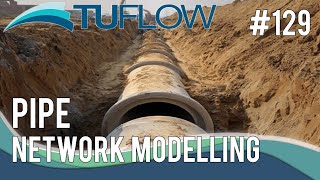
Urban Pipe Network Modelling
Learn key hydraulic calculations for urban pipe network modelling, including energy losses and flow capture. Explore GIS tools for efficient data quality control and automated corrections in stormwater systems.
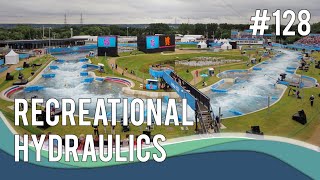
Recreational Hydraulics - Rafting, Wave Pools, & Water Slides
Explore the exciting world of recreational hydraulics, from Olympic whitewater courses to wave pools and waterslides. Learn how engineers apply fluid dynamics principles to create thrilling aquatic experiences.
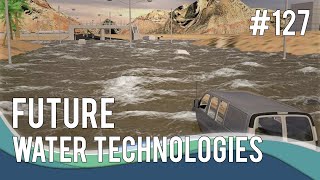
Technological Advances in the Water Sector
Explore cutting-edge water technologies: drones, CFD modeling, 3D printing, web analytics, and intelligent flood communication systems. Industry experts discuss innovations shaping the future of water management.
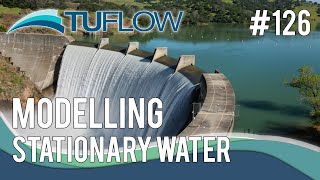
Lake Modelling
Explore hydraulic modeling of stationary water bodies, focusing on key processes, numerical models, and real-world applications for responsible freshwater management.
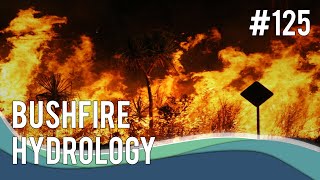
Bushfire Hydrology
Explore bushfire impacts on catchment hydrology and aquatic fauna, covering soil erosion, water quality, and resilience strategies for hydraulic structures in the face of climate change.
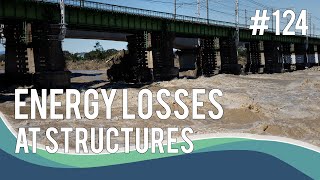
Energy Losses at Structures
Explore energy losses in water structures, from form losses to modeling approaches. Learn about constrictions, piers, bridge decks, and industry-standard techniques for understanding and mitigating hydraulic energy dissipation.
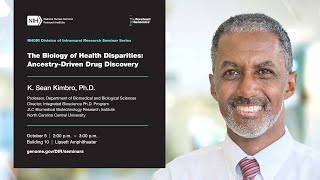
The Biology of Health Disparities: Ancestry-Driven Drug Discovery - K. Sean Kimbro
Explore ancestry-driven drug discovery and its potential to address health disparities, focusing on molecular characterization of hormonal cancers affecting individuals of African ancestry.
Establishing and Sustaining Genomic Learning Healthcare Systems
Experts discuss progress and challenges in implementing genomic medicine, focusing on evidence generation, payer perspectives, and integration of personalized medicine in healthcare systems.
Direct-to-Consumer Genetic Testing - Case Studies
Panel discussion exploring direct-to-consumer genetic testing, covering benefits, limitations, clinical applications, and considerations for healthcare professionals. Includes case studies and expert insights on interpreting results.
Concept Clearance - Analysis, Visualization and Informatics Lab-Space - AnVIL
Explore AnVIL's genomic data sharing platform, clinical research support, and cloud computing solutions. Learn about program renewals, key components, and future developments in this informative presentation.
Expanding the Capacity to Conduct Gene x Environment Experiments - Rick Woychik
Explore gene-environment interactions, epigenetics, and the exposome in health research. Learn about NIEHS initiatives, including PEGS and climate change studies, with potential for NHGRI collaboration.
Multi-Omics for Health and Disease - Joannella Morales
Explore multi-omics applications in health and disease research, including molecular profiling, method development, and creation of interoperable datasets for advancing genomic medicine.
Molecular Phenotypes of Null Alleles in Cells - Pre-Application Webinar
Informative webinar on NHGRI's MorPhiC program, detailing funding opportunities, goals, and application process for research on molecular phenotypes of null alleles in cells.
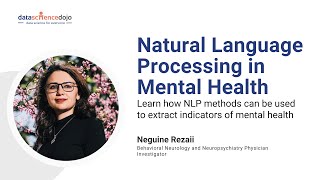
Natural Language Processing in Mental Health
Explore how natural language processing can extract mental health indicators from everyday language, aiding neuropsychiatry while considering potential risks and ethical implications.