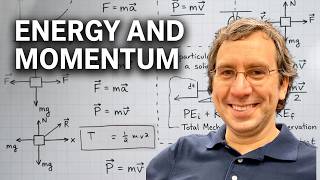
Kinetic Energy - Where Does It Come From? - Linear and Angular Momentum - Worked Examples
Explore kinetic energy, linear and angular momentum, and their applications in space vehicle dynamics. Gain insights into energy conservation, pendulum motion, and momentum rate equations.
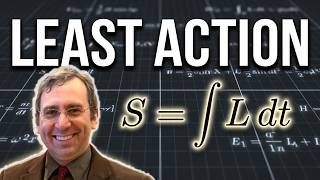
Principle of Least Action and Lagrange's Equations of Mechanics - Basics of Calculus of Variations
Explore variational principles in mechanics, including the Principle of Least Action and Lagrange's equations. Learn calculus of variations techniques and their applications in physics and engineering problems.
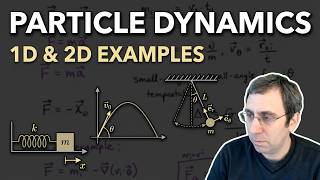
Single Particle Dynamics - 1D and 2D Worked Examples
Explore single particle dynamics through 1D and 2D examples, covering conservative forces, Newton's laws, projectile motion, and pendulum equations. Gain insights into space vehicle dynamics.
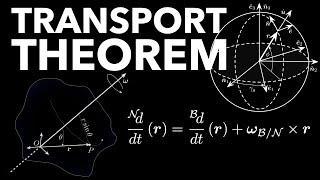
Transport Theorem Worked Examples - Vector Derivatives When Frames Are Rotating and Translating
Comprehensive exploration of vector derivatives in rotating and translating frames, with practical examples. Covers transport theorem, matrix representations, and applications to space vehicle dynamics.

Satellite Reference Frames, Viewing Geometry, and Mission Analysis
Explore spacecraft reference frames, mission analysis basics, and satellite viewing geometry. Learn about ECI, ECEF, orbital frames, and key concepts like sub-satellite points, access areas, and ground tracks.
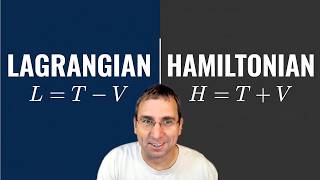
Hamiltonian Systems Introduction - Why Study Them?
Explore Hamiltonian systems and their advantages in mechanics. Learn about generalized momentum, canonical equations, and the transformation from Lagrangian to Hamiltonian formalism.
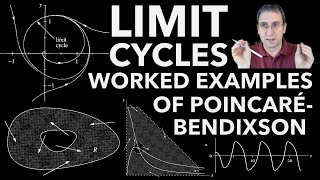
Limit Cycles - Poincare-Bendixson Worked Examples: Glycolysis
Explore Poincaré-Bendixson theorem applications in limit cycle analysis, including a glycolysis model. Learn to construct trapping regions using nullclines and understand parameter spaces for stable limit cycles.
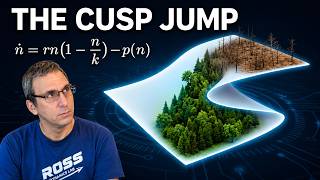
Insect Outbreak Model - A Cusp Catastrophe Population Dynamics Example
Explore insect outbreak modeling using cusp catastrophe theory, analyzing population dynamics, fixed points, and bifurcations in a budworm-fir tree ecosystem.
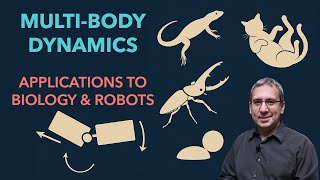
Coupled Rigid Bodies, Impulsive Dynamics, Applications - Trap Jaw Ants, Leaping Lizards, Falling Cat
Explore advanced dynamics applications in biology, from cat landings to flying snakes. Discover how angular momentum and impulsive dynamics explain fascinating natural phenomena and inspire robotic designs.
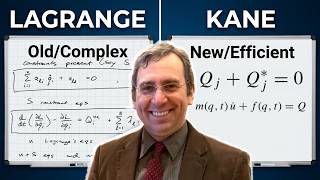
Kane's Method, Kane's Equations, Avoiding Lagrange Multipliers - Quasivelocities & Dynamic Equations
Introduces Kane's method for efficient modeling of constrained systems using quasivelocities, avoiding Lagrange multipliers. Covers theoretical foundations and practical examples like vehicle stability and semi-truck dynamics.
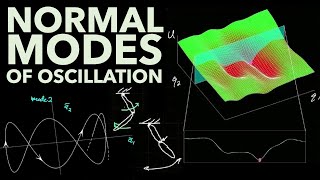
Normal Modes of Mechanical Systems - Oscillations and Instabilities
Explore normal modes in mechanical systems, including oscillatory patterns, steady drift, and instability. Learn about natural frequencies, mode shapes, and their applications in analyzing system responses to forcing.

Double Pendulum
Simulate a double pendulum in Processing (Java) with step-by-step guidance. Learn to implement formulas, visualize motion, and add path tracing and damping effects.

Cube Wave by Bees and Bombs
Learn to recreate a mesmerizing 3D cube wave animation using p5.js and WebGL. Explore oscillation, 3D rendering, and perspective techniques to bring this hypnotic visual effect to life.
More Inverse Kinematics and Texturing Cloth Simulation
Explore advanced inverse kinematics techniques and learn to texture 3D cloth simulations in Processing. Gain hands-on experience with multiple snake models, fixed points, and meshed cloth texturing.
Forward and Inverse Kinematics
Explore forward and inverse kinematics, create tentacle-like creatures, and learn about polar coordinates in this interactive coding session with hands-on challenges and community showcases.
Nature of Code Continued - Chapter 2, Forces
Explore forces in nature through coding, focusing on friction and drag. Learn to simulate realistic physics in creative programming projects.

Fractal - TeamTrees with Physics
Explore fractal tree generation with physics and microphone interaction in this coding livestream, supporting #TeamTrees initiative while learning creative programming techniques.

Erlang Tutorial
Comprehensive introduction to Erlang programming, covering core concepts and syntax through practical examples. Ideal for experienced programmers looking to learn Erlang quickly and efficiently.
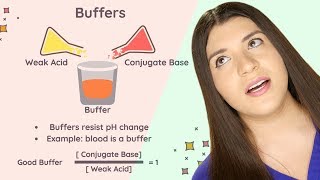
Heating Curves, Buffers & Standard Enthalpy of Formation
Comprehensive chemistry tutorial covering heating curves, buffer solutions, and standard enthalpy of formation. Learn to calculate heat absorption, buffer pH changes, and use enthalpy formulas effectively.

Titrations and Rates of Reaction
Comprehensive guide to titrations and reaction rates, covering equivalence points, pH calculations, and various acid-base combinations. Includes practical examples and step-by-step explanations.
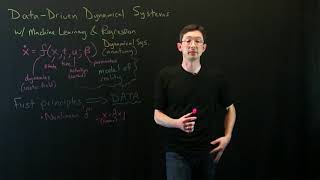
Data-Driven Dynamical Systems with Machine Learning
Explore modern machine learning methods for modeling complex dynamical systems from data. Learn data-driven control techniques and apply them to various fields of science and engineering.