The New Jersey Heat Vulnerability Index: Understanding and Applying the Tool
Explore the Heat Vulnerability Index for New Jersey, its construction, application, and importance in identifying at-risk communities during extreme heat events.

Improving Education and Career Pathways for Underrepresented Minority Students in the Geosciences
Explore strategies to enhance diversity and inclusion in geoscience education, focusing on underrepresented minority students' pathways to success.

How Squishy is the Middle Crust? - Exploring Crustal Rheology
Explore the deformation of Earth's middle crust and its implications for geological processes with Dr. Steven Kidder's insightful analysis.
Adaptive Potentials of Marine Calcifiers in an Ever-Changing Ocean
Explore adaptive potentials of marine calcifiers amid ocean changes, focusing on their resilience and evolutionary strategies in response to environmental shifts.
Growing with Trilobites: Studying Growth and Evolution in this Iconic Fossil Group
Explore trilobite growth and evolution, uncovering insights into this iconic fossil group's development and significance in Earth's history.
What Shark Teeth Can Tell Us About Ancient Oceans
Explore ancient oceans through shark teeth fossils, uncovering climate history and marine ecosystem evolution with Princeton researcher Alliya A. Akhtar.
The Serpent Rises from the Waves - Origin of Mosasaurus, Lizard King of the Cretaceous
Explore the fascinating evolution of Mosasaurus, the dominant marine predator of the Cretaceous period, through expert insights and paleontological discoveries.

Earth and Planetary Sciences - Lightning Talks
Explore diverse Earth & Planetary Sciences topics through rapid-fire faculty presentations, covering geology, climate change, oceanography, and more in concise 3-minute talks.
Linking Petrological and Geophysical Monitoring of Volcanic Eruptions - La Palma Example
Explore the connection between petrology and geophysics in volcanic eruption monitoring, focusing on La Palma's case study with Dr. Marc-Antoine Longpré.

Stellar Magnetic Activity with Kepler and TESS
Explore stellar magnetic activity through Kepler and TESS data, uncovering insights into stellar behavior and its impact on exoplanet detection and characterization.

Building a Reliable Record of Animals' First Homes
Explore ancient sedimentary rocks to uncover the puzzling late emergence of complex life on Earth and its implications for the search for extraterrestrial life.
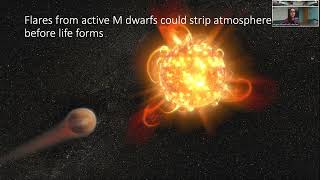
Finding Atmospheres on M Dwarf Terrestrial Planets with JWST
Explore JWST's capabilities in detecting atmospheres on M dwarf terrestrial planets and its implications for the search for habitable exoplanets through secondary eclipse photometry.
Detecting Exo-Earth Candidates with Next Generation Direct Imaging Space Telescopes
Explore cutting-edge techniques for identifying Earth-like exoplanets using advanced space telescopes in direct imaging missions.
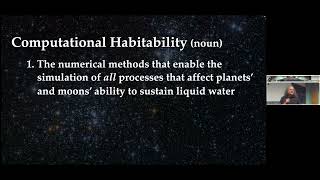
Computational Habitability
Explore computational methods for assessing planetary habitability, covering atmospheric, interior, surface, and system-wide factors in exoplanet research.
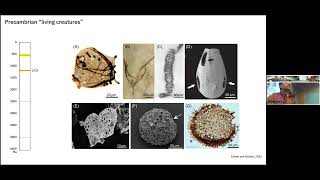
Insights into Ancient Sedimentary Environments via Three-Dimensional Reconstructions
Explore ancient sedimentary environments through 3D reconstructions, uncovering Earth's history and early life evolution via innovative analysis of rock records and fossils.

Non-enzymatic RNA Copying in Carbonate Lakes - Resolving Challenges for the Origin of Life
Explore non-enzymatic RNA copying in carbonate lakes and its implications for the origin of life. Uncover groundbreaking insights into early Earth's biochemistry.

Ice Science Advances: From Antarctic Cores to Future Mars Sampling
Explore advances in ice science through Antarctic cores and potential Mars sampling, uncovering insights about Earth and Mars' ancient climates and environments.
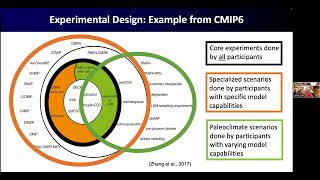
Looking Ahead to the Future of Exoplanet Climate Modeling
Explore the evolution of exoplanet climate modeling, from 1D models to sophisticated 3D simulations, and learn how JWST observations will shape future research and model refinement.

The Origin of Mercury's Structure and Chemical Composition and Their Astrobiological Implications
Explore Mercury's unique composition, formation, and implications for astrobiology. Investigate its metal-rich core, volatile elements, and comparisons to chondrites through experimental data and spacecraft observations.
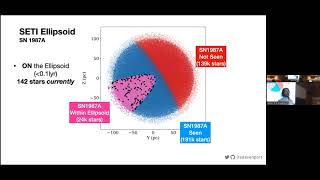
Searching the SETI Ellipsoid
Explore the concept of the SETI Ellipsoid and its role in the search for extraterrestrial intelligence with Astrobiology/Astronomy expert Jim Davenport.
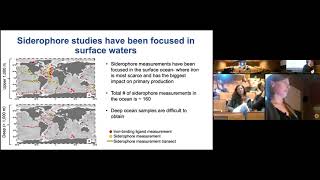
Microbial Iron Acquisition and Adaptations at Hydrothermal Vents
Explore microbial adaptations for iron acquisition in hydrothermal vents, focusing on siderophores and their role in maintaining bioavailable iron in deep-sea ecosystems.