Early Stage of Cheese Making: A Two-Step Aging Process in Milk Gels
Explore the two-stage aging process in enzymatic milk gels during cheese production, examining structural changes and their impact on optimizing industrial cheese manufacturing.
Dynamics of Active Particles at High Densities
Explore the dynamics of active particles at high densities in this advanced physics lecture by Thomas Voigtmann from the ESI's thematic programme.
From Thermal to Athermal Systems: Self-Assembly and Absorbing Phase Transitions
Explore self-assembly and absorbing phase transitions in thermal and athermal systems, bridging physics and biology in non-equilibrium processes.
Exploring Cell Tissue Dynamics in Reciprocal Space: A Differential Dynamic Microscopy Approach
Explore cell tissue dynamics using differential dynamic microscopy in reciprocal space, uncovering non-equilibrium processes in physics and biology.
Artificial Intelligence Meets the Natural World
Explore AI's impact on biodiversity research, climate solutions, and natural world protection. Discover opportunities and challenges in applying AI to evolutionary studies and environmental conservation.
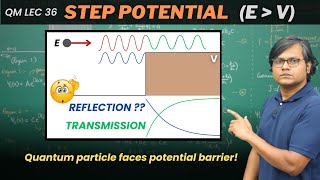
Step Potential: Reflection and Transmission Probability Derivation - Part I (E > V)
Explore quantum particle behavior at potential steps, deriving reflection and transmission probabilities. Gain insights into wave-like properties and partial reflection phenomena.
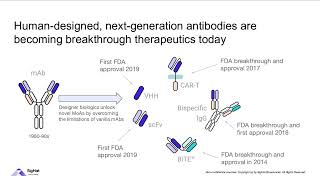
Enabling Faster Therapeutic Antibody Discovery Through AI/ML-Wet Lab Integration
Explore AI/ML-guided antibody design for faster, more effective therapeutic discovery using an integrated platform that combines high-speed wet lab with advanced automation.
Unlocking the Potential of Ultra-Low Frequency Variant Identification for Cancer Research
Explore advanced techniques for identifying ultra-low frequency variants in cancer research, enhancing biomarker discovery and personalized treatment strategies.
Unveiling the Potential of CRISPR: A Guide to Gene Editing
Explore CRISPR gene editing technology, its applications, and IDT's Alt-R products through an overview of design tools, reagents, and a case study on CRISPR solutions.
Overcome Challenges in Cancer Research with xGen NGS Solutions for Oncology and MRD Research
Explore advanced NGS solutions for cancer and MRD research, enhancing library complexity and offering customizable hybridization capture approaches.
Accelerated mRNA Manufacturing from Synthetic DNA Templates
Explore mRNA applications and production challenges, focusing on BASE's strategies for optimizing workflows and increasing capabilities using synthetic templates.
A Scalable, Cost-Efficient Method for Targeted Enrichment of Long Fragments for Third-Gen Sequencing
Discover a scalable targeted enrichment protocol for long DNA fragments, demonstrated with a custom blood group panel and highly multiplexed enrichment pool of 16 samples.
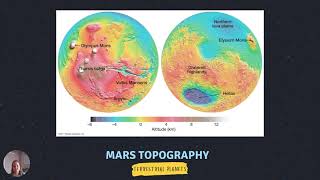
Introduction to Our Solar System
Explore the wonders of our cosmic neighborhood and gain insights into the planets, moons, and other celestial bodies that make up our Solar System.
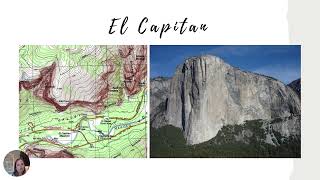
Topographic Maps: An Introduction
Explore topographic maps: learn to read contour lines, interpret elevation, and understand terrain features for navigation and land analysis.
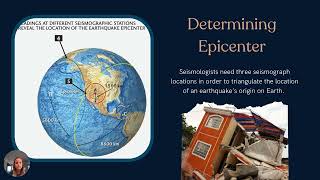
Earth's Geosphere - Crustal Deformation: Earthquakes
Explore earthquakes, seismic waves, and their impacts. Learn to determine epicenters and magnitudes while examining notable seismic events worldwide.
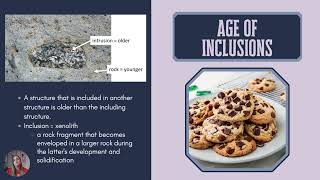
Earth's Past: Geochronology
Explore Earth's history through geochronology, learning dating techniques and geological timescales. Gain insights into our planet's ancient past and evolutionary timeline.
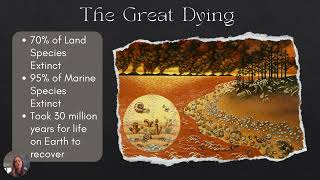
Mass Extinctions: A Brief Summary of Earth's Major Catastrophic Events
Explore Earth's major mass extinctions, their causes, and impacts on biodiversity throughout geological history.
The Creation, Collections, and Curators of the Rutgers University Geology Museum
Explore the rich history, diverse collections, and dedicated curators of the Rutgers University Geology Museum, uncovering its significance in geological education and research.
Planetary Geology: Mars Exploration - Presentation Only
Explore Mars through a graduate student's presentation, delving into the Red Planet's geological wonders and scientific mysteries.
Mineral Identification - Ask a Geologist Series
Learn mineral identification techniques from a geology expert, exploring physical properties and tools used to classify rocks and minerals found in nature.
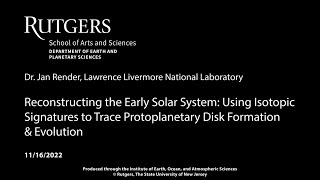
Reconstructing the Early Solar System
Explore early solar system formation through meteoritic analysis, isotopic anomalies, and integrated data to uncover the origins of our cosmic neighborhood.