How Software Can Feed the World
Explore how Python-based software supports innovative indoor farming, addressing global food challenges through IoT, real-time monitoring, and edge computing with AI.
Bioinformatics Pipeline for Revealing Tumour Heterogeneity
Explore a Python-based bioinformatics pipeline for analyzing single-cell DNA sequencing data to reveal tumor heterogeneity, aiding in personalized cancer treatment decisions.
When a Biologist Met Python
Explore the intersection of biology and Python, discovering how computational tools enhance biological research and improve scientific workflows.
When a Biologist Met Python
Explore the intersection of biology and Python, discovering how this programming language revolutionizes research in computational biology and bioinformatics through various modules and tools.

Astro Pi - Python on the International Space Station
Explore Python programming on the International Space Station with Astro Pi, a collaboration between Raspberry Pi Foundation and ESA, offering exciting opportunities for students to conduct space experiments.
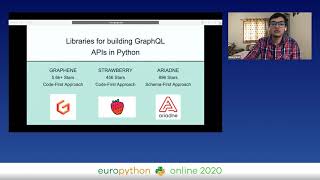
Developing GraphQL API in Django Using Graphene
Learn to build efficient GraphQL APIs in Django using Graphene. Explore ObjectTypes, Queries, Mutations, and pagination while understanding the advantages over REST APIs.
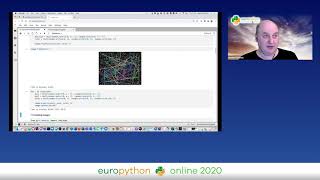
PyRT - Computer Graphics in Jupyter Notebooks for Fun and Teaching
Explore pyRT for raytracing in Jupyter notebooks, creating 2D animations, visualizing algorithms, rendering geodata, and generating 3D graphics with Python.

Radio Astronomy with Python
Explore radio astronomy using Python, focusing on redshift studies, galaxy distribution analysis, and machine learning techniques for processing large astronomical datasets.
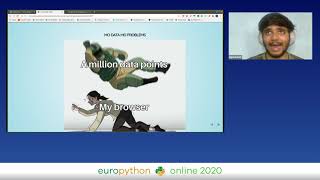
Interactive Mapmaking with Python
Explore interactive mapmaking using Python and GeoDataframes. Learn to create visually appealing maps with libraries like Folium, Kepler.gl, and Plotly, and discover Geopatra for simplified geodata visualization.
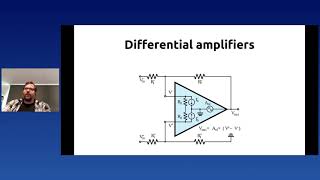
Heartbeats for Hackers
Explore electrocardiography, from heart basics to building an ECG with Arduino. Learn data analysis and machine learning techniques for heart data interpretation.
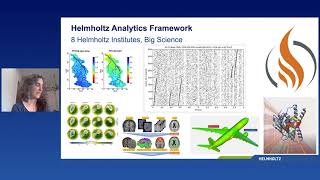
Connecting Communities - The Helmholtz Analytics Framework and the Making of Heat
Explore challenges and insights from uniting diverse academic fields for the Helmholtz Analytics Framework, focusing on HPC, Scientific Big Data, co-design, and Python integration.
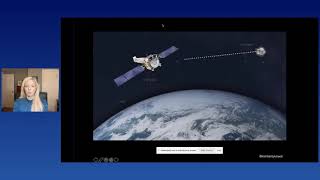
Our Universe through Sight, Sound & Touch
Explore the cosmos through innovative sensory experiences: listen to stellar explosions, walk through the Milky Way in VR, and feel vibrations of stellar nurseries. Transform 2D data into immersive, multi-dimensional encounters with our universe.
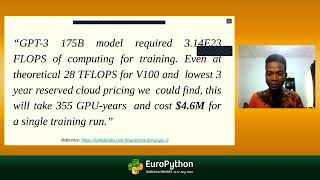
Open Science - Building Models Like We Build Open-Source Software
Explore the concept of developing pre-trained models collaboratively, applying open-source software principles to machine learning for wider participation and continuous improvement.
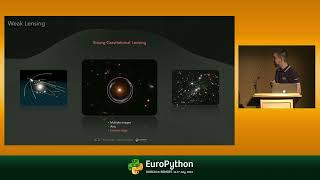
ShapePipe - A Modular Weak-Lensing Processing and Analysis Pipeline
Explore a Python-based pipeline for analyzing weak gravitational lensing, aiding cosmologists in understanding dark matter and dark energy through precise galaxy shape measurements.
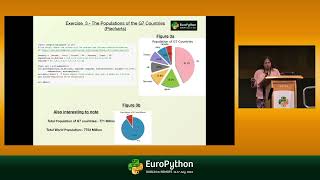
Creating the Next Generation of Billionaires - Part 4
Explore how young people use Python to analyze real-world issues like climate change and population growth, showcasing the impact of early programming education on problem-solving skills.
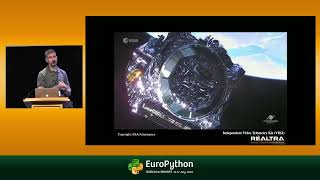
Python's Role in Unlocking the Secrets of the Universe with the James Webb Space Telescope
Explore how Python powers data processing for the James Webb Space Telescope, enabling groundbreaking discoveries about the Universe's origins, star formation, and exoplanets.
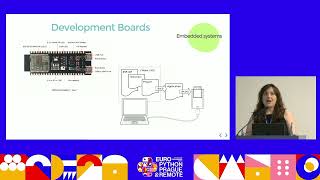
Continue Thinking Small - Next Level Machine Learning with TinyML
Explore TinyML for deploying machine learning on microcontrollers. Learn about hardware options, frameworks, and real-world applications in agriculture, conservation, health, and ecology monitoring.
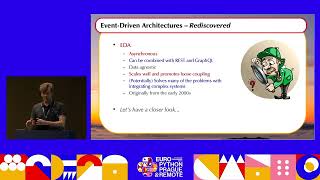
Diving into Event-Driven Architectures with Python
Explore Event-Driven Architectures (EDAs) implementation in Python, focusing on scalability and complexity management for modern applications. Gain insights into key components and connections.
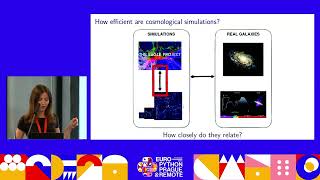
How Well Do We Understand Our Universe? Let's Python It Out!
Explore cosmic evolution using Python and machine learning to model the Universe's history, train AI on simulations, and apply findings to real galaxies, shedding light on their cosmic past.
Open Source Databases - Summit Preview
Learn to centrally monitor, diagnose, and report on open source databases alongside SQL Server, Oracle, and DB2 deployments in a single pane of glass.
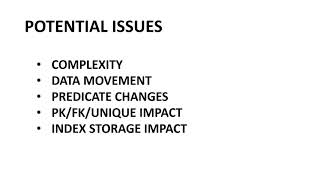
Table Partitioning 101
Learn table partitioning in SQL Server: advantages, disadvantages, implementation, and best practices for improved database management and performance optimization.