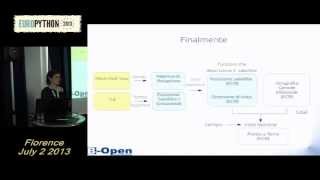
Simulare l'assetto e l'orbita di un satellite con SymPy e PyEphem
Esplora la simulazione di assetto e orbita satellitare utilizzando SymPy e PyEphem, apprendendo tecniche avanzate per modellare il comportamento dei satelliti nello spazio.
Python on Mars
Explore Python's role in Mars exploration, including its applications in space missions, data analysis, and robotic control systems used by space agencies.
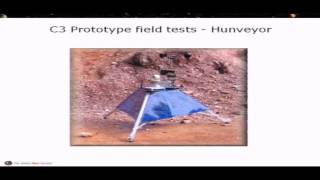
Python su Marte
Esplorazione di come Python viene utilizzato nelle missioni spaziali su Marte, con focus sulle applicazioni pratiche e le sfide uniche dell'informatica interplanetaria.
VPython Goes to School
Explore VPython's potential in high school education, linking programming concepts with math, physics, and chemistry through interactive 3D visualizations and simulations.
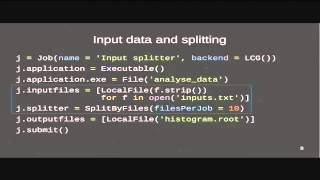
Ganga - An Interface to the LHC Computing Grid
Explore Ganga, a Python-based interface for CERN physicists to manage and distribute data analysis tasks across global computing resources, from local machines to worldwide centers.
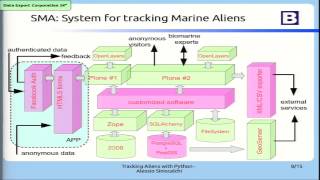
Citizen Science - Tracking Aliens with Python
Learn to track invasive marine species using Python in citizen science projects. Explore strategies for data collection, workflow design, and technology choices for mobile apps and web platforms.
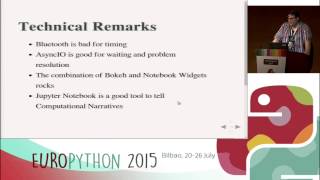
Brainwaves for Hackers 2.0
Explore EEG experiments using Neurosky Mindwave, integrating with IPython Notebook and Raspberry Pi. Learn about brain waves, IoT applications, and data analysis techniques for real-time brainwave monitoring.
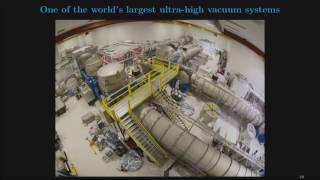
LIGO - The Dawn of Gravitational Wave Astronomy
Explore the groundbreaking discovery of gravitational waves by LIGO, its significance in astronomy, and the crucial role Python played in this scientific milestone.
Python in Astronomy
Explore Python's role in modern astronomy, from data analysis to visualization. Learn about AstroPy and see real-world applications in astronomical research and computation.
Unveiling the Universe with Python
Explore how Python and Monte Carlo simulations unveil the mysteries of the Universe, from analyzing cosmic microwave background data to revealing the surprising dominance of dark matter and energy.
Brainwaves for Hackers 3.0
Explore brain secrets using Python and EEG devices. Interactive Jupyter experiments demonstrate evoked response potentials and neurofeedback training for hands-on brain wave analysis.
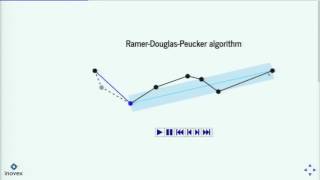
Handling GPS Data with Python
Learn to handle GPS data in Python, from reading/writing tracks to visualizing on OpenStreetMap. Explore libraries, add elevation data, and understand algorithms like Douglas-Peucker and Kalman filters for track simplification and smoothing.
How Can Machine Learning Help to Predict Changes in Size of Atlantic Herring
Explore machine learning techniques to predict Atlantic herring size changes using environmental and fishing data, with implications for conservation and sustainable fisheries management.
Best Practices for Debugging
Learn systematic debugging strategies for Python, covering syntax errors, runtime exceptions, scientific method, variable inspection, interactive debuggers, and delta debugging techniques.
Solid Snakes
Learn strategies to enhance software reliability, minimize manual interventions, and reduce the need for emergency fixes, ensuring more peaceful nights and stress-free vacations for developers and system administrators.
Facing the Challenge of Climate Change with Xarray and Dask
Explore climate data analysis using xarray and Dask, leveraging Python's scientific ecosystem to process and visualize complex climate forecasts and projections from the Copernicus Climate Change Service.
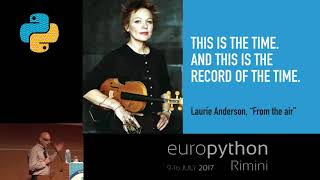
Fighting the Controls - Tragedy and Madness for Programmers and Pilots
Explore parallels between debugging in programming and crisis management in aviation, uncovering strategies to improve troubleshooting techniques and avoid common pitfalls in software development.
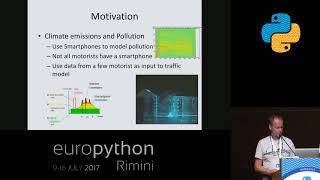
Modelling Pollution from Traffic, Using Smartphone Data and Python
Explore Python-based modeling of traffic pollution using smartphone data, combining traffic assignment, econometric models, and congestion analysis for urban environmental monitoring and mitigation.
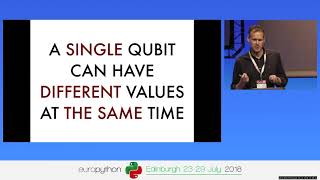
Quantum Computing - A Very Gentle Glimpse into a Possible Future
Demystifying quantum computing: explore key concepts, potential applications, and Python's role in this emerging field. Gain insights into qubits, algorithms, and practical challenges.
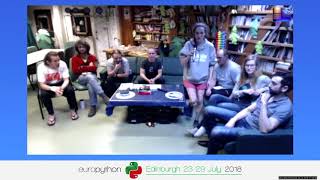
White Mars - Living Far Away From Any Form of Life
Explore life and scientific research at Concordia Station in Antarctica, an isolated environment mimicking extraterrestrial conditions, and its implications for space exploration and human adaptation.
Citizen Science with Python
Explore data-driven humanitarian and healthcare projects using Python, with audience experiments and inspiration for running your own scientific experiments using the Python stack.