Convergence of Ideas and Communities
Explore global ocean policy perspectives with experts from Europe and the US, discussing research initiatives, funding, and international collaborations for marine sciences advancement.
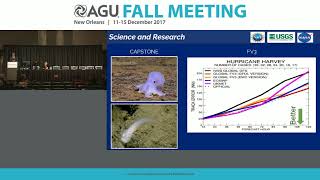
Perspectives and Priorities on Earth and Space Science
Explore perspectives on Earth and space science from NOAA, NASA, USGS, and NSF. Gain insights into satellite data, weather research, fleet operations, and cutting-edge missions like Europa exploration and the Parker Solar Probe.
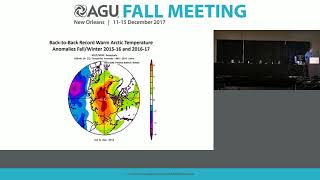
Indicators of Processes and Feedbacks Contributing to Arctic Change and Their Linkages to Global Change
Explores indicators of Arctic change, including permafrost, glaciers, sea ice loss, and their global impacts. Discusses climate models, temperature anomalies, and regional panels addressing Arctic-midlatitude connections.
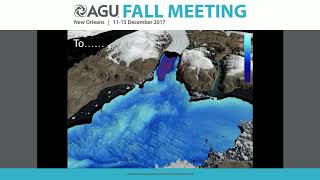
Seafloor Mapping - Progress, Discoveries, Innovations, and Collaborations
Explore seafloor mapping progress, discoveries, and innovations. Learn about international collaborations, marine databases, and geological products from leading experts in oceanography and marine science.
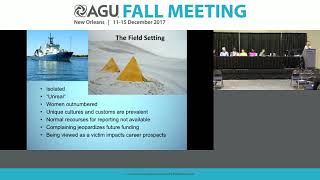
Creating Inclusive and Diverse Field and Lab Environments
Strategies for fostering inclusive and diverse environments in geoscience fieldwork and labs, addressing barriers and promoting equal participation through leadership, training, and policy changes.
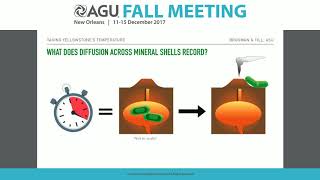
Student Engagement to Enhance Development
Explore diverse geoscience topics through student presentations, covering Yellowstone's temperature, seismic tomography, stress management, uncertainty quantification, magma modeling, field observations, climate, and methane flux estimation.
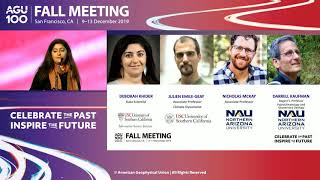
Inspire the Future for the Benefit of Humanity
Exploring Earth and space science challenges: climate change, natural disasters, ecosystems, energy transition. Experts discuss innovative solutions and opportunities to benefit humanity through interdisciplinary collaboration and public engagement.
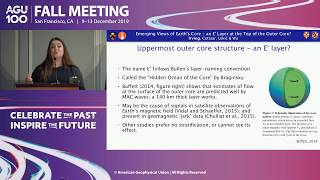
Emergent Views of the Earth’s Deep Interior
Explore cutting-edge research on Earth's deep interior through seismology, geodynamics, and mineral physics. Discover new insights on mantle dynamics, core composition, and planetary formation.
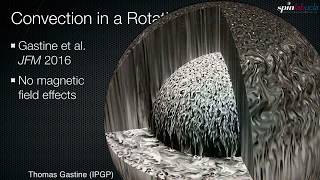
A Primer on Core Dynamics
Explore Earth's core dynamics, from fundamental principles to advanced concepts like quasigeostrophic flow and rotating convection, uncovering the mysteries of our planet's interior.
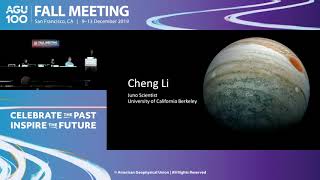
Juno Science Results Since Jumping Jupiter's Shadow
Latest findings on Jupiter's polar cyclones, magnetic field, auroras, lightning, and stunning imagery from JunoCam, presented by Juno mission scientists at AGU Fall Meeting 2019.
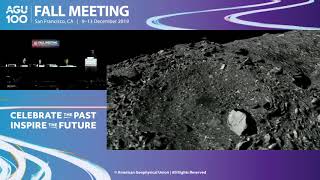
NASA's OSIRIS-REx Sample Collection Site Announcement
NASA's OSIRIS-REx team announces primary and backup sample collection sites on asteroid Bennu, detailing the selection process, mapping efforts, and plans for the 2020 sampling event.
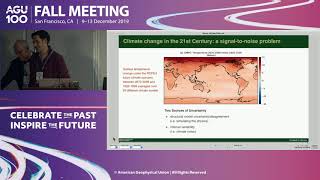
Data Analytics and Machine Learning Innovation for Climate and Earth Surface Processes
Explore innovative data analytics and machine learning techniques for climate and Earth surface processes, focusing on big data challenges and opportunities in Earth system modeling and predictability.

The Future of Lunar and Mars Exploration
Explore Apollo's legacy and NASA's Artemis program for lunar return, examining lunar samples, solar system formation, and future Mars exploration.
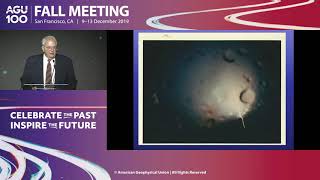
The Apollo 12 Lightning Incident - Fifty Years of Advancing the State of the Art
Exploring the Apollo 12 lightning incident, its impact on space missions, and advancements in launch safety protocols over 50 years. Discusses lessons learned and ongoing research in atmospheric electricity.
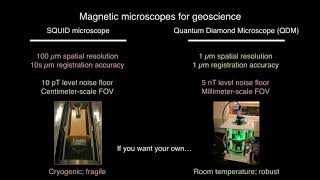
Magnetic Microscopy Talk
Explore magnetic microscopy in geoscience, examining rock magnetization, SQUID and QDM technologies, and their applications in studying chondrites and speleothems.

Getting Beyond Earth - Exploring the Solar System
Explore the solar system through expert presentations on past and present missions, gaining insights into planetary bodies and Earth while understanding the importance of continued space exploration.
New Access to Space
Panel discussion on new opportunities in lunar exploration, featuring commercial spacecraft programs, small satellites, and international missions to unexplored lunar regions.
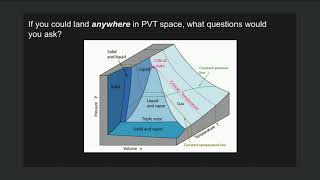
Novel Experiments for Understanding the Interior of the Earth, Planets, and Exoplanets
Explore cutting-edge techniques to unravel the mysteries of Earth's interior and other celestial bodies, from high-pressure experiments to dynamic compression and advanced spectroscopy.
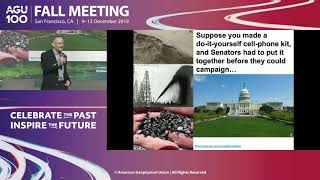
Current Problems Facing Our Planet and Society
Exploring planetary changes, human impacts, and societal challenges through scientific connections. Highlights sea level rise and complex global interactions affecting communities worldwide.
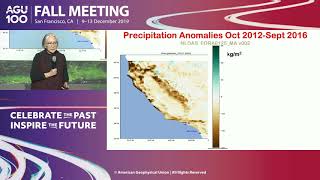
Habitability of Planet Earth in the Modern Anthropocene
Explore Earth's habitability evolution and human impact in the Anthropocene through expert talks on climate, water, and effective science communication.
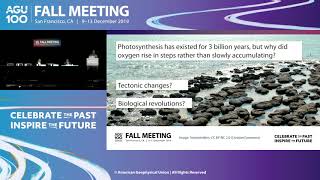
What Controlled the Rise of Oxygen on Earth?
Explore new findings challenging theories on Earth's oxygenation events, their sources, and implications for understanding oxygen history on Earth and other planets.