Ten Months of Perseverance - Jezero Science
Exploring Perseverance's discoveries on Mars: Jezero crater floor, Séítah geologic unit, and future plans for the ancient river delta. Insights into Mars' geological history and potential for past life.
Major Discoveries as NASA's Parker Solar Probe Closes in on the Sun
NASA scientists share groundbreaking discoveries from Parker Solar Probe's close encounters with the Sun, revealing unprecedented insights into solar mysteries and advancing our understanding of our star's behavior.
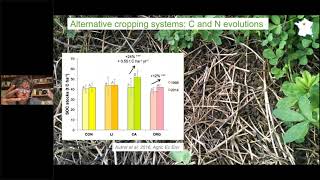
Soil Carbon Sequestration - When Does Increased Soil C Storage Yield Net Removal of Greenhouse Gases
Explore soil carbon sequestration's impact on greenhouse gases, featuring case studies from France and U.S. Midwest. Discuss organic agriculture, nitrogen leaching, and mitigation strategies for reducing agriculture's GHG impact.
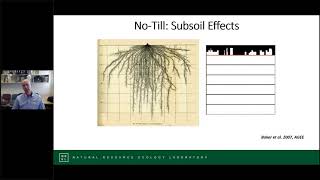
Soil Carbon Sequestration - How Does Tillage Affect Soil Carbon?
Explore tillage's impact on soil carbon with experts discussing conservation practices, long-term experiments, and debates surrounding carbon sequestration in agricultural lands.
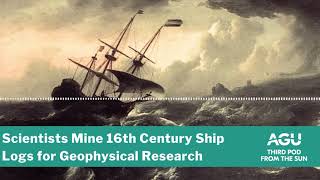
Scientists Mine 16th Century Ship Logs for Geophysical Research
Explore how historical ship logs from the Age of Sail provide crucial data for mapping Earth's magnetic field over the past 400 years, blending maritime history with modern geophysical research.

Conversations About Career Paths for Atmospheric Scientists in the Private Sector
Explore diverse private sector careers for atmospheric scientists, featuring insights from industry professionals on work environments, responsibilities, and transitioning from academia.
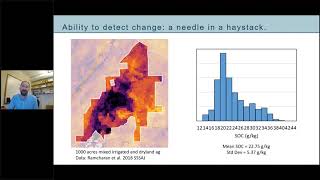
Measuring Soil C - Emerging Approaches
Explore emerging approaches for measuring soil carbon with experts from the Soil Health Institute and Woodwell Climate Research Center, focusing on widespread quantification and monitoring techniques.
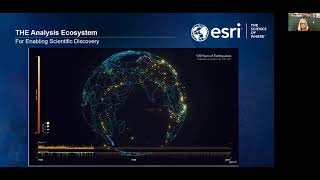
Earth Science Research Methods - Protecting Our Planet
Explore cutting-edge technologies and analytical methods in Earth sciences to address global challenges like climate change, pollution, and ecosystem degradation for the benefit of humanity.
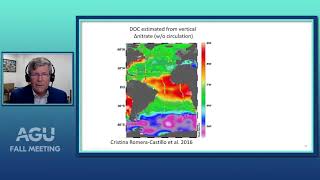
Oceanic Dissolved Organic Carbon - The World Tour
Explore the dynamics of oceanic dissolved organic carbon, a major carbon reservoir, through global observations and data analysis. Uncover sources, sinks, and controls across ocean basins.
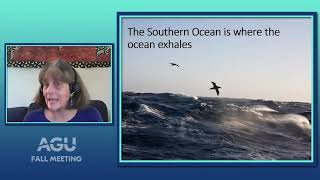
The Southern Ocean’s Role in Glacial Cycles - Engine Not Caboose?
Explore the Southern Ocean's critical role in Earth's climate engine and glacial cycles through multiple proxies, focusing on its impact on atmospheric CO2 levels and ocean dynamics.
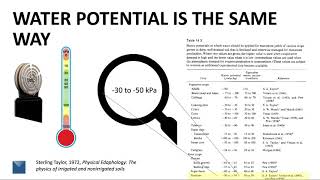
Why Water Content Can't Tell You Everything and Other Research-Ruining Mistakes
Discover common research pitfalls, best practices, and strategies for effective field data collection in soil moisture studies, emphasizing the importance of comprehensive measurements beyond water content.
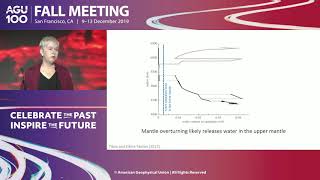
Evolution of the Differentiated Earth
Explore Earth's early evolution from accretion to habitability, covering magma oceans, differentiation, magnetic field formation, and the emergence of life-sustaining conditions.
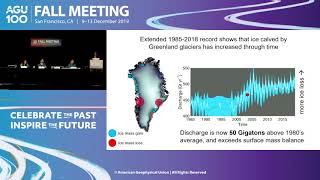
Ice in Motion - Decades of Satellite Images Illuminate Change
Satellite imagery reveals decades of ice changes, showcasing glacier retreat, Greenland melt, and Antarctic subsurface lakes. Experts discuss climate impacts on Earth's cryosphere using long-term observations.
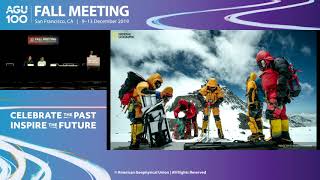
The Importance and Vulnerability of the World's Water Towers
Climate scientists discuss the critical role of mountain regions as "water towers" for global water supply, their vulnerability to climate change, and strategies for sustainable management.
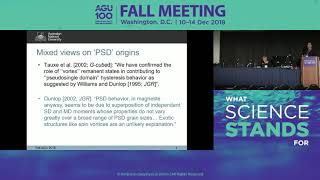
Grand Challenges in Rock and Paleomagnetism
Explore frontiers in rock magnetism, paleomagnetism, and geomagnetic field behavior with expert talks on atomic-scale properties, big data applications, and Earth's magnetic history.
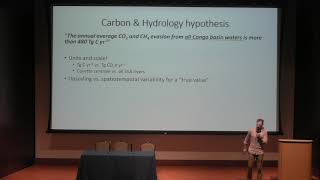
Hydrologic Research in the Congo Basin
Explore Congo Basin hydrology research, discussing CO2/CH4 emissions, wetlands, modeling challenges, and ecosystem productivity. Gain insights into this vital yet understudied region.
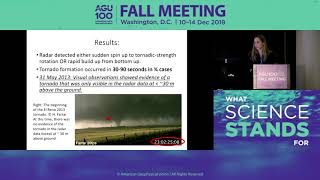
New Insights into the Formation of Tornadoes
New insights challenge traditional understanding of tornado formation in supercell thunderstorms, potentially revolutionizing forecasting methods and warning systems for these destructive phenomena.
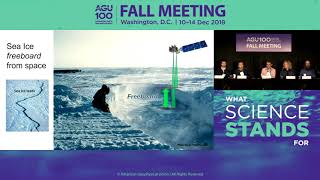
First Results from NASA’s New Ice-Measuring Space Laser
NASA scientists present groundbreaking data from ICESat-2, revealing detailed Earth surface features and ice measurements. This innovative space laser provides crucial insights for climate research and sea level predictions.
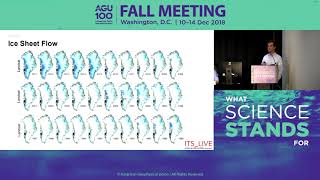
Changes in East Antarctic Glaciers
New findings reveal acceleration of East Antarctic glaciers near Totten Glacier over the past decade, challenging long-held stability assumptions and potentially impacting global sea levels. Causes and implications discussed.
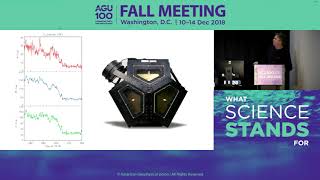
Voyager 2 - Updates on the Journey to Interstellar Space
Scientists share latest observations from Voyager 2 as it approaches interstellar space, providing unique insights into the heliosphere's boundary and the nature of space beyond our solar system.
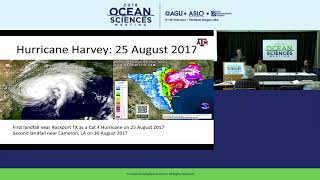
Unusual Ocean Conditions and Hurricane Harvey
Exploring unusual Gulf of Mexico conditions that contributed to Hurricane Harvey's intense rainfall, atypical storm surge, and rapid intensification through new research findings.