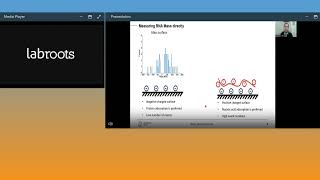
Elucidating the Composition of CRISPR Cas12f1 Complexes Using Mass Photometry
Explore the composition of CRISPR-Cas12f1 complexes through mass photometry, revealing insights into their stoichiometry and interactions with nucleic acids for improved genome editing applications.
ChipCytometry - Practical and Approachable Multiplexing for Spatial Biology
Explore ChipCytometry™ technology and CellScape™ instrument for practical, approachable multiplexed spatial biology integration. Learn about open-source reagents, antibody validation, and data analysis tools for enhanced research capabilities.
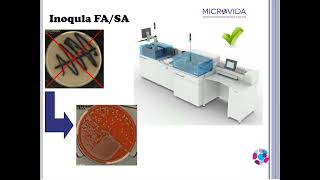
From Soup to Nuts - The Journey of a Sample Through an Automated Clinical Microbiology Lab
Explore the journey of clinical samples through an automated microbiology lab, focusing on standardization, efficiency, and accelerated processing for timely diagnostic results.
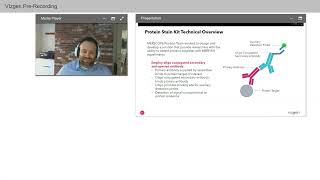
Visualizing In Situ Single-Cell Multi-Omic Gene Expression from FFPE Tissue with MERSCOPE
Explore MERSCOPE's advanced capabilities for visualizing single-cell gene expression in FFPE tissue, including protein co-detection and enhanced sample processing for deeper biological insights.
Studying the Glymphatic System Using Light Sheet Microscopy
Explore the glymphatic system's role in brain health using cutting-edge light sheet microscopy. Gain insights into CSF circulation, solute clearance, and potential implications for neurological diseases.
Tips, Tricks, and Optimization: A User's Guide to BOND RX and Chromogenic Multiplexing in Research
Optimize IHC and multiplex staining protocols with expert guidance on BOND RX usage, chromogenic multiplexing, and best practices for research applications. Gain step-by-step insights for software configuration and problem-solving.
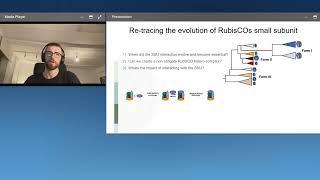
The Evolution of Carbon Fixation: Studying Form I Rubisco Using Ancestral Sequence Reconstruction and Mass Photometry
Explore the evolutionary trajectory of Form I Rubisco, the key CO2-fixing enzyme, using ancestral sequence reconstruction and mass photometry to unravel its complex development.
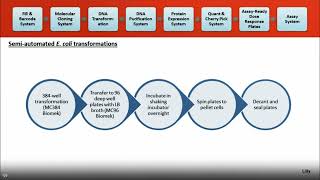
Single Cell Antibody Discovery Using Islands of Automation
Explore advanced automation techniques for single cell antibody discovery, focusing on Eli Lilly's 'Islands of Automation' approach to accelerate drug development timelines and increase research efficiency.
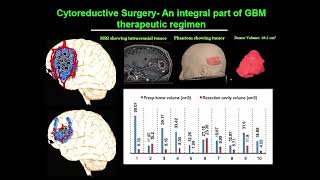
Innovation in Science and Technology: Translating Cellular Therapies from Bench to Bedside
Explore strategies for developing cellular therapies through gene editing and learn to create and validate tumor models for clinical translation of therapeutic cells.
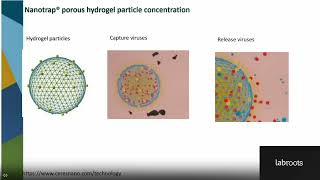
Beyond SARS-CoV-2: Application of Absolute Q Digital PCR System for Waterborne Pathogens
Explore digital PCR applications for detecting waterborne pathogens beyond SARS-CoV-2. Learn about challenges in monitoring enteric pathogens and innovative solutions for environmental water sample analysis.
Gene Structure Heterogeneity and Loop Extrusion Drive Transcriptional Noise in Human Cells
Explore how gene structure diversity and loop extrusion mechanisms influence transcriptional variability in human cells, impacting phenotypic variation within cell populations.
Physical Genomics Training Program Research Showcase
Explore cutting-edge research in physical genomics, including genome organization mapping, nanoparticle-based cancer treatment, and chromatin organization in transcription.
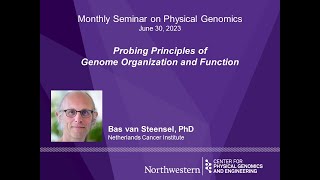
Probing Principles of Genome Organization and Function
Explore innovative genomics technologies for understanding gene regulation and chromatin organization in mammalian cells. Discover approaches to alter genomic structure and study its impact.
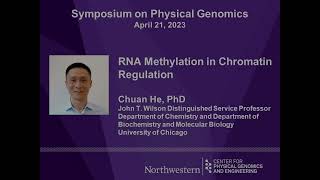
RNA Methylation in Chromatin Regulation
Explore RNA methylation's role in chromatin regulation and gene expression. Discover groundbreaking findings on reversible RNA modifications and their impact on biological processes.
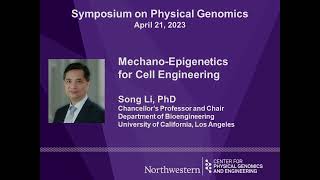
Mechano-Epigenetics for Cell Engineering: Biophysical Regulation and Applications
Explore mechano-epigenetics for cell engineering, focusing on biophysical regulation, mechanotransduction, and nuclear deformation's impact on gene activation and chromatin accessibility.
Quantitative Imaging of Nuclear Organization
Explore quantitative imaging techniques for nuclear organization with Prof. Carolyn Larabell. Discover soft x-ray tomography and cryo fluorescence tomography for near-native cellular imaging.
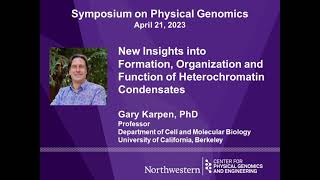
New Insights into Formation, Organization and Function of Heterochromatin Condensates
Explore new insights into heterochromatin condensates' formation, organization, and function with Gary Karpen's research on chromosome structure and its impact on genome stability.
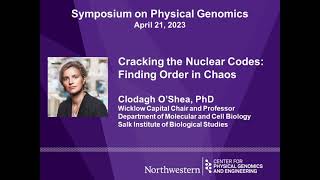
Cracking the Nuclear Codes: Finding Order in Chaos
Explore interdisciplinary research blending virology, biology, and genomics to uncover genetic circuits in viral replication and cancer growth, with insights from the Salk Institute.

Alterations in Spatial Genome Compartmentalization Associated with Constriction and Expansion
Explore 3D genome structure changes in cells under physical stress, examining constricted migration and nuclear expansion effects on chromosome organization and gene expression.
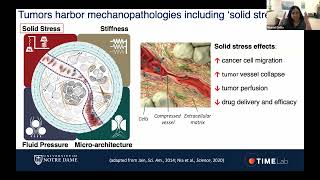
Abnormal Mechanics in Brain Tumors: Implications for Immunotherapy
Explore abnormal mechanics in brain tumors and their impact on immunotherapy efficacy, focusing on solid stress measurement, neurological effects, and potential treatment strategies.

Thermodynamics as a Tool for Quantum Gravitational Dynamics
Explore how thermodynamics of local causal horizons encodes gravitational dynamics and its implications for understanding quantum gravity effects.