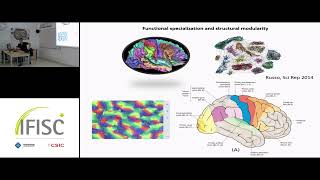
Information Processing in Oscillating Brain
Explore how oscillations in the brain contribute to information processing and cognitive functions. Gain insights into neural dynamics and their role in cognition.
Statistical Physics at 65
Explore advanced concepts in statistical physics, focusing on complex systems and interdisciplinary applications. Gain insights from leading experts in the field.
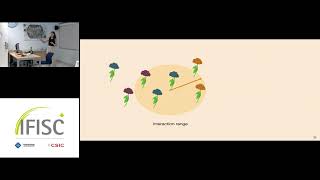
Exploring Ecological and Social Interactions Through the Lens of Complex Systems
Analyze ecological and social interactions using complex systems theory. Gain insights into interconnected dynamics of nature and society.
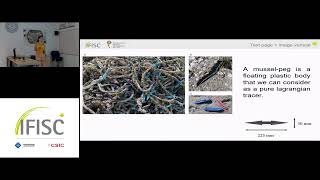
Lagrangian Transport of Floating Plastics at Local and Regional Scales Using MOHID-Lagrangian
Explore Lagrangian transport modeling for floating plastics using MOHID-Lagrangian, focusing on local and regional scale applications.
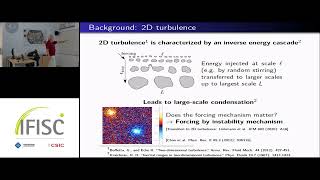
Instability-Driven Turbulence
Explore instability-driven turbulence and its complex dynamics in physical systems through advanced theoretical and computational approaches.
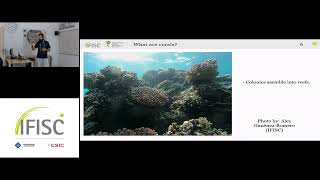
On the Formation of Coral Reefs
Explore the fascinating process of coral reef formation, delving into the complex ecological systems and environmental factors that shape these underwater wonders.
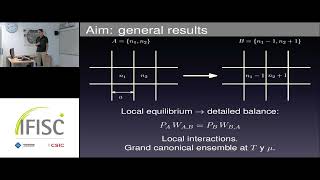
Transition Probabilities and Diffusion Coefficient in Interacting Particle Systems
Explore transition probabilities and diffusion coefficients in interacting particle systems, delving into complex physics concepts and their applications.
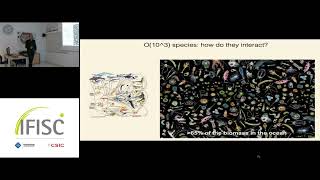
Understanding the Structure and Functioning of Oceans' Microbiomes - Toward a Holistic View
Explore ocean microbiomes' structure and function, gaining a holistic perspective on these complex ecosystems and their impact on marine environments.
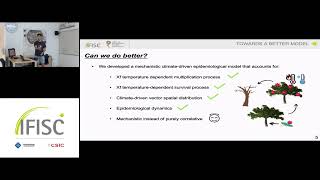
A Climate-Driven Epidemiological Model for Pierce Disease of Grapevines
Explore a climate-driven epidemiological model for Pierce disease in grapevines, examining its impact and implications for vineyard management and sustainability.
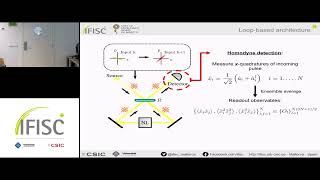
Constructive Effects of Squeezing in Loop-Based Quantum Photonic Architectures for Quantum Reservoir Computing
Explore constructive effects of squeezing in loop-based quantum photonic architectures for quantum reservoir computing, enhancing understanding of advanced quantum systems.
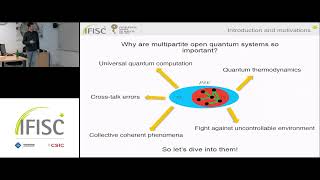
Characterization and Simulation of Multipartite Open Quantum Systems
Explore advanced techniques for characterizing and simulating complex multipartite open quantum systems, enhancing understanding of quantum dynamics and interactions.
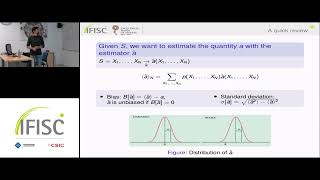
Entropy Estimators for Markovian Systems
Explore entropy estimators for Markovian systems, delving into advanced concepts and methodologies in statistical physics and complex systems analysis.
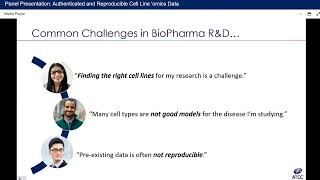
Authenticated and Reproducible Cell Line 'omics Data
Explore ATCC Cell Line Land for authenticated genomic profiles of cell lines. Access standardized 'omics data to enhance preclinical experiment planning and design. Learn about data curation, provenance, and practical applications.
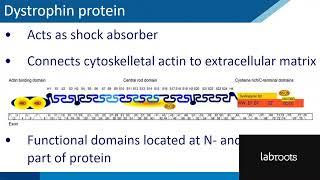
Dystrophin Quantification in Preclinical and Clinical Settings
Explore dystrophin quantification methods for Duchenne muscular dystrophy therapies. Learn about exon skipping, gene therapy approaches, and measuring dystrophin levels in clinical trials.
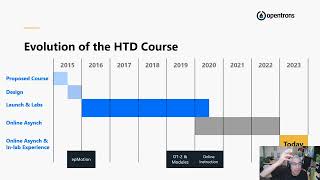
Lab Automation for High-Throughput Discovery Science
Explore lab automation for high-throughput discovery science in undergraduate and graduate courses. Learn about integrating research-scale automation, designing scripts, and embracing new challenges with liquid handlers.
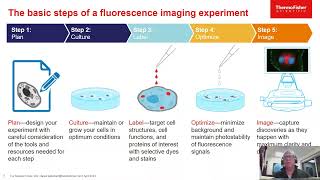
Practical Considerations for Fluorescent Cell Staining and Microscopy in Cancer Cell Biology
Explore fluorescence microscopy techniques for cancer research, covering cell staining, imaging methods, and applications in drug discovery and mechanism studies for 2D and 3D models.
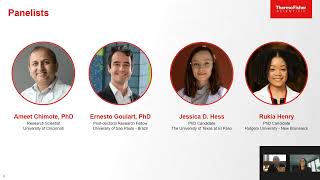
SLC25A46 as a Novel Mitochondrial Regulator and Biomarker in Breast Cancer
Explore SLC25A46's role as a novel mitochondrial regulator and biomarker in breast cancer, focusing on its impact in triple-negative breast cancer and potential for targeted treatments.
Simplifying Somatic NGS Analysis and Reducing Literature Review Time with HSMD
Streamline somatic NGS analysis and reduce literature review time by 90% with the Human Somatic Mutation Database. Explore genomic content, clinical trials, and expert-curated insights for solid tumors and hematological malignancies.
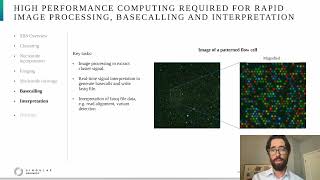
Delivering Fast, Flexible Next-Generation Sequencing through Innovations in Chemistry and Engineering
Explore rapid next-generation sequencing innovations for faster, flexible DNA analysis in research and clinical applications, reducing turnaround time and improving cost-effectiveness.
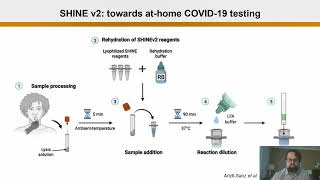
Detecting Viruses with CRISPR: Applications and Technologies
Explore CRISPR-based technologies for detecting and destroying viral RNA, including point-of-care and massively multiplexed nucleic acid detection methods like HUDSON, SHINE, and CARMEN.
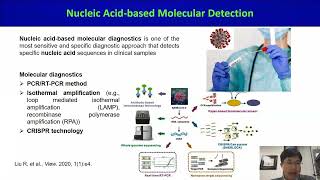
CRISPR-based Microfluidic Biosensing Systems for Molecular Diagnostics
Explore CRISPR-based microfluidic biosensing for molecular diagnostics. Learn about innovative point-of-care detection methods for pathogens and cancers, combining CRISPR and microfluidic technologies.