Gene Regulatory Network Structure and Perturbation Effects Distribution - Simulation and Analysis
Explore gene regulatory network structure and its impact on perturbation effects. Gain insights into simulating and modeling GRNs for improved understanding of gene expression regulation.
OpenFold: Lessons Learned and Insights from Rebuilding and Retraining AlphaFold2
Explore insights from rebuilding AlphaFold2, including performance analysis, learning mechanisms, and current progress in protein structure prediction.
Training Neural Network Potentials: Bayesian and Simulation-based Approaches
Explore advanced techniques for training neural network potentials in molecular dynamics simulations, including data-efficient methods, experimental data integration, and uncertainty quantification for reliable results.
Accelerating Cryptic Pocket Discovery Using AlphaFold and Markov State Modeling
Explore cryptic pocket discovery using AlphaFold and Markov State Modelling. Learn about Plasmepsin II, transition states, and activation mechanisms in drug discovery.
Chemically Transferable Generative Backmapping of Coarse-Grained Proteins
Explore innovative machine learning techniques for generative backmapping of coarse-grained proteins, focusing on transferability, reliability, and efficiency in molecular simulations.
Cell Morphology-Guided De Novo Hit Design by Conditioning GANs on Phenotypic Image Features
Explore cell morphology-guided de novo hit design using GANs conditioned on phenotypic image features for efficient bioactive molecule development in drug discovery.
Path Integral Stochastic Optimal Control for Sampling Transition Paths in Molecular Dynamics
Explore stochastic optimal control for sampling molecular transition paths, considering full geometry without relying on collective variables. Applicable to larger proteins like Polyproline and Chignolin.
Interpretable Chirality-Aware Graph Neural Networks for QSAR Modeling in Drug Discovery
Explore an innovative Graph Neural Network approach for drug discovery, incorporating molecular chirality and offering interpretable results to enhance quantitative structure-activity relationship modeling.
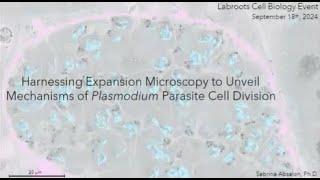
Exploring Plasmodium Parasite Cell Division Processes through Expansion Microscopy Visualization
Explore Plasmodium parasite cell division using expansion microscopy. Gain insights into eukaryotic cell polarity, organelle segregation, and universal division mechanisms in apicomplexan protists.
Direct cDNA Synthesis Using Template Switching RT for Highly Sensitive Gene Expression Analysis
Explore reverse transcriptases, template switching RT, and direct cDNA synthesis from cell lysates for enhanced single-cell analysis and gene expression studies.
Programmable Genomic Integration (PGI): A Technology for Large DNA Sequence Integration at Specific Genomic Locations
Explore Programmable Genomic Integration (PGI) technology for integrating large DNA sequences at specific genomic locations. Learn about its applications in primary human cells and progress in translational research.
Advancing Gene Editing Technologies with Spherical Nucleic Acids
Explore cutting-edge gene editing using Spherical Nucleic Acids. Learn how these nanomaterials enhance drug delivery, overcome biological barriers, and revolutionize diagnostics and therapeutics in disease treatment.
Autoimmune Diseases - The Arising Opportunities for Cell Therapies
Explore the potential of CAR-T cell therapies in treating autoimmune diseases, focusing on recent advancements and future opportunities for potentially curative approaches beyond oncology.
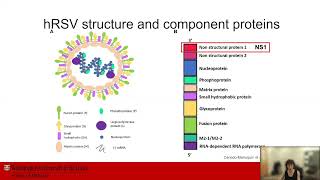
Viral Hijacking - How hRSV NS1 Wrests Control of Host Immune Regulation
Explore how hRSV NS1 manipulates host immune regulation, focusing on its global health impact and mechanisms of viral control in respiratory infections.
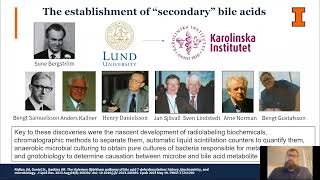
Steroid and Bile Acid Metabolism by the Gut Bacterium, Clostridium scindens
Explore gut microbiology and steroid metabolism with Dr. Ridlon, focusing on Clostridium scindens' role in gastrointestinal diseases and potential treatment strategies.
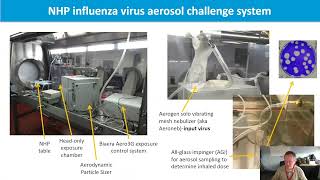
Macaque Model of Severe Respiratory Disease Caused by H5N1 Viruses
Explore severe respiratory disease in macaques caused by aerosolized H5N1 avian influenza virus, its pandemic potential, and implications for human health.
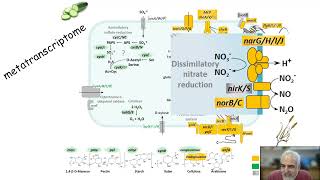
From Microbial Ecology to Agricultural Practice
Explore the impact of plant-associated microbiomes on agriculture, focusing on root microbiome structures in cereals and vegetables and their implications for crop management.
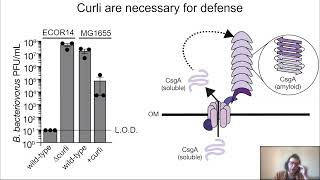
Functional Amyloid Confer Defense Against Predatory Bacteria
Explore how functional amyloid proteins defend against predatory bacteria, focusing on B. bacteriovorus and its infectious life cycle in Gram-negative bacteria.
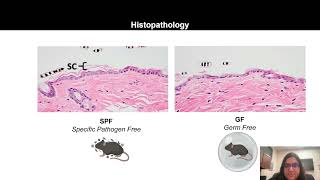
Commensal Microbes Fortify Skin Barrier
Explore how commensal microbes strengthen the skin's epidermal barrier, aiding in defense against dehydration and harmful substances through research on germ-free mice.
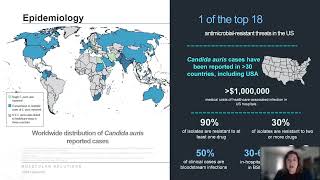
The Fungus Among Us: Detecting Candida auris Colonization and Yeast Bloodstream Infections
Explore detection methods for Candida auris colonization and yeast bloodstream infections. Learn about this emerging public health threat and its impact on healthcare facilities.
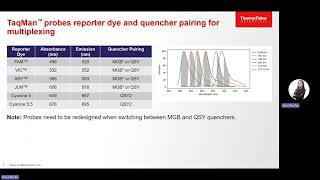
Mastering Multiplexing: Innovative Tools for Multiplexing in Your qPCR Workflow
Explore innovative tools for multiplexing in qPCR workflows. Learn to increase sample throughput, reduce costs, and minimize variations between reactions for more efficient research and diagnostics.