Real-Time Scheduling Fault Simulation and Testing in Linux Systems
Explore fault simulation techniques for Linux real-time scheduling, covering methods for testing system responses to jitter, deadline misses, and error handling in safety-critical applications.
Implementing AI in Critical Systems
Discover essential strategies and considerations for implementing artificial intelligence solutions in mission-critical systems, focusing on practical applications and risk management.

Trustworthy Runtime Verification via Bisimulation - Experience Report
Explore trustworthy runtime verification using bisimulation in the Copilot framework. Learn how CopilotVerifier generates correctness proofs for compiled monitors, enhancing safety-critical system assurance.
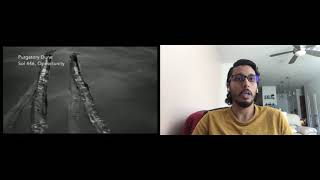
Machine Learning for Space Exploration
Explore AI's role in revolutionizing space exploration, from autonomous robots to planetary science, and learn about challenges and applications in safety-critical systems.
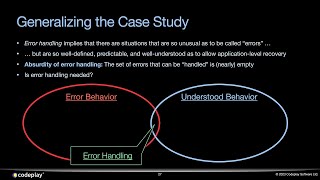
The Absurdity of Error Handling: Finding a Purpose for Errors in Safety-Critical SYCL
Explore error handling challenges in safety-critical SYCL, examining the concept of safety and rethinking error scenarios in C++ software development for critical systems.
Measuring Code Coverage of the Linux Kernel in Accordance with RTCA DO-178C
Explore Boeing's approach to measuring Linux kernel code coverage for safety-critical avionics, focusing on RTCA DO-178C requirements and the enhancement of LLVM coverage tools.
Parallelism Safety-Critical Guidelines for C++
Explore parallelism safety guidelines for C++, covering challenges in multicore architectures and potential issues with newer features. Gain insights into future rules for safety-critical software development.
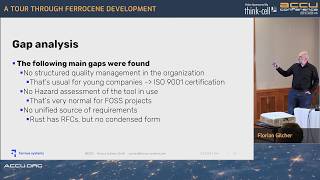
A Tour Through Ferrocene Development
Explore Ferrocene, an open-source Rust compiler variant designed for safety-critical systems in automotive and aviation, focusing on its documentation, correctness principles, and implementation approach.
Dealing with Static Analysis Findings: MISRA - Lecture
Learn to handle static analysis findings, focusing on MISRA C++ violations. Explore strategies for addressing feedback, documenting deviations, and improving code quality in safety-critical systems.

Eclipse ThreadX: A Star is Reborn - OCX 2024
Discover the Eclipse ThreadX real-time operating system, its safety certifications, and comprehensive features for embedded development including SMP, filesystems, networking, and USB protocols.