
Security Threat Modeling Live from Scratch Session
Hands-on workshop demonstrating lightweight threat modeling for CNCF projects, led by Andrew Martin. Learn practical techniques to identify and mitigate security risks in cloud-native environments.
How to Trust Your Open Source Software Using Scorecards
Explore OSSF Scorecards to assess open source software health, automate risk evaluation, and build dependency policies for informed decision-making in software development.

How do Mature DevOps Teams Manage Software Security?
Explore strategies for managing software security in mature DevOps environments, focusing on best practices and innovative approaches for integrating security into the development lifecycle.

Secure Your Software Supply Chain Using Observability
Explore techniques for enhancing software supply chain security through observability, focusing on key benefits and practical implementation strategies.

How to Reduce CVE Noise with VEX - Vulnerability-Exploitability eXchange
Explore VEX, a tool to enhance vulnerability management by providing context to CVEs, improving risk assessment, and streamlining communication between vendors and consumers.

Cybersecurity Integration from the Beginning - Perils and Benefits
Explores challenges and benefits of integrating cybersecurity from project inception, offering insights on overcoming resistance, developing secure designs, and building value chains in early-stage cybersecurity implementation.

Cyber Crash Investigations: Learning from Past Crises
Explore insights from cyber crisis investigations, focusing on prevention, impact reduction, and effective response strategies. Learn from real-world case studies to enhance organizational readiness.

Understanding Technical and Enterprise Tradeoffs in Cybersecurity
Explore strategies for navigating cybersecurity challenges in organizations, understanding human behavior, and negotiating better decision-making when faced with resistance to implementing security solutions.
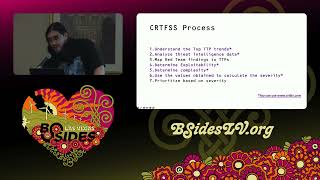
How to Prioritize Red Team Findings - Introducing CRTFSS: Common Red Team Findings Score System
Learn to prioritize red team findings with the Common Red Team Findings Score System (CRTFSS), enhancing cybersecurity assessment and decision-making processes.

Saving Lives in Healthcare: Trust, Teamwork, and Tangible Outcomes - A Decade of Change
Explore a decade of progress in healthcare cybersecurity, focusing on medical devices and tangible outcomes. Gain insights from experts on trust, teamwork, and strategies for positive change in the field.

Security Risks of Low-Code/No-Code Applications - What Could Go Wrong?
Explores security risks of low-code/no-code platforms used by business professionals. Presents research findings, demonstrates common security issues, and introduces OWASP framework for mitigating risks in business-led development.
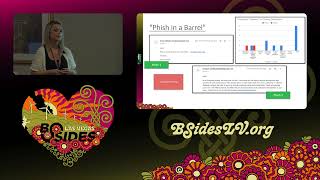
Social Engineering: Training the Human Firewall Against Phishing Attacks
Explore research on psychological factors behind phishing susceptibility and learn strategies to improve security education and measure risk in your organization.
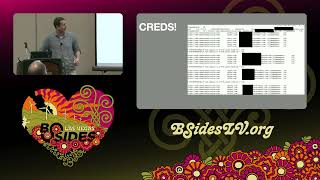
Conti Leaks and CARVER Analysis for Threat Intelligence Analysts
Applying CARVER vulnerability assessment to Conti ransomware leaks for rapid enterprise risk evaluation. Methodology and steps for maximizing intelligence value from this rare event.
Building a Culture of Cybersecurity - A Case Study Approach to Enhancing Risk Management
Explore real-world strategies for cultivating a risk-aware cybersecurity culture through case studies, engaging both technical and non-technical staff to enhance organizational security.
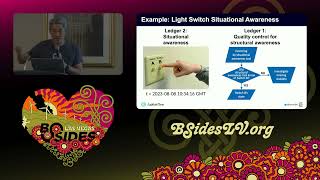
Double Entry Accounting for Cybersecurity - Revolutionizing Security Programs
Explore how double entry accounting principles can revolutionize cybersecurity programs, offering innovative ways to enhance and streamline security practices.

Are The Lessons on Security Incident and Vulnerability Management Learned?
Explore lessons learned in security incident and vulnerability management, examining current practices and potential improvements in cybersecurity strategies.

AI and Data Security Innovation Showcase
Experts discuss risks and benefits of generative AI in companies, focusing on compliance, privacy, and security. Includes presentations from emerging AI and data security firms.
Beware, Data Processing! Proposing Categories for Risk Communication Related to Personal Data
Proposing information categories for better risk communication in personal data processing, based on expert and user studies, to improve understanding and decision-making for all stakeholders.
Putting Privacy on the Map - A Systematic Privacy Threat Modeling Framework
Systematic privacy threat modeling framework for early threat discovery and reporting. Utilizes established frameworks to outline actors, threats, and harm, aiding developers in identifying privacy requirements.
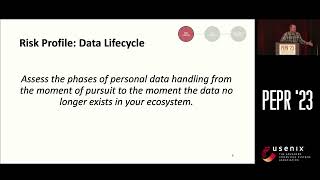
The Missing Link in Privacy Risk Assessments - A Persona-Based Approach
Introducing a persona-based approach for contextual privacy risk assessments, addressing gaps in industry frameworks and enabling organizations to evaluate unique risk appetites and adapt to global regulations.
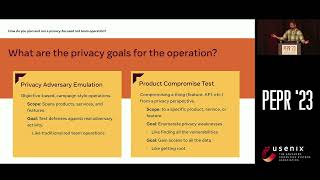
How to Utilize Your Red Team for Privacy
Explore how offensive privacy operations can strengthen an organization's privacy posture, including planning and executing privacy-focused red team exercises and their unique challenges.