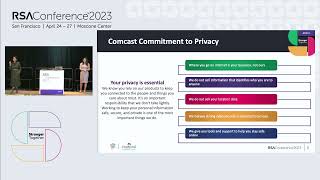
Data Privacy Concerns - A Risk Based Approach to De-Identification
Explore a comprehensive approach to data de-identification, covering risk scores, certification processes, and key business outcomes in response to new privacy regulations.

Code as Risk
Explore how code itself can be a source of risk in software development. Learn strategies to reduce vulnerabilities, improve security, and create more robust systems through better coding practices.

Adaptive Threat Modelling
Explore dynamic threat modeling to adapt security strategies based on real-time data, enhancing risk assessment and defense mechanisms for evolving cyber landscapes.

Business 4.0
Explore the future of business in the digital age, focusing on talent management, workplace design, and career strategies for success in a rapidly evolving technological landscape.
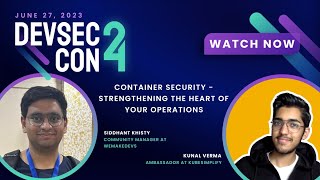
Container Security - Strengthening the Heart of Your Operations
Explore best practices and effective steps to secure containers, safeguard the software supply chain, and protect end-users from critical security risks in production environments.
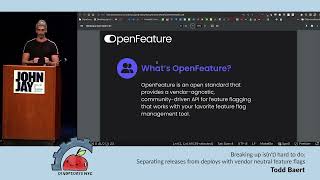
Breaking Up Isn't Hard to Do: Separating Releases from Deploys with Feature Flags
Explore OpenFeature for risk reduction, faster delivery, compliance support, and experimentation in DevOps using vendor-neutral feature flags.

Explainable Machine Learning in Finance - When Machines Surpass Human Intelligence
Explore causal and counterfactual explainability in AI/ML models for finance, addressing challenges when machines surpass human intelligence in complex, high-risk applications.
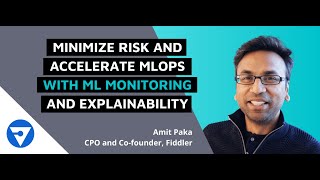
Minimize Risk and Accelerate MLOps with ML Monitoring and Explainability
Discover strategies to minimize risk and accelerate MLOps through ML monitoring and explainability. Learn to efficiently monitor, troubleshoot, and document ML models for improved performance and compliance.
Convincing Your Management, Your Peers, And Yourself That Risk Management Doesn't Suck
Discover effective strategies to advocate for risk management, overcoming resistance and demonstrating its value to stakeholders and yourself in this insightful presentation.

Typical C++, But Why?
Explore how leveraging C++'s type system strengths can enhance code quality, prevent errors, improve readability, and reduce risks during modifications.

Ethical Machine Learning
Explore ethical considerations in machine learning development, focusing on mitigating bias and implementing governance from the start to ensure responsible AI deployment in enterprise settings.

How to Deprecate a Feature the Right Way
Strategies for effective feature deprecation: planning, cross-functional collaboration, clear communication, and successful retirement. Insights on avoiding pitfalls and maintaining user trust during the process.
Securing Your .NET Application Software Supply-Chain
Hands-on guide to securing .NET application supply chains, covering source code access, third-party libraries, build servers, and implementing SLSA guidance and SBOM concepts.
Ethical Machine Learning
Explore ethical considerations in machine learning development, focusing on mitigating bias and implementing governance from the start to ensure responsible AI deployment in enterprise settings.

Keep Your Nose Out of It - Denying Yourself Access to Production
Explore secure practices for managing production environments without direct access, ensuring data privacy and system integrity while maintaining agility and release efficiency.
Proactive Security, Less Buzzword, More Action
Implementación de controles de seguridad proactivos alineados con las necesidades del negocio y los flujos de trabajo naturales, maximizando el impacto y minimizando riesgos mediante análisis cuidadoso.
Software and Database Refactor Patterns
Explore software and database refactor patterns to safely enhance legacy systems. Learn strategies for successful refactoring, considering team factors and implementation challenges.

Safety-Critical Systems from the Inside - NDC Oslo 2020
Explore techniques for ensuring safety in critical systems, including fail-safety, CPU redundancy, secure communication, and formal proofs. Learn about safety integrity levels and effective documentation practices.
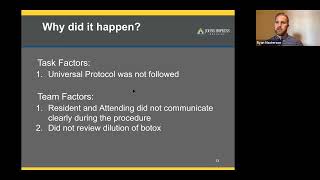
Time Outs and Closed Loop Communication in Medical Practice
Discover essential medical safety protocols through an in-depth exploration of timeout procedures and closed-loop communication techniques in clinical settings.
Measuring Change: Responding to Cyber Material Risk
Discover effective strategies for prioritizing investments and measuring the impact of technical changes while improving decision-making processes in cybersecurity risk management.
Control Constellations - Mapping the Cyber Cosmos of Threats
Explore the intricate relationship between threat actors, TTPs, and cybersecurity controls to enhance organizational defense strategies and risk management through practical intelligence mapping.