Milvus Vector Database - Unlocking the Future of Open Source Vector Databases
Explore Milvus, a high-performance cloud-native vector database. Learn its history, architecture, unique features, and real-world applications in RAG, recommendation systems, and molecular search.
Streamlining RAG Applications with Pinecone's OSS Framework Canopy
Explore Canopy, Pinecone's open-source RAG framework for rapid GenAI app development. Learn about automated processes, customization options, and how Canopy simplifies building production-ready applications.
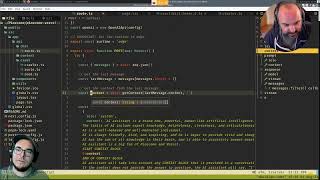
Pinecone Vercel Starter Template and RAG - Live Code Review Part 2
Explore Retrieval Augmented Generation in a production app using TypeScript and Next.js. Learn about document splitting, embedding, context injection, and UI design for improved relevance and auditability.
Accelerating GenAI to Production with Neo4j and Databricks
Discover how Neo4j knowledge graphs enhance GenAI accuracy through GraphRAG, offering superior context for LLMs. Learn to build graphs from Databricks data for improved AI experiences and business solutions.

Python RAG Tutorial - AI for PDFs with Local LLMs
Build a Python RAG app to query PDFs using AI. Learn advanced topics like local execution, vector DB updates, file handling, and response quality testing.
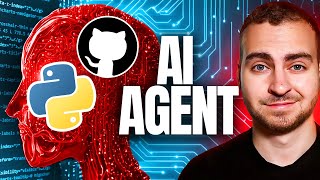
Python AI Agent Tutorial - Build a Coding Assistant with RAG and LangChain
Build a custom AI coding assistant using Python, RAG, and LangChain. Learn to create a GitHub helper that can query information and assist with coding tasks in under an hour.

Deploy RAG/AI App to AWS Cloud - Step-by-Step Tutorial
Step-by-step guide to deploy a Python RAG/AI project as a scalable, high-performance public API on AWS Lambda, covering FastAPI integration, Docker image creation, and AWS CDK infrastructure setup.
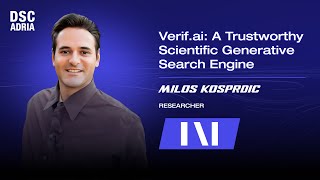
Verif.ai - A Trustworthy Scientific Generative Search Engine
Discover how Verif.ai combines information retrieval, generative models, and verification engines to create a trustworthy scientific search system that delivers referenced, verifiable answers.
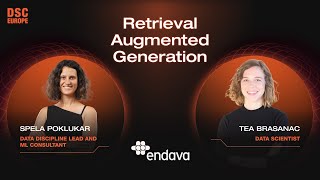
Retrieval Augmented Generation - Understanding Semantic Search and LLM-Based Text Generation
Discover how Retrieval Augmented Generation (RAG) combines semantic search with LLM-based generation to enhance accuracy and reliability in AI responses, featuring practical implementations and tools.
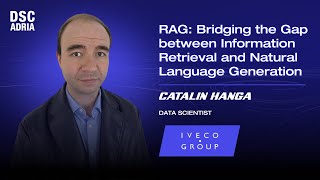
Retrieval Augmented Generation - Bridging the Gap Between Information Retrieval and NLG
Explore the fundamentals and applications of Retrieval Augmented Generation (RAG), focusing on how it enhances LLMs through external knowledge integration for improved document processing.
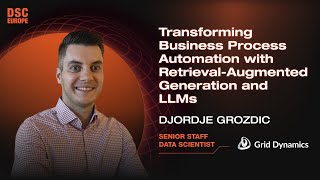
Revolutionizing Automation: Retrieval-Augmentation with LLMs
Discover how Retrieval-Augmented Generation and LLMs transform business automation through practical applications, real-world case studies, and industry-specific implementation strategies.
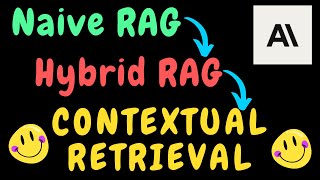
Improving RAG Pipelines with Contextual Information Retrieval
Master advanced RAG techniques by exploring hybrid approaches combining semantic embeddings with TF-IDF and BM25, plus learn about Anthropic's Contextual Retrieval method for enhanced performance.
In-Context Learning - Comparing Extreme Context Length with Fine-Tuning and RAG
Explore groundbreaking research on in-context learning with extended context models, comparing performance against fine-tuning and RAG methods while examining scaling impacts and demonstration effectiveness.
DSPy: Building Self-Improving Language Model Pipelines - Beyond LangChain Templates
Explore DSPy's innovative approach to building self-improving LLM pipelines, featuring automatic prompt engineering and graph-based optimization - moving beyond traditional prompt templates.

Techniques to Avoid Common LLM Pitfalls - Overcoming Hallucinations and Limitations
Master practical techniques for overcoming LLM challenges, including RAG, ReACT prompting, function calling, and grounding to enhance accuracy and reliability in real-world applications.
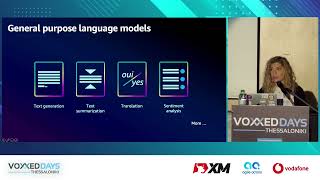
Generative AI - Architectures and Applications in Depth
Dive into generative AI architectures, from foundational concepts to advanced RAG models, with hands-on demonstrations and insights into security, compliance, and real-world applications.
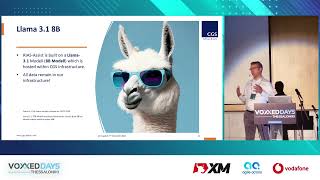
Integrated AI and Enterprise Intelligence with LLMs and RAG
Discover how to effectively integrate AI and LLMs into business operations, overcome adoption challenges, and leverage RAG technology to enhance enterprise intelligence and decision-making processes.

Boosting LLM Accuracy with Entity Resolution-based RAG
Discover how Entity Resolution enhances RAG systems for LLMs, improving accuracy when handling structured enterprise data like customer records through real-time unified data processing.
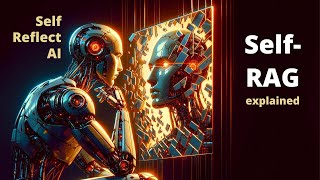
Self-Reflective AI: Understanding Self-RAG Framework for Multi-AI-Agents
Explore the innovative Self-RAG framework that enhances AI language models through self-reflection and intelligent retrieval mechanisms, improving accuracy and contextual relevance in text generation.

Integrating AI with Real-time Data and RAG - Part 2
Dive into practical methods for integrating fine-tuned AI systems with external data sources, focusing on Retrieval Augmented Generation (RAG) and real-time data connectivity for enhanced AI applications.
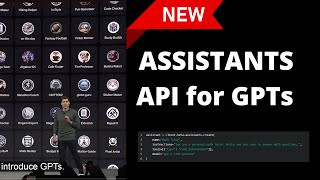
Creating GPTs with OpenAI's Assistants API - A Practical Guide
Discover how to leverage OpenAI's Assistants API to build custom GPTs with code interpretation, function calling, and knowledge augmentation through RAG and retrieval capabilities.