A Survey of Production RAG Pain Points and Solutions
Explore production challenges and solutions for Retrieval Augmented Generation (RAG) in LLM applications. Learn about pain points, evolving architectures, and strategies for building robust AI systems.
Seeing Like a Language Model - Understanding Embeddings and Meaning in AI
Explore how language models process text and represent meaning through embeddings. Gain insights into building better retrieval-augmented LLM systems and designing natural interfaces for reading and writing.
Retrieval Augmented Generation - Techniques and Applications
Explore Retrieval Augmented Generation with Syed Asad. Dive into production issues, embedding models, inference layer experiments, and the evolving landscape of AI engineering in this insightful discussion.
Visualize - Bringing Structure to Unstructured Data - MLOps Podcast #258
Explore techniques for structuring and visualizing unstructured data in machine learning, from classification to Retrieval-Augmented Generation, using tools like UMAP and Renumics Spotlight to uncover patterns and evaluate model performance.
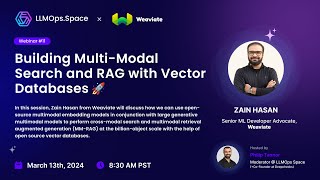
Building Multi-Modal Search and RAG with Vector Databases
Explore open-source multimodal embeddings for cross-modal search and MM-RAG. Learn techniques for integrating diverse data types, enhancing decision-making with real-time processing and LLMs.
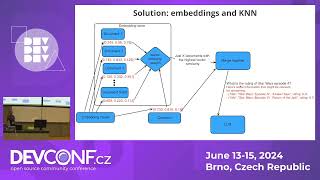
Developing AI Applications in Java with Quarkus and Langchain4j
Explore AI application development using Quarkus and Langchain4j. Learn to build chatbots, autonomous agents, and leverage image-generating models in Java for cloud-native AI solutions.
A Novel Approach to Generating Terraform Configurations for Google Cloud Platform
Explore a novel approach to auto-generate Terraform configurations for GCP using AI. Learn how custom retriever architecture and LLMs streamline cloud infrastructure deployment and management.
Vector Databases for Generative AI Applications
Explore vector databases' role in generative AI, covering concepts like RAG and efficient open-source tools for building AI applications.

Vector Databases for Generative AI Applications - Episode 3
Explore vector databases' role in generative AI, covering search engines, open-source tools, and efficient application development for chatbots, virtual assistants, and content creation.
Build More Capable LLMs with Retrieval Augmented Generation
Enhance LLM capabilities using retrieval-augmented generation to access knowledge bases and deliver fact-based answers, overcoming training data limitations.
LLM Projects - A Quick Tutorial on Multi-Agent Workflows with AutoGen
Explore multi-agent workflows using AutoGen framework for RAG-based question answering with Wikipedia integration. Learn to implement and leverage this powerful approach for dynamic information retrieval.

Improved Retrieval Augmented Generation with ALL-SORT - Advanced Techniques
Explore advanced retrieval augmented generation techniques using ALL-SORT for improved LLM-assisted information retrieval, with practical demonstrations and performance evaluations.

RAG with Verified Citations - Advanced Inference Techniques
Explore advanced RAG techniques with verified citations, including BM25 and cosine similarity methods. Learn to implement and leverage one-click document RAG for improved accuracy.
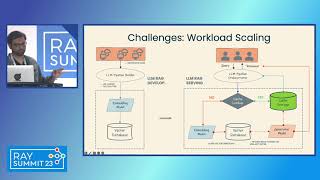
Enterprise Vector-based Information Retrieval and Prompt Engineering at Scale Using Open Source on AWS
Build enterprise-scale vector-based information retrieval systems using open source technologies on AWS, addressing challenges in Retrieval Augmented Generation for accurate, hallucination-free results.
Kubespray Unleashed: Navigating Bare Metal Services in Kubernetes for LLM and RAG
Explore Kubespray for deploying Kubernetes on bare metal, enhancing AI workloads like LLM and RAG. Learn key features, best practices, and swift AI deployment using Retrieval-Augmented Generation.
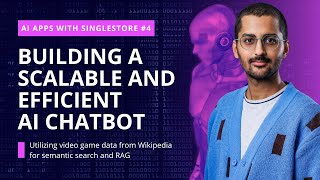
Building a Scalable AI Chatbot with Wikipedia Data - Semantic Search and RAG
Learn to create an AI chatbot using Wikipedia video game data, implementing semantic search and RAG with SingleStore, optimizing with vector indexes, and integrating GPT models for an interactive experience.
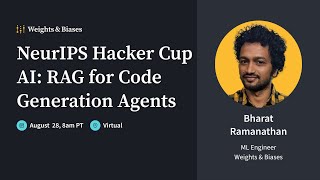
RAG for Code Generation - AI Hacker Cup Example
Explore advanced LLM-powered competitive programming using RAG for code generation. Learn to design robust architectures, implement AST-based similarity search, and enhance few-shot learning for AI agents.
Revolutionizing Insurance Customer Service with Advanced AI Chatbot
Transformación del servicio al cliente en seguros mediante chatbot AI avanzado, mejorando productividad y calidad. Desafíos, lecciones y estrategias en el desarrollo e implementación de IA generativa para crecimiento empresarial.
State-of-the-Art Retrieval Augmented Generation at Scale in Spark NLP
Efficient scaling of RAG systems using Spark NLP: pre-processing, embedding calculation, post-processing, and integration with LangChain and HayStack for production-grade LLM systems.
Accelerating Operational Excellence with Generative AI - Implementing RAG for Customer Service Efficiency
Discover how a financial company implemented RAG to enhance customer service, exploring architecture, data pipelines, innovations, and optimization strategies for transforming operations with Generative AI.
Full RAG: A Modern Architecture for Hyperpersonalization
Explore Full RAG architecture for AI-driven hyperpersonalization, integrating real-time data and contextual insights to enhance recommendation systems beyond traditional models' capabilities.