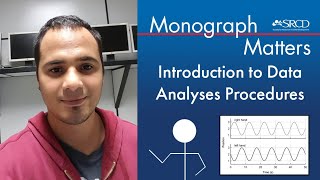
Methodological Lessons - Introduction to Data Analyses Procedures
Introduction to three data analysis procedures: Hilbert Transform Relative Phase, Wavelet Analysis, and Linear Mixed Effects Analysis. Suitable for all levels, providing a broad overview of their functions in bimanual coordination research.
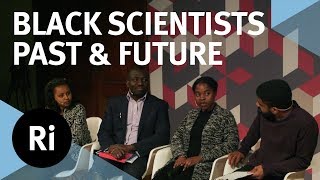
Black Scientists - Past, Present and Future
Panel discussion exploring diversity in science, focusing on Black scientists' contributions, challenges, and the impact of representation on research and society.
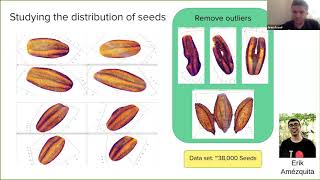
Topological Data Analysis for Quantifying Plant Morphology
Explore topological data analysis for plant morphology using persistent homology and Euclidean Distance Transform. Learn applications in hurricane video data and XRay CT scans of plants.
How to Write Compelling Content for Your Audience, with Eric Barker
Learn strategies for creating compelling content from bestselling author Eric Barker. Discover research techniques, cognitive biases, and tips for business growth in this insightful interview on effective writing and audience engagement.
Probability and Its Interpretation - Foundations of Humanities Analytics
Explore probability theory, its historical development, and interpretations in this humanities analytics lecture, focusing on frequency and subjective approaches to understanding uncertainty.
What Independent SAGE Has Taught Me About Issues in Light of COVID-19 and Where Data Science Can Help
Insights from Independent SAGE on COVID-19 challenges and potential data science solutions, exploring lessons learned and future research priorities for crisis response.

Correlation vs. Causality - Unraveling the Relationship
Explore the crucial distinction between correlation and causation through real-world examples and philosophical insights, enhancing critical thinking skills for data interpretation and decision-making.
Kaemika App - Simulating Reaction Networks and Digital Protocols
Explore integrated descriptions for automated scientific processes, extracting models and protocols for analysis and execution using the Kaemika app across multiple platforms.
Third-Party Service Provider Diligence - Why Are We Doing It All Wrong?
Explore effective third-party service provider diligence strategies, challenging conventional approaches and offering insights to improve risk assessment and management practices.
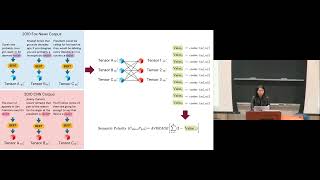
Words Matter: How Language Choices Predict Societal Trends and Outcomes in Media, Health and Policing
Explore how language patterns in media, health discussions, and police interactions predict societal trends and outcomes. Gain insights into communication challenges and their real-world implications.
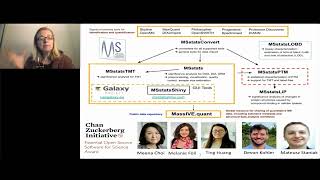
Multilevel Statistical Modeling for Proteomic Experiments With Complex Designs and Isobaric Labeling
Learn advanced statistical modeling techniques for complex proteomic experiments using isobaric labeling, focusing on multilevel designs and time-series data analysis.
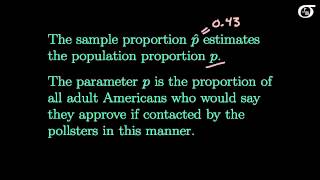
Confidence Intervals for a Population Mean
Learn to construct, interpret, and apply confidence intervals for population means using Z and t methods, exploring assumptions and sample size determination.
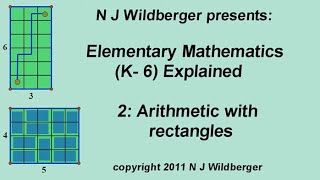
Arithmetic With Rectangles - Elementary Mathematics Explained
Explore arithmetic fundamentals using rectangles. Learn counting, addition, and multiplication with visual representations suitable for young learners. Develop a strong foundation in basic mathematical concepts.

Learning from Data: The Two Cultures
Explore statistical and task modeling approaches in AI, their strengths, limitations, and the importance of integrating principles from both cultures for more robust and responsible machine learning.
Fan Ye, Harvard University - 2-Torsions in Singular Instanton Homology
Exploration of 2-torsions in singular instanton homology for knots, comparing complex and Z/2 coefficients, with focus on fibered knots and genus 1 knot surgeries.
Causal Inference for Earth System Sciences - Jakob Runge
Exploring causal inference techniques for Earth system sciences, focusing on advanced methods to uncover complex relationships in climate data and improve understanding of multi-scale processes.
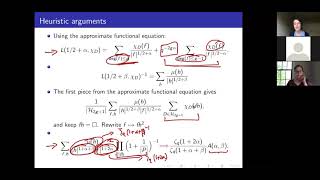
The Ratios Conjecture Over Function Fields
Explore the Ratios Conjecture for quadratic L-functions over function fields, including upper bounds for negative moments and partial results for various L-function ratios.
A Causal Inference Framework for Combinatorial Interventions
Explore a novel latent factor model for estimating causal effects of combinatorial interventions, addressing challenges in factorial experiments and recommendation systems.

Paired T-Test - Statistical Analysis for Comparing Group Means
Explore paired t-tests: comparing means in two scenarios. Learn calculation methods, standard error, and when to use nonparametric alternatives for statistical analysis.
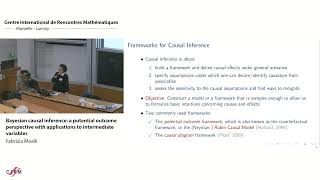
Bayesian Causal Inference: A Potential Outcome Perspective with Applications - Lecture
Explore Bayesian causal inference from a potential outcome perspective, with practical applications and insights from Fabrizia Mealli's conference talk.
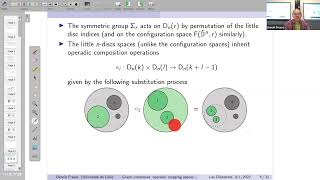
Graph Complexes, Operadic Mapping Spaces and Embedding Calculus - A Survey
Explore graph complexes, operadic mapping spaces, and embedding calculus in this comprehensive survey by B. Fresse from Lille.