Using the Observer Effect and Cyber Feng Shui - Jacob Torrey
Explore techniques for detecting system monitoring and creating secure environments. Learn about architectural "tells", physical unclonable functions, and strategies for evading analysis in computer systems.

The Undeniable Truth - How Remote Attestation Circumvents Deniability Guarantees in Secure Messaging Protocols
Explore protocol design to resist remote attestation attacks in secure messaging, covering cryptographic methods and TEE-based approaches for enhanced deniability and security.
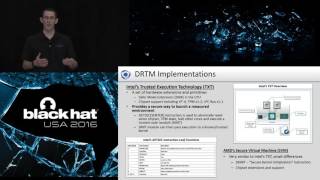
Breaking Hardware-Enforced Security With Hypervisors
Explore how hypervisors can bypass Intel's Trusted Execution Environment and capture keys from AES-NI instructions, revealing vulnerabilities in hardware-enforced security mechanisms and offering insights on robust deployment strategies.
Has My IoT Device Been Hacked? Establishing Trust with Remote Attestation
Explore remote attestation techniques for IoT security, including mechanisms for device swarms, current challenges, and future research directions in establishing trust and integrity.
SANA - Secure and Scalable Aggregate Network Attestation
Explore SANA, a secure and scalable network attestation system, presented at CCS 2016. Learn about its design, efficiency, and security considerations for protecting large-scale networks.
Undeserved Trust - Exploiting Permutation-Agnostic Remote Attestation
Explore vulnerabilities in remote attestation protocols for Intel SGX, revealing potential exploits and security risks in trusted execution environments.
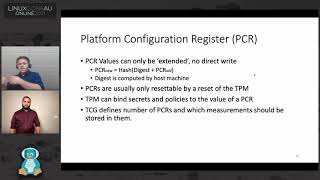
The Privacy Aspect of TPM Attestation
Explore TPM2.0 remote attestation's privacy aspects, focusing on cryptographic trust measurement in digital systems and IoT platforms. Learn about TPM2 commands and data exchange for enhanced security.
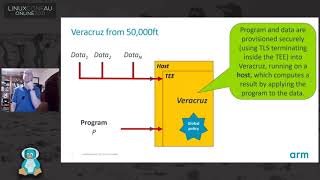
Veracruz - Privacy-Preserving Multiparty Computation Using Trusted Hardware
Explore privacy-preserving computation using secure enclaves, enabling secret data processing on untrusted hosts. Learn about Veracruz's implementation, security measures, and potential applications in multiparty scenarios.
A Trusted Trip in the Cloud - Working with Trusted Hardware
Exploring trusted computing in cloud environments using TPM 2.0. Discusses practical challenges and experiences in setting up a secure cloud infrastructure with remote attestation and evolving open-source software.
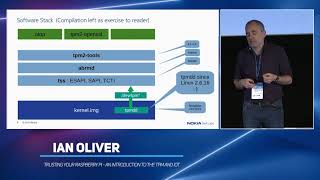
Trusting Your Raspberry Pi - An Introduction to the TPM and IoT
Explore TPM and IoT security using Raspberry Pi. Learn about trusted computing, chain of trust, and mitigating firmware attacks for building secure IoT systems.
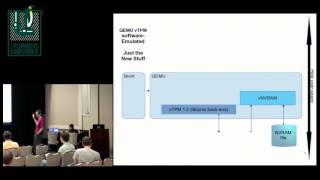
Kicking it up a Level - Bringing the Trusted Platform Module into QEMU
Explore virtualization of Trusted Platform Modules in qemu, enhancing security for cloud users through remote attestation and verification of untampered Trusted Computing Bases.
Remote Attestation of IoT Devices Using a Discrete TPM 2.0
Explore secure IoT device authentication using discrete TPM 2.0, covering attestation benefits, challenges, and practical implementation through a live demonstration.
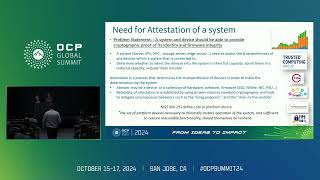
Leveraging FPGA-Based Root of Trust for Efficient, Dynamic, and Remote Platform Attestation
Discover how FPGA-based Root of Trust enables secure platform attestation, providing dynamic cryptographic proof of identity and firmware integrity in modern computing systems.
Beyond Memory Encryption: Accelerating Confidential Computing for Cloud Native
Explore confidential computing challenges, solutions for diverse infrastructures, and open-source projects addressing data protection in cloud-native environments.
Hiding Attestation with Linux Keyring in Confidential Virtual Machines
Explore confidential computing and Linux Keyring to hide attestation details in trusted execution environments. Learn techniques for seamless adoption and secure secret management.
Confidential Computing - New Capabilities for New Workloads
Explore Confidential Computing's potential for secure, collaborative applications using hardware-based security and cryptography. Learn about Gen AI, Web3, and multi-party computation applications.
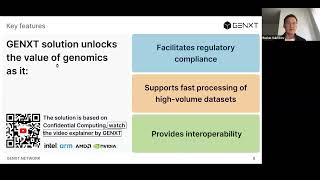
Confidential Computing in Genomics - GENXT Cross Database DNA Matching
Explore secure genomic data analysis using Confidential Computing for cross-database DNA matching, enabling privacy-compliant collaborative research in precision medicine.
Coconut-SVSM - Early Attestation to Unlock Persistent State - KVM Forum
Explore early attestation for unlocking persistent state in Coconut-SVSM, enabling stateful services like vTPM and secure UEFI variable store for Confidential VM guests on AMD SEV-SNP platforms.
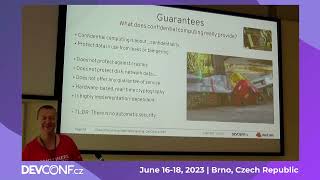
Chains of Trust in Confidential Computing
Explore Confidential Computing technologies, chains of trust, and attestation techniques for protecting data in use across various scenarios, from VMs to clusters.
Confidential Computing - The Minimum Developers Should Know
Explore Confidential Computing essentials: technologies, importance, and ecosystem. Learn about FHE, SMPC, TEEs, and more. Gain insights into industry collaborations and community engagement.
Chains of Trust in Confidential Computing
Explore chains of trust in Confidential Computing, including attestation techniques for VMs, containers, and clusters. Learn about roots of trust, verification processes, and key technologies.