
Pareto, Power Laws, and Fat Tails: A Beginner's Guide to Non-Gaussian Statistics
Explore power laws, fat tails, and their impact on statistical analysis. Learn why traditional methods fall short and gain insights into analyzing extreme events in various domains.

Causal Effects via Regression with Python Code - Part 5
Explore regression-based techniques for computing causal effects, including linear regression, double machine learning, and metalearners. Gain practical insights with Python code examples.
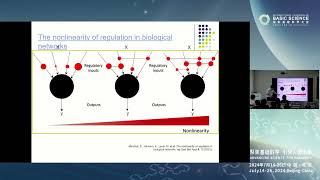
Quasi-Dynamic System Representation of Multiple Nonlinear Regression
Explore evolutionary game theory and allometric scaling to model nonlinear relationships between variables, overcoming limitations of linear regression for complex systems analysis.
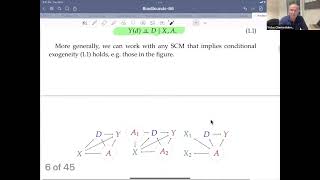
Omitted Variable Bias in Causal Machine Learning
Explore omitted variable bias in causal machine learning with Victor Chernozhukov's keynote address at UAI 2023, offering insights into this critical aspect of AI research.

Addressing Cultural and Technical Challenges in Product Experimentation - Beyond the Tool
Explore cultural and technical challenges in product experimentation, focusing on hypothesis testing, causal inference, and data science techniques beyond traditional methods.
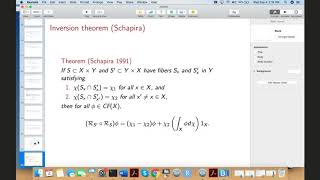
A Fiber Bundle Theory for Shapes
Explore fiber bundle applications in probabilistic modeling for shapes and surfaces, focusing on regression, variable selection, and Gaussian processes in evolutionary biology and biomedicine.
R Tutorials
Comprehensive R tutorials covering data management, analysis, and visualization, with hands-on exercises using real datasets and practical applications in statistics and data science.
R for Beginners
Comprehensive R tutorials for beginners, covering installation, data manipulation, statistical analysis, and visualization. Hands-on approach with downloadable data files for practical learning.
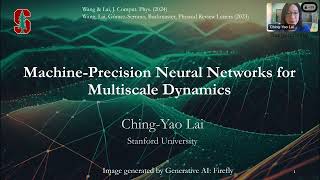
Machine-Precision Neural Networks for Multiscale Dynamics
Discover how multi-stage neural networks can achieve machine-precision accuracy in scientific predictions, addressing spectral bias and improving deep learning applications in multiscale physics problems.
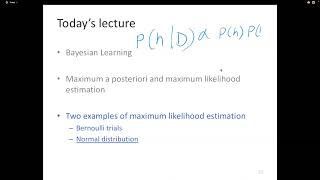
Maximum Likelihood Estimation for Regression in Machine Learning - Lecture 24
Dive into maximum likelihood estimation for regression through practical examples and explore its connection to loss minimization in Bayesian learning frameworks.
OpenAI Embeddings Explained With Code Examples - How to Use OpenAI GPT-3 ADA Vectorized Embeddings API
Explore OpenAI's ADA vectorized embeddings API for advanced NLP, search, and machine learning applications with practical code examples and visualizations.

Regularization Part 1 - Ridge (L2) Regression
Learn Ridge Regression to prevent overfitting, solve unsolvable equations, and optimize models. Covers main ideas, details, applications for various data types and models, and usage with limited data.
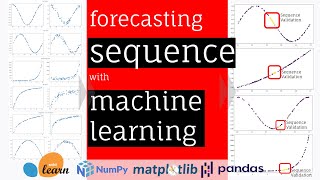
Forecast Any Mathematical Number Sequence with Regression - Machine Learning
Learn to generate and forecast mathematical number sequences using Python, pandas, numpy, and scikit-learn. Visualize data with matplotlib and apply regression models to predict future numbers in various function-based series.
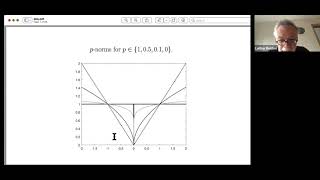
Methods for L_p-L_q Minimization in Image Restoration and Regression - SIAM-IS Seminar
Explore methods for image restoration and regression using $\ell_p$-$\ell_q$ minimization, covering problem formulation, solution techniques, and applications in this advanced mathematical seminar.
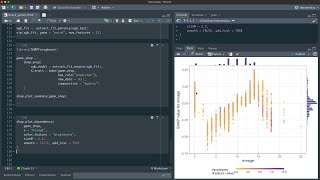
Feature Engineering & Interpretability for XGBoost with Board Game Ratings
Explore advanced modeling with board game ratings data: feature engineering, XGBoost tuning, and explainability methods for data-driven insights and predictive analysis.
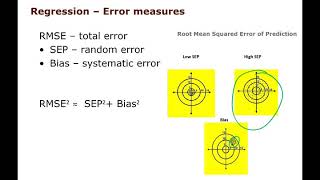
PLS Number of Components
Learn validation techniques for PLS models, including outlier detection, error measures, cross-validation, and practical tips for selecting the optimal number of components.
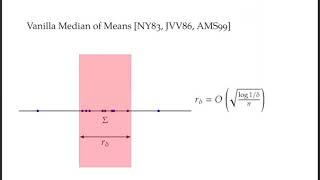
Algorithms for Heavy-Tailed Statistics - Regression, Covariance Estimation, and Beyond
Explore advanced statistical techniques for handling heavy-tailed data, including regression and covariance estimation, with a focus on SOS assumptions and median of means framework.
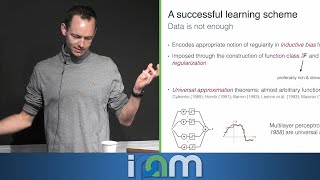
Machine Learning Basics: A Speedrun - IPAM at UCLA
Speedrun through machine learning fundamentals, covering key concepts like inductive bias, regularization, and kernel methods for both linear and nonlinear regression.
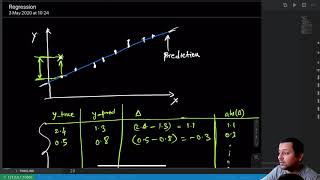
Simple and Basic Evaluation Metrics for Regression
Learn essential evaluation metrics for regression problems, including MAE, MSE, RMSE, RMSLE, and R2 score, with practical implementation in Python.

Model Explanation and Prediction Exploration Using Spark ML
Explore techniques for explaining non-linear models, showing feature contributions, and performing what-if analysis using Spark ML. Implement these methods to enhance model interpretability and enable interactive prediction exploration.
Benefits of Saying I Don't Know When Analyzing and Modeling the Climate System With ML - Elizabeth Barnes
Explore the benefits of acknowledging uncertainty in climate system analysis using machine learning. Learn about state-dependent predictability and controlled abstention networks for improved modeling accuracy.